
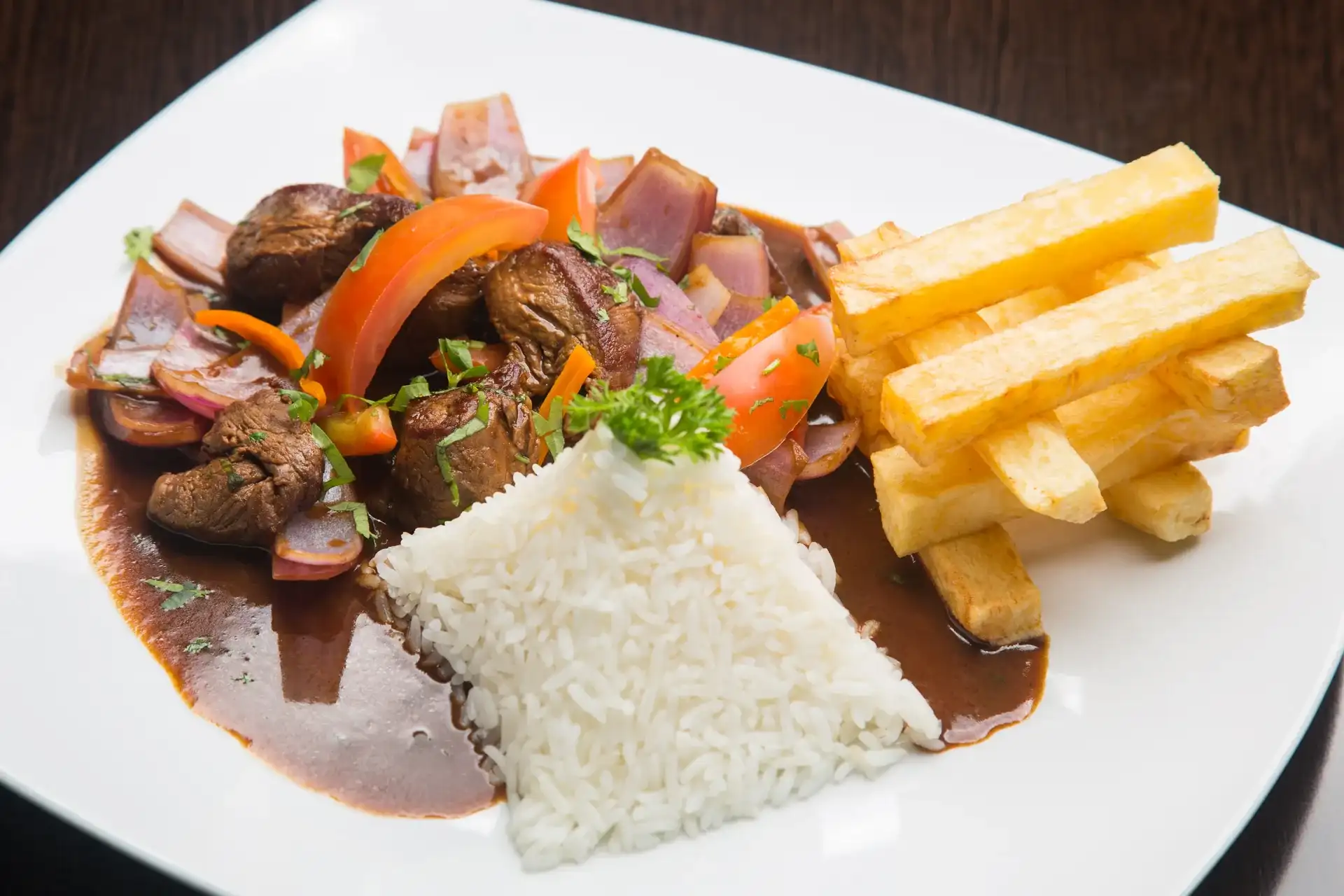
Cusco's food is the food of the Andes: corn, native potatoes, broad beans, quinoa, chilli, and pork, cuy and alpaca, cooked to recipes that blend Inca tradition with what arrived from Spain. It's hearty food, made for cold weather and altitude, and closely tied to the calendar: there are Sunday dishes, festival dishes and seasonal dishes. This guide brings together the region's most typical dishes and drinks, what's in them, when they're eaten and where to try them without leaving the traveller's route.
Start here: Cusco tips · things to do in Cusco
What makes Cusco's cooking different
Three things define the Cusco table. First, Andean ingredients: hundreds of potato varieties, the giant white corn of the Urubamba valley, chuño (freeze-dried potato) and aromatic herbs such as huacatay and muña. Second, chilli: rocoto and ají amarillo are in almost every sauce. Third, rhythm: breakfast is big, lunch is the main meal and many picanterías only open at midday.
- Native potatoes of Cusco: varieties, chuño and dishes to try
- Peruvian fruits in Cusco markets: what to try and how to eat them
Popular activities on GetYourGuide
1. Chiriuchu, the Corpus Christi dish
Chiriuchu ("cold chilli" in Quechua) is Cusco's most emblematic dish. It's served cold and combines ingredients from different regions: roast cuy, hen, charqui (dried meat), sausage, cheese, a flour fritter, cochayuyo (seaweed), fish roe and corn tortilla, with rocoto. It's eaten above all during Corpus Christi in June, when dozens of stalls sell it around the Plaza de Armas and Plaza San Francisco.
2. Adobo cusqueño, the Sunday breakfast
A pork stew marinated in chicha de jora, chilli, garlic, cumin and spices, slow-cooked in a reddish broth. It's the Sunday breakfast par excellence, served with bread for dipping. Locals swear there's no better hangover cure.
3. Chicharrón from Saylla
Cusco-style chicharrón is pork fried in its own fat, crisp outside and juicy inside, served with mote (boiled corn), potatoes, mint and onion salsa. The village of Saylla, about 20 minutes from the centre, is famous for it and fills up at weekends.
4. Roast cuy
Cuy (guinea pig) has been raised in the Andes for thousands of years and is the celebration dish par excellence. In Cusco it's mostly oven-roasted, stuffed with herbs such as huacatay, and served whole with potatoes and often a stuffed rocoto. Tipón, in the South Valley, is the best-known village to try it. If seeing it whole puts you off, ask for it cut into pieces.
- Eating guinea pig (cuy) in Cusco: what it is, how it's cooked and where to try it
- Cusco's South Valley: Tipón, Pikillacta, Andahuaylillas and local flavours
5. Lechón with tamal
Oven-roasted suckling pig with golden, crackling skin is sold mostly at weekends in markets and stalls in the centre and the neighbourhoods. It's served in portions with a tamal and bread, often with an onion and chilli salsa.
6. Kapchi
A creamy stew of fresh cheese, milk, potato and huacatay, made with broad beans or wild mushrooms. Mushroom kapchi appears in the rainy season, when mushrooms sprout in the fields. It's simple, homely and very comforting.
7. Corn with cheese
Cusco's giant white corn, with huge tender kernels, grows in the Urubamba valley. Boiled and served with a slice of fresh cheese, it's the classic roadside snack of the Sacred Valley, sold along the roads and in markets.
8. Trout
Trout is farmed in the region's rivers and lakes, and Cusco eats a lot of it: fried, grilled or as trout ceviche. It's a light option if Andean food feels heavy during your first days at altitude.
9. Rocoto relleno
Rocoto (a large, hot chilli) stuffed with minced meat, onion, olives and cheese, then baked. It's associated with Arequipa, but it's common in Cusco's picanterías, often alongside cuy. It's spicy: ask first if you're sensitive.
10. Soups: lawa, chairo and quinoa soup
Soups are the backbone of Andean food. Lawa is a thick cream of corn, broad-bean or chuño flour with herbs. Chairo has meat, chuño, wheat and vegetables. Quinoa soup, nourishing and mild, is ideal if your stomach is delicate from the altitude.
11. Timpu, the Carnival stew
At Carnival, in February or March, Cusco families make timpu: a big platter of boiled meats with cabbage, potatoes, chuño, sweet potato, chickpeas and fruit such as peaches. It's a sharing meal served on large platters.
12. Chuta bread from Oropesa
The town of Oropesa, in the South Valley, is the bread capital: large round loaves baked in wood-fired ovens. They're sold in Cusco and along the road, and are perfect with adobo or breakfast.
13. Tamales and humitas
Corn dough wrapped in husks or leaves, sweet or savoury, steamed. They're eaten for breakfast in the street and in markets, with coffee or a hot emoliente.
14. Chicha de jora, frutillada and chicha morada
Chicha de jora is the fermented corn drink that has been drunk in the Andes since pre-Hispanic times; it's served in huge glasses in chicherías, marked by a red flag at the door. Frutillada is chicha mixed with strawberries. Chicha morada, on the other hand, has no alcohol: it's a purple-corn soft drink with fruit and cinnamon.
15. Coca tea, emoliente and Cusco coffee
You'll be offered coca tea as soon as you arrive: it helps many travellers with the altitude. Emoliente, a hot infusion of herbs and barley, is sold from carts in the morning and at night. And high-altitude coffee grown in La Convención province can be tried in the city's cafés.
- Coca leaf in Cusco: tea, chewing, altitude sickness and whether you can take it home
- Coffee in Cusco: where it comes from, specialty cafés and farm visits
Where to try traditional food
- Markets: San Pedro market and other neighbourhood markets have food stalls with broths, chicharrón, soups and juices at local prices.
- Picanterías and chicherías: traditional eateries with hearty dishes and chicha, especially at lunchtime.
- Villages: Saylla for chicharrón, Tipón for cuy and Oropesa for bread, all on the South Valley route.
- Restaurants in the centre: many serve lighter versions of Andean dishes, useful for your first days.
- San Pedro Market in Cusco: what to eat, what to buy, opening hours and tips
- What and where to eat in Cusco: typical dishes, markets and tips
- Local markets in Cusco: Wanchaq, Huancaro, Vinocanchón and beyond San Pedro
Tips for eating well at altitude
- On your first days, eat light in the evening: digestion is slower at 3,400 metres.
- Drink bottled or filtered water and avoid ice in doubtful places.
- Ask for "poco picante" if you're not used to rocoto.
- If you're vegetarian, look for kapchi, corn with cheese, soups and quinoa.
- Vegan and vegetarian food in Cusco: Andean dishes, markets and useful phrases
- Health in Cusco: vaccines, yellow fever, water, sun and first-aid kit
Learn to cook it
A cooking class is a good way to understand Andean ingredients: many start with a market visit and end with lunch made from what you've cooked.
Frequently asked questions
- What is the most typical dish in Cusco?
- Chiriuchu, the cold Corpus Christi dish. Adobo, chicharrón and roast cuy are also very representative.
- Where is the best chicharrón?
- In Saylla, about 20 minutes from the centre, especially at weekends.
- Is there traditional food for vegetarians?
- Yes: kapchi, corn with cheese, quinoa soup, lawa and many native-potato dishes.
- Does chicha morada contain alcohol?
- No. Chicha morada is a purple-corn soft drink; the alcoholic one is chicha de jora.
Book this plan
- Cusco food tourCompareSee dates →
- Peruvian cooking classCompareSee dates →
Notice: This guide shares advice and recommendations based on research and local experience. Prices, opening hours and rules may change: always check with official sources and operators. Cusco Tips is not responsible for third-party services, bookings or decisions made using these guides; some links are affiliate links (see our affiliate policy).
Related guides
What and where to eat in Cusco: typical dishes, markets and tips
Cusco dishes worth trying, typical drinks, types of places to eat, markets and food-safety tips at altitude.
Read guide →
Cusco picanterías and chicherías: eat like a local
Cusco picanterías and chicherías: what they are, the red flag, typical dishes (chiriuchu, kapchi, cuy, adobo), chicha de jora and verified places. Check opening times.
Read guide →
Eating guinea pig (cuy) in Cusco: what it is, how it's cooked and where to try it
All about cuy in Cusco: its cultural role in the Andes, oven-roasted and fried cuy, how to eat it, what kind of places serve it, rough prices and alternatives if you'd rather not.
Read guide →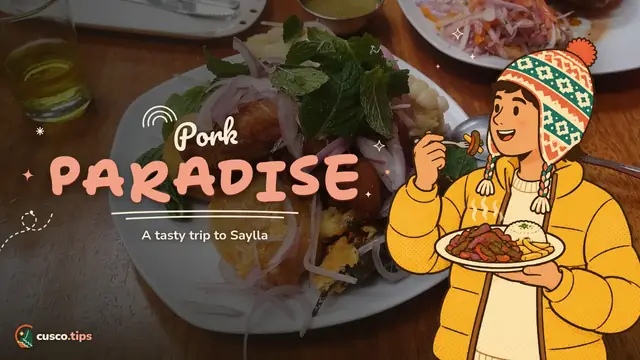
Saylla chicharrón: Cusco's fried-pork town
Saylla, the town of Cusco chicharrón: how to get there from Cusco, what to order, when to go, the July festival and how to combine it with the South Valley.
Read guide →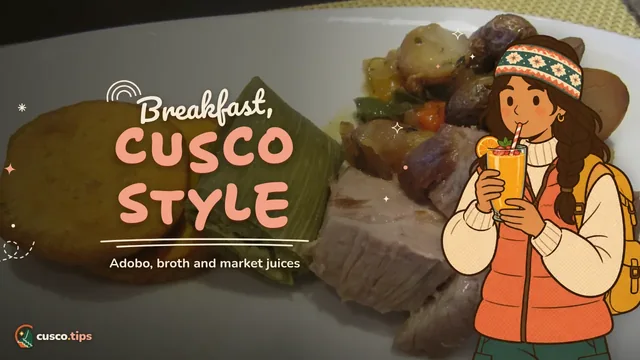
Traditional breakfast in Cusco: adobo, chicken soup, juices and pan chuta
How Cusco locals eat breakfast: Sunday adobo, chicken soup, chicharrón sandwiches, market juices, hot quinoa and pan chuta. Where to try them.
Read guide →