
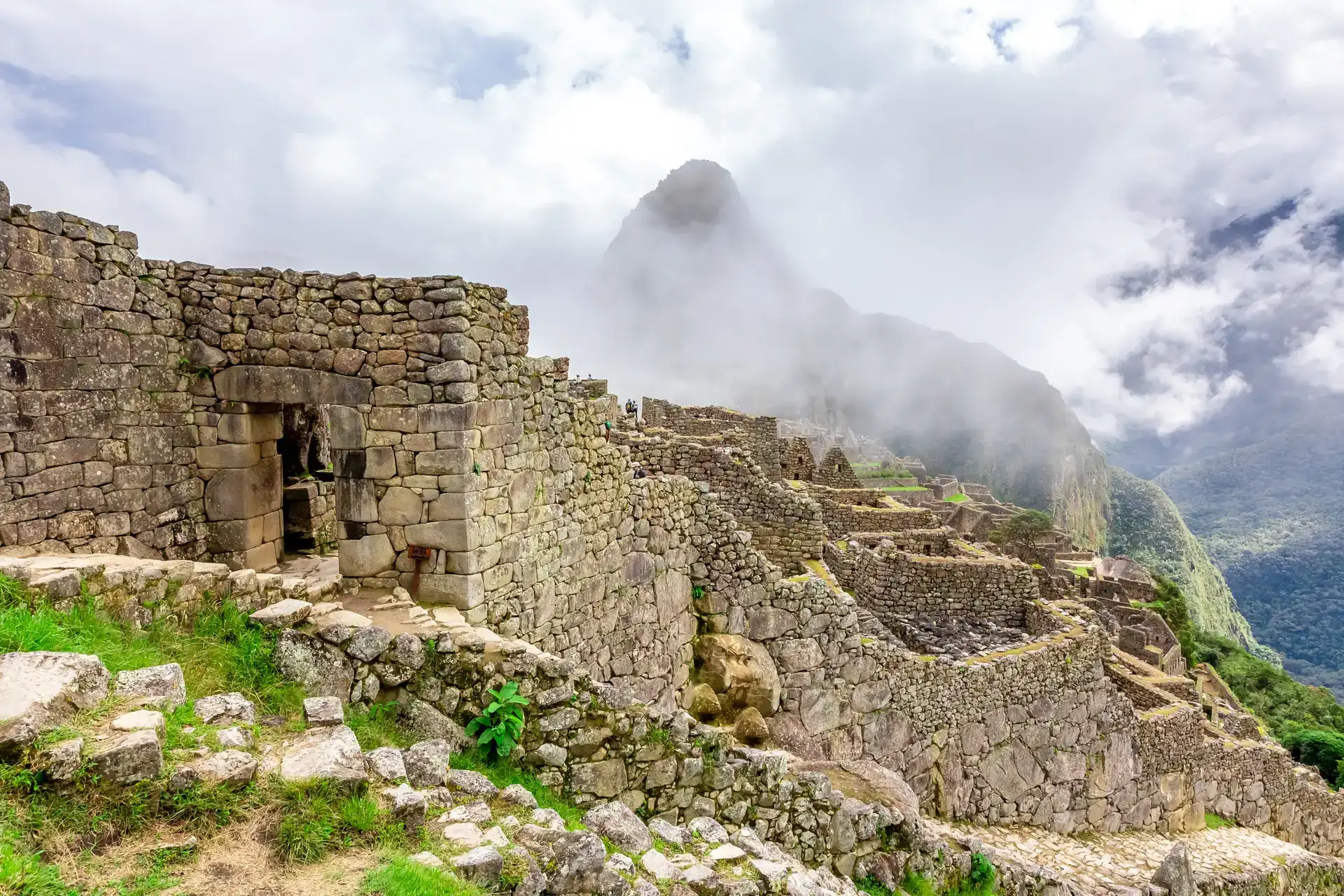
There is no road to Machu Picchu: you can only reach the citadel from Aguas Calientes (officially Machu Picchu Pueblo), a town at the bottom of the Urubamba canyon. To get to Aguas Calientes there are three main ways: the train, the Inca Trail on foot, or the budget route via Hidroeléctrica. This guide explains each option, roughly how long it takes and what to book in advance.
Start here: Cusco tips · things to do in Cusco
The route at a glance
The classic route is Cusco → Ollantaytambo (in the Sacred Valley) → Aguas Calientes by train → up to the citadel by bus or on foot. Cusco to Ollantaytambo is roughly 1.5–2 hours by road, and the train from Ollantaytambo to Aguas Calientes usually takes around 1.5–2 hours. Some trains leave from Poroy station, about 20–30 minutes from Cusco, but the full ride is longer.
- Train: the most comfortable and fastest — what most travellers choose.
- Inca Trail: the iconic experience, with limited permits and a mandatory operator.
- Hidroeléctrica: the cheapest, but long and with a walk along the tracks.
Tip
Many travellers spend a night in the Sacred Valley first: it's lower than Cusco, helps with acclimatization and puts Ollantaytambo minutes away.
Popular activities on GetYourGuide
Option A: by train (PeruRail or Inca Rail)
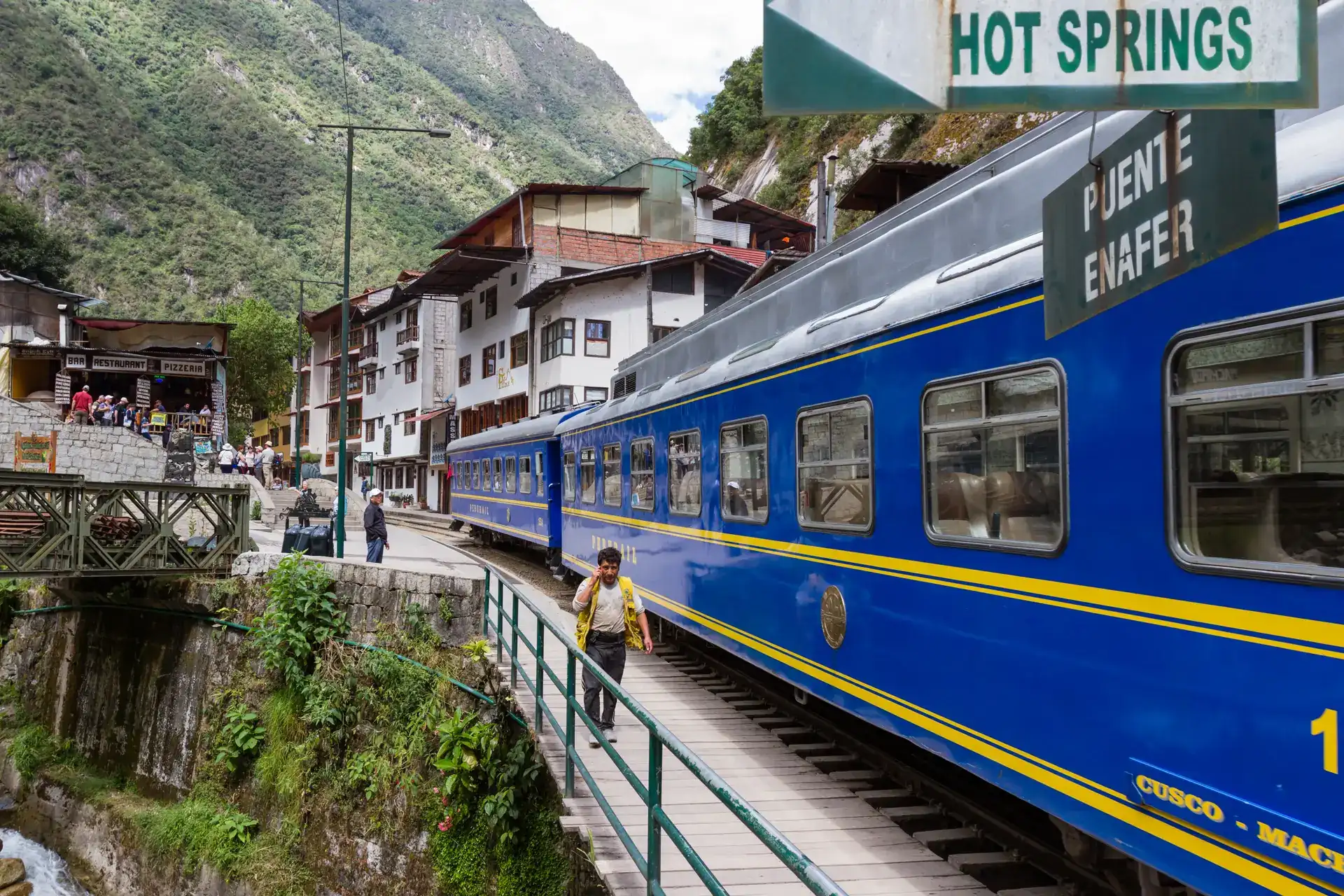
Two companies run trains to Aguas Calientes: PeruRail and Inca Rail. Both offer several service classes, from simple comfortable carriages to panoramic cars with roof windows and luxury services with meals. The difference is comfort, views and price — journey times are very similar.
Where does the train leave from?
- Ollantaytambo: the station with the most departures. Reach it by taxi, shared van or transfer from Cusco.
- Poroy (Cusco area): some services depart here, mainly in the dry season.
- Bimodal service: in the rainy season (roughly January to April) trains usually don't leave Cusco/Poroy; the rail company runs a bus to Ollantaytambo where you board the train on a single ticket.
Schedules and fares change with season and demand, so always check the official PeruRail and Inca Rail websites. In high season (June–August, holidays and Easter) the best departures sell out weeks ahead.
Option B: the Inca Trail
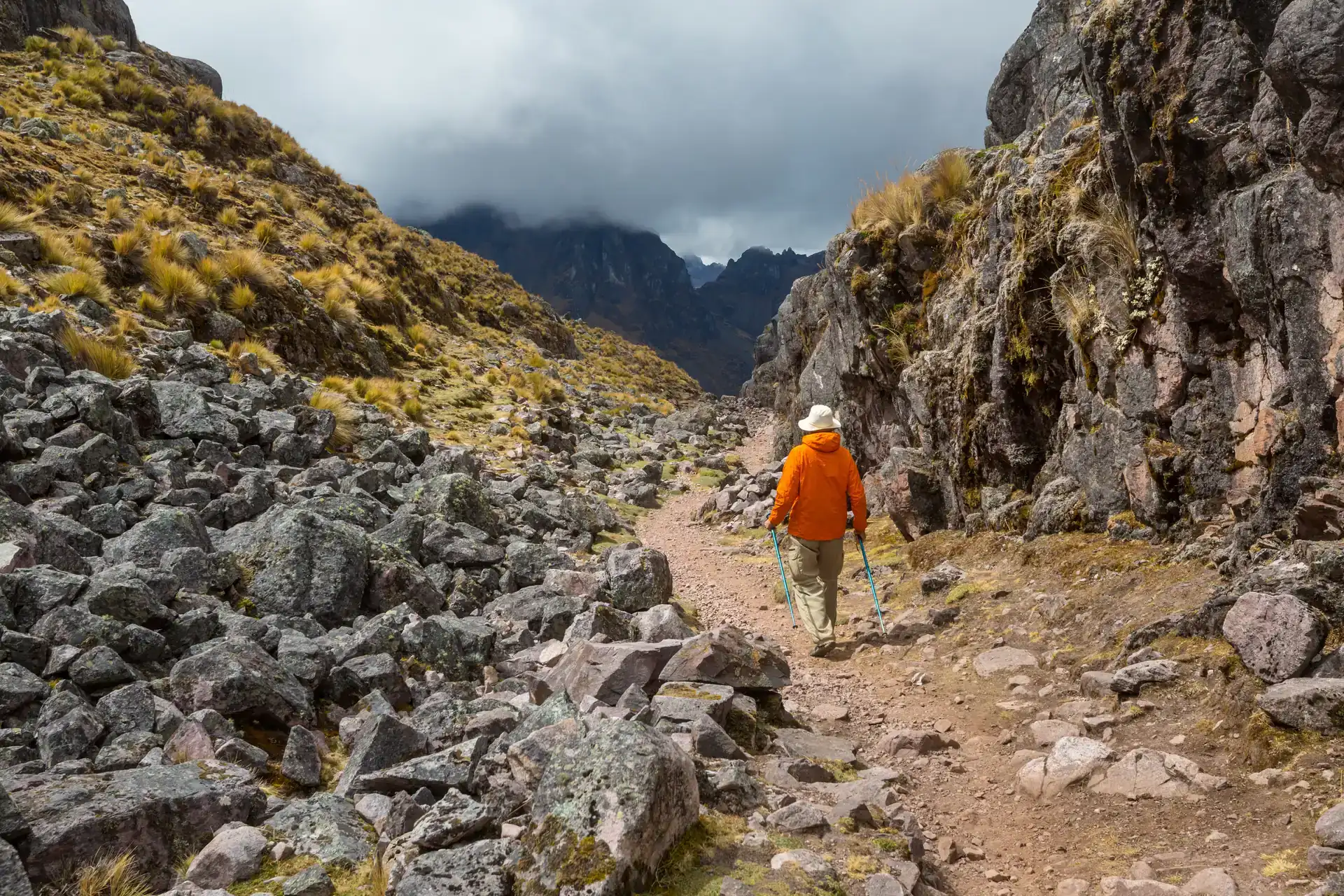
The classic Inca Trail takes 4 days and covers about 40 km, crossing passes above 4,000 m and several archaeological sites before entering Machu Picchu through the Sun Gate (Inti Punku). A short 2-day version starts near km 104 of the railway and includes Wiñay Wayna.
- It can only be done with a licensed tour operator — independent hiking isn't allowed.
- Permits are name-specific and limited; for May–September they often sell out months ahead.
- The trail closes every February for maintenance.
- Bring the passport the permit was issued with.
Heads up
The trail climbs above 4,200 m at Dead Woman's Pass. Only attempt it after several days of acclimatization in Cusco or the Sacred Valley.
Option C: the Hidroeléctrica route
This is the budget option. From Cusco you travel by bus or van on a mountain road via Santa María and Santa Teresa to the Hidroeléctrica power station — usually about 6–7 hours. From there it's a roughly 2.5–3 hour walk on a flat path beside the railway to Aguas Calientes. There's also a short train from Hidroeléctrica if you'd rather not walk.
- Pros: the cheapest option, with spectacular scenery.
- Cons: it takes almost a full day each way.
- The road is winding and narrow in places; use formal agencies and avoid night travel.
- In the rainy season landslides (huaicos) can block the road.
Tip
Always walk on the side path, never on the rails, and carry a torch if you'll arrive near dusk.
Other treks: Salkantay and Lares
If Inca Trail permits are gone, the Salkantay trek (usually 4–5 days, passing near Salkantay peak at about 4,600 m) and the Lares trek (3–4 days, with Andean villages and hot springs) are popular alternatives. They need no special permit, and most packages include the Machu Picchu visit.
From Aguas Calientes up to the citadel
You can take the bus up the zigzagging Hiram Bingham road, about 25–30 minutes, or walk a steep stone staircase that usually takes around 1.5 hours. Consettur's concession expired in September 2025, and in 2026 the service runs provisionally with two companies: Consettur (rebranding as Camino a la Maravilla) and San Antonio de Torontoy. Bus tickets are sold in town or online; check which company is selling them for your dates, and note that in high season queues start very early.
Tip
With an early entry time, sleeping in Aguas Calientes the night before saves you a brutal pre-dawn start.
Machu Picchu entry tickets
Tickets have a fixed entry time and are tied to a specific circuit inside the citadel; some include mountains such as Huayna Picchu or Machu Picchu Mountain. Daily capacity is limited and in high season tickets sell out weeks or months ahead.
- Buy in advance on the official Ministry of Culture site (tuboleto.cultura.pe) or through a tour.
- Bring your original passport — it must match the ticket.
- Be on time: late arrivals have little tolerance.
- Guide, backpack and circuit rules change often; check the current rules before you go.
Official sources
Final tips
- Book in this order: entry tickets → train → accommodation.
- Dress in layers: chilly mornings, strong midday sun.
- Insect repellent and sunscreen are essential.
- Carry some cash in soles for Aguas Calientes.
- Leave buffer time: trains and roads are sometimes delayed.
Book this plan
- Machu Picchu day trip from CuscoCompareSee dates →
- Sacred Valley and Machu Picchu in 2 daysCompareSee dates →
- Machu Picchu entry with a guided visitCompareSee dates →
Notice: This guide shares advice and recommendations based on research and local experience. Prices, opening hours and rules may change: always check with official sources and operators. Cusco Tips is not responsible for third-party services, bookings or decisions made using these guides; some links are affiliate links (see our affiliate policy).
Related guides
Things to do in Cusco: 30 essentials in the city and beyond
Things to do in Cusco: the city's essentials, Machu Picchu, the Sacred Valley, day trips, treks, food, markets and festivals, with 1- to 3-day plans.
Read guide →
Altitude sickness in Cusco: how to prevent it and what to do
Cusco sits at about 3,400 m. Altitude sickness symptoms, warning signs, how to acclimatize, coca tea, medication and when to do the highest day trips.
Read guide →
Sacred Valley of the Incas: what to see and how to visit
Sacred Valley guide: Pisac, Chinchero, Moray, the Maras salt pans and Ollantaytambo, tickets, how to visit (tour, independently or with a driver) and a 2-day plan.
Read guide →
How many days in Cusco + 3, 5 and 7-day itineraries
How many days do you need in Cusco? Short answer, key factors (altitude, Machu Picchu, treks) and day-by-day 3, 5 and 7-day itineraries.
Read guide →