
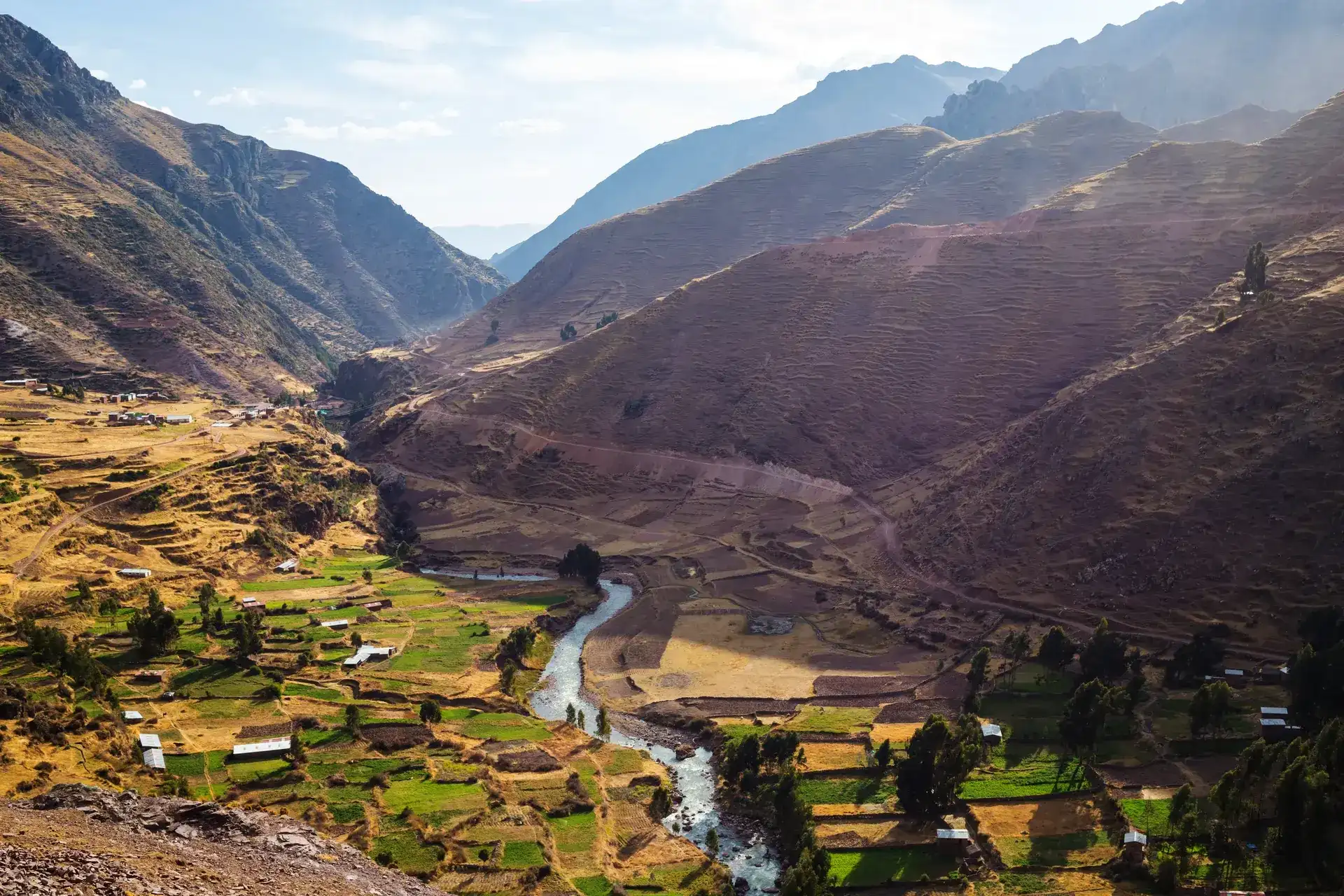
The Sacred Valley of the Incas is the stretch of the Urubamba River valley between Pisac and Ollantaytambo, 1–2 hours from Cusco. It packs Inca terraces, living villages, craft markets, the circular terraces of Moray and the Maras salt pans, and it sits about 500 m lower than Cusco, ideal for acclimatizing. This guide covers how to get there, tickets and approximate prices, the best time, 1- and 2-day itineraries and FAQs.
Start here: Cusco tips · things to do in Cusco
Sacred Valley overview
The valley floor is around 2,800–2,900 m (Urubamba about 2,870 m, Ollantaytambo about 2,790 m), roughly 500 m lower than Cusco (about 3,400 m). It's fertile, with corn fields, rivers and snowy peaks all around. Many travelers spend one or two nights here and then take the train to Machu Picchu from Ollantaytambo without going back to Cusco.
- Distances: Cusco–Pisac about 1 h; Cusco–Urubamba about 1–1.5 h (via Chinchero); Cusco–Ollantaytambo about 1.5–2 h.
- Altitude: valley floor about 2,800–2,900 m; Chinchero is higher, around 3,700 m.
- Tickets: most sites are on the Boleto Turístico del Cusco; Maras is paid separately.
Popular activities on GetYourGuide
What to see in the Sacred Valley
Pisac
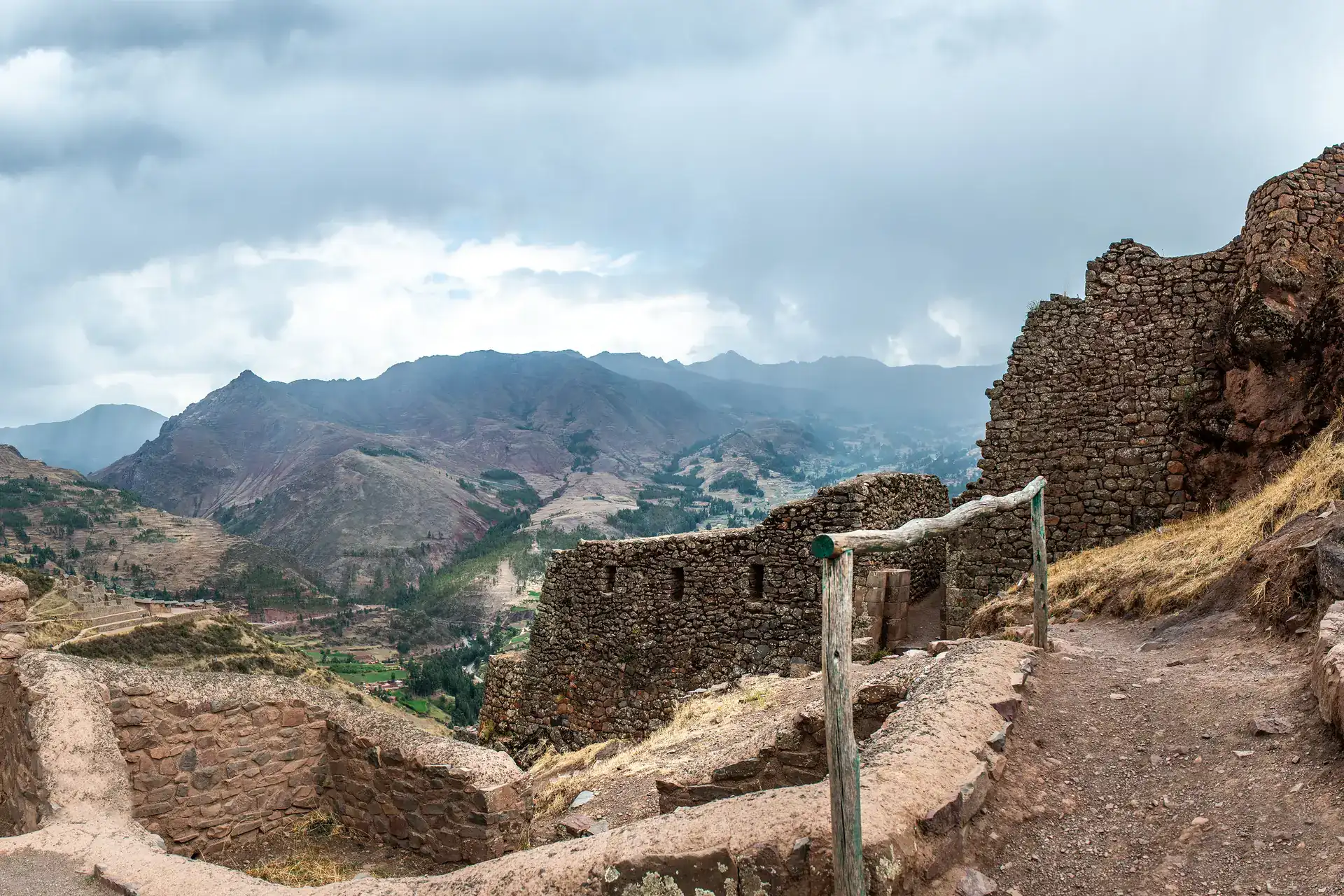
The Pisac ruins above town have some of the valley's most spectacular terraces, plus residential areas, temples and an ancient cliffside cemetery. Down in town is the well-known craft market: it runs daily, though Sunday is traditionally the liveliest day.
Chinchero
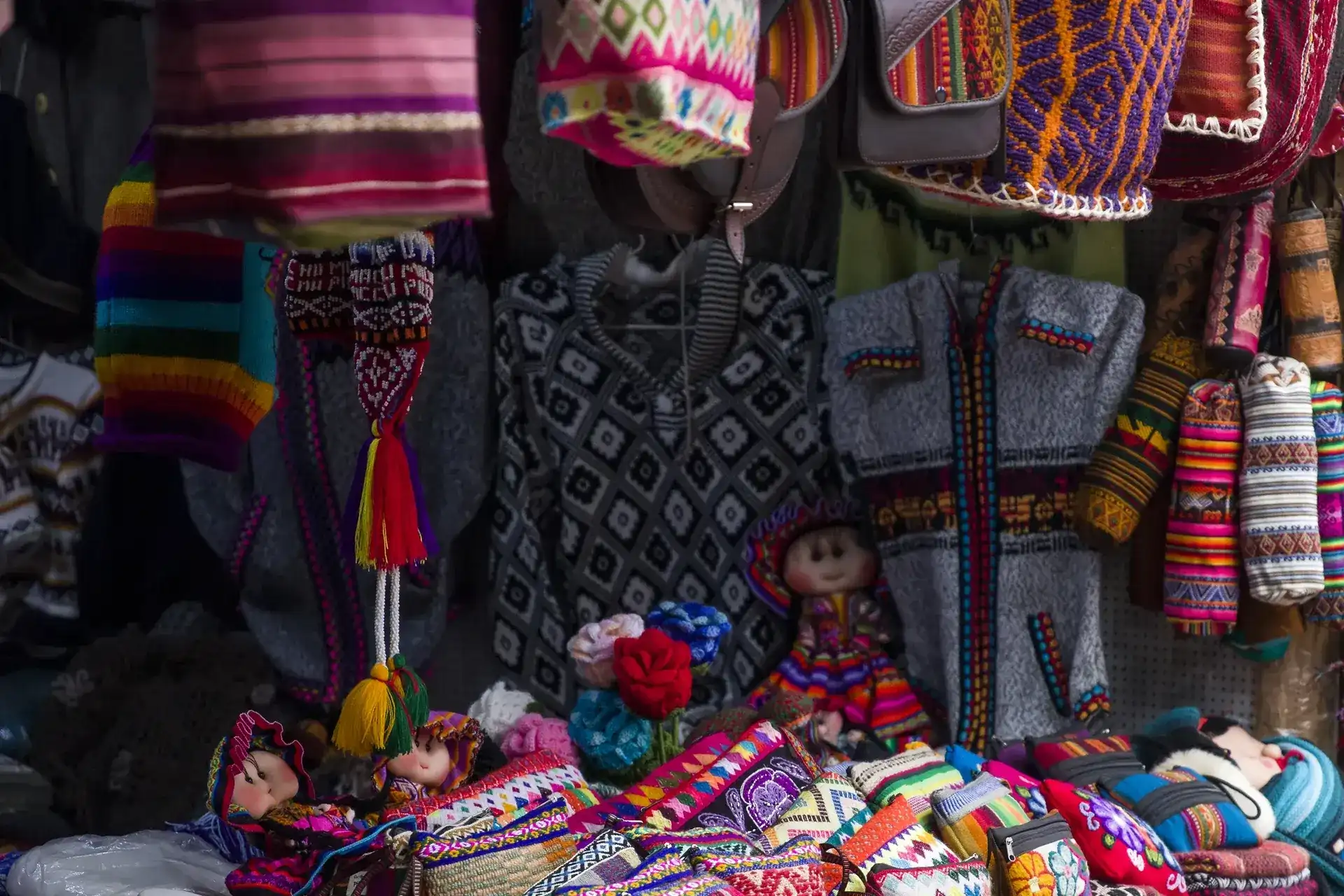
A higher village (about 3,700 m) with a colonial church built on Inca foundations and wide terraces. It's known for weaving cooperatives that show how wool is washed and dyed with natural dyes before being woven on the loom.
Moray
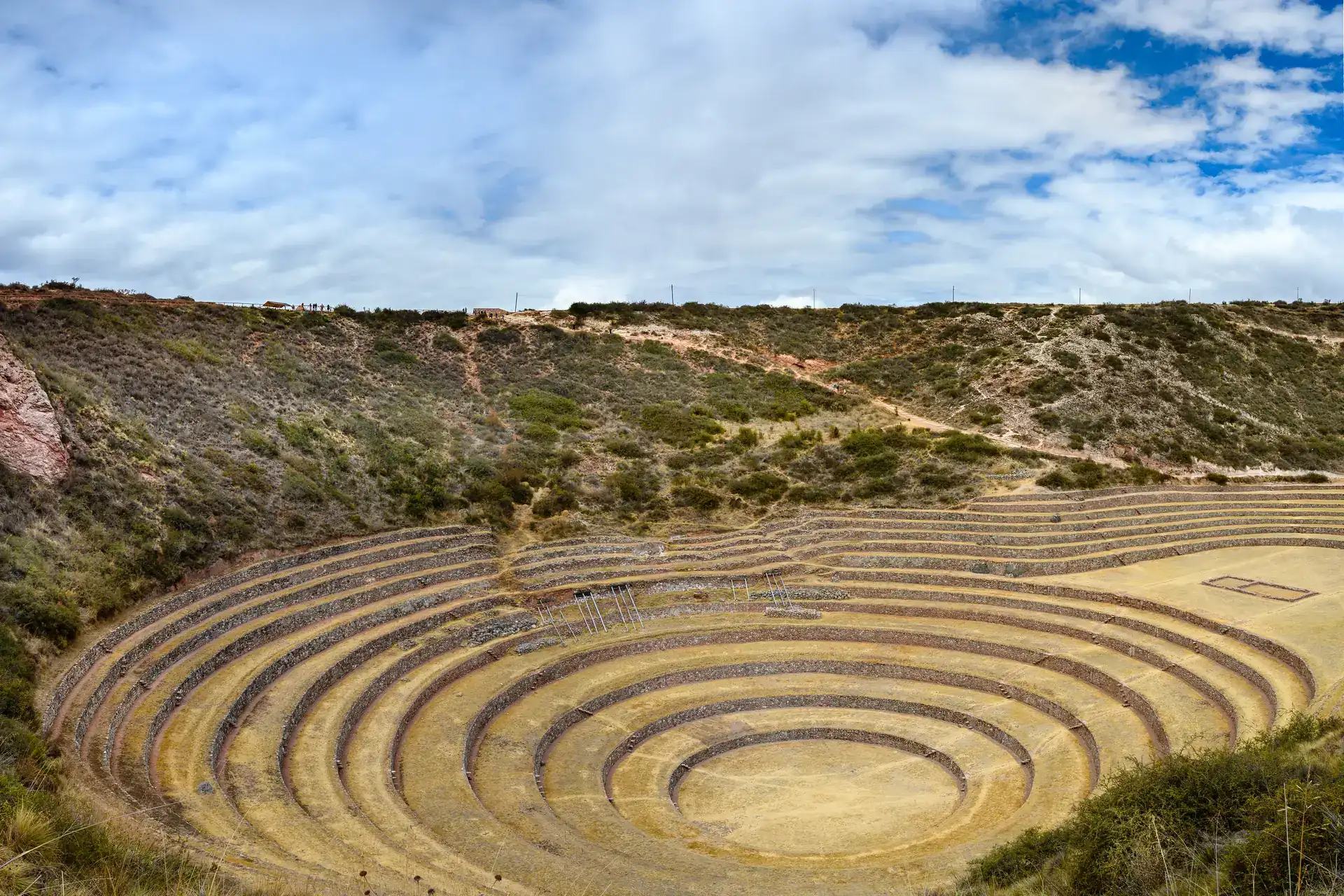
Concentric circular terraces that step down like an amphitheater. A popular theory is that the Incas used it for agricultural experiments, taking advantage of temperature differences between levels, though its exact purpose is still debated.
Maras salt pans
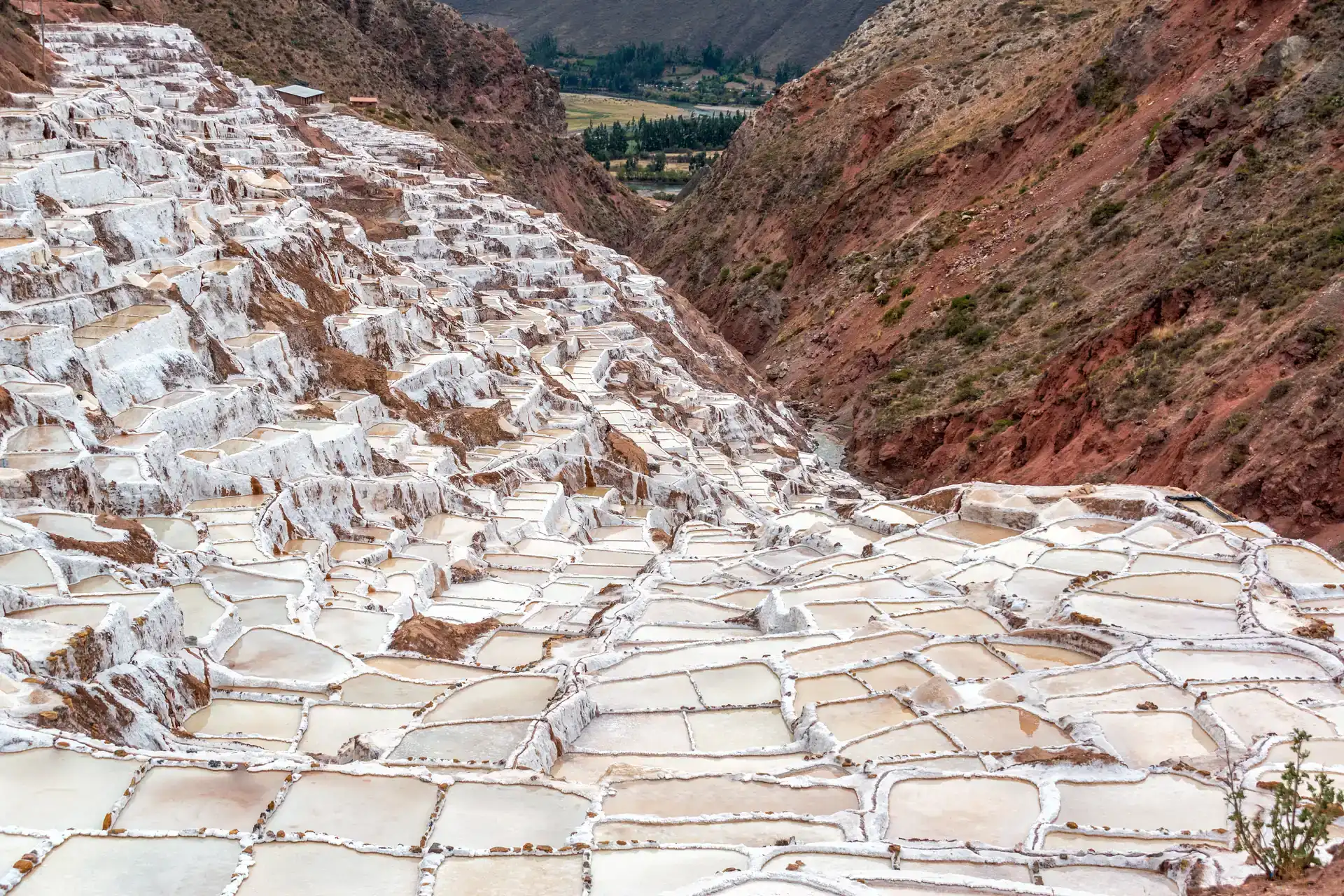
Thousands of terraced salt pools fed by a saline spring and worked by local families for centuries. Entry is paid separately (about S/20 for foreigners, cash) and isn't on the Boleto Turístico. Since 2019 visitors can't walk on the pools; you view them from paths and viewpoints.
Ollantaytambo
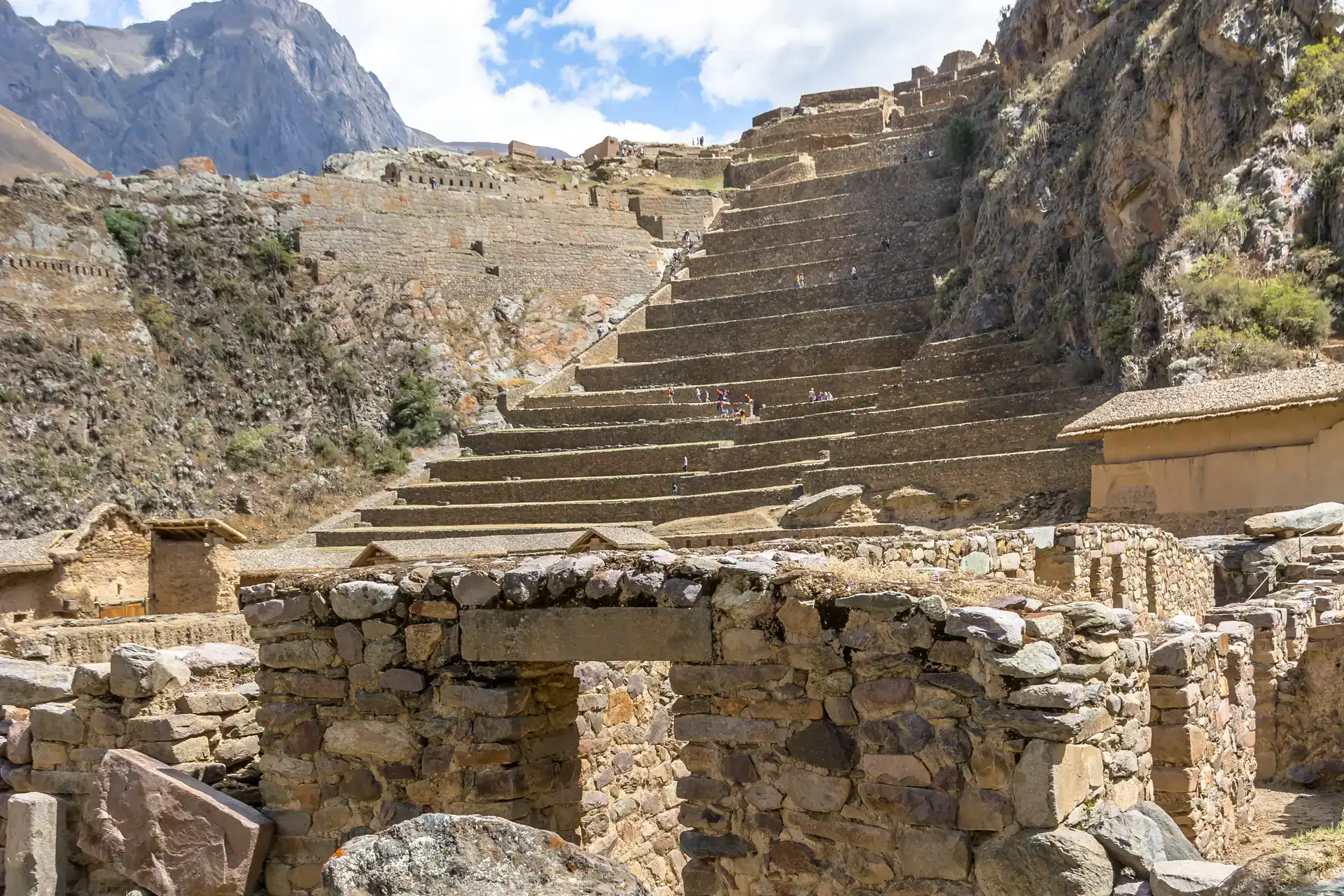
A living Inca town with its original street grid and water channels still in use. Above it rise the terraces and temple-fortress with huge stone blocks. It's also the main departure point for trains to Machu Picchu.
Also: Urubamba and Huchuy Qosqo
Urubamba is the valley's largest and most practical town, with plenty of places to stay. For keen walkers, the Huchuy Qosqo trek (usually 1–2 days) leads to little-visited ruins with great views.
- Pisac: Inca ruins, craft market and how to visit from Cusco
- Chinchero: weaving, Inca ruins and market between Cusco and the Sacred Valley
- Moray and the Maras salt mines: how to visit from Cusco or the Sacred Valley
- Ollantaytambo: ruins, a living Inca town, the Machu Picchu train and tips
- Urubamba: the central base of the Sacred Valley (things to do, getting there and where to stay)
How to get to the Sacred Valley from Cusco
- Colectivo (cheapest): shared vans that leave when full. Cusco–Pisac about S/5–8; Cusco–Urubamba about S/8–12; Cusco–Ollantaytambo about S/12–15 (approximate).
- Taxi or private driver: Cusco–Ollantaytambo about S/100–150 per car; agree the fare before you get in.
- Full-day tour: the simplest option if you're short on time.
- Train: trains to Aguas Calientes (Machu Picchu) leave from Ollantaytambo.
There's no regular public transport to Moray or Maras: get off at the Maras turnoff and continue by local taxi, or go on a tour.
- Cusco to the Sacred Valley and Ollantaytambo: colectivo, taxi, tour and train
- Private driver in Cusco and the Sacred Valley: when it's worth it and how to hire one
Tickets and approximate prices
| Ticket | Approximate price | Covers |
|---|---|---|
| Boleto Turístico (full) | about S/130 (10 days) | Pisac, Chinchero, Moray, Ollantaytambo and Cusco sites |
| Partial ticket, Circuit III | about S/70 (2 days) | Pisac, Chinchero, Moray, Ollantaytambo |
| Maras salt pans | about S/20 foreigners · S/15 Peruvians | Paid separately, cash |
| Full-day tour | about US$25–60 | Usually excludes tickets |
Approximate prices for foreign adults; they can change. Pisac, Chinchero, Moray and Ollantaytambo generally don't sell single-site tickets. See our Boleto Turístico guide to pick the right one.
Heads up
Many Sacred Valley tours don't include the Boleto Turístico or the Maras entrance. Ask before booking and carry cash in soles.
Tour, driver or independent?
- Full-day tour: usually Pisac, Ollantaytambo and Chinchero (Maras and Moray sometimes a separate tour). Easy, but little time at each site.
- Independent: colectivos and taxis link the towns; works best if you sleep a night or two in the valley.
- Private driver: pricier but flexible and comfortable for families or groups.
Best time to visit
May to September (dry season) brings more sunny days, ideal for ruins and photos; it's also the busiest season. December to March is wetter, but the valley is very green and quieter. Any time of year, start early: Pisac and Ollantaytambo fill up by mid-morning.
Altitude and acclimatization
Because it's lower than Cusco, the valley is a good place for your first nights. Chinchero and Moray are higher, though: walk slowly, drink water and avoid alcohol for the first days.
1- and 2-day itineraries
Sacred Valley in 1 day
- Early start from Cusco → Pisac (ruins and market).
- Lunch in Urubamba.
- Ollantaytambo in the afternoon (ruins and town).
- Back to Cusco via Chinchero.
Sacred Valley in 2 days
- Day 1: Cusco → Pisac (early ruins and market) → lunch in the valley → night in Urubamba.
- Day 2: Chinchero (weavers) → Moray → Maras salt pans → Ollantaytambo in the afternoon → night in Ollantaytambo or train to Aguas Calientes.
Tip
The classic plan: 1–2 nights in the valley (e.g. Urubamba or Ollantaytambo), then the train from Ollantaytambo to Machu Picchu. You save time and acclimatize better.
- Where to stay in the Sacred Valley: Pisac, Urubamba, Ollantaytambo and more
- Where to stay in Pisac: areas, atmosphere and who it suits
- Where to stay in Ollantaytambo: areas, pros and when it makes sense
- Glamping in the Sacred Valley: hanging pods, tents and domes with a view
Maps
Official sources
Practical tips
- Carry cash; outside the bigger towns cards aren't always accepted.
- The sun is strong even when it's cool: hat, sunglasses and sunscreen.
- Pisac and Ollantaytambo terraces have lots of steps and little shade.
- Respect communities: ask before photographing people.
- Buy textiles from cooperatives, where the money goes straight to the weavers.
Sacred Valley FAQ
Frequently asked questions
- How many days do I need for the Sacred Valley?
- One day on a tour covers the highlights; two days let you add Moray, Maras and Chinchero without rushing, ideally sleeping in the valley.
- What ticket do I need for the Sacred Valley?
- Pisac, Chinchero, Moray and Ollantaytambo are on the Boleto Turístico del Cusco (full ticket about S/130 or partial Circuit III about S/70). The Maras salt pans are paid separately, about S/20 for foreigners.
- How do I get from Cusco to the Sacred Valley on my own?
- By colectivo: to Pisac for about S/5–8 and to Urubamba or Ollantaytambo for about S/8–15 (approximate). Taxis and private drivers are also available.
- Is it better to stay in the Sacred Valley or Cusco?
- Many travelers spend their first nights in the valley: it's lower, helps acclimatization and is close to the Machu Picchu train in Ollantaytambo.
- When is the best time to visit the Sacred Valley?
- May to September has more sun and less rain. In the rainy season the valley is greener and quieter.
- Can I combine the Sacred Valley with Machu Picchu?
- Yes: it's very common to end in Ollantaytambo and take the train to Aguas Calientes to visit Machu Picchu the next day.
- Can you walk on the Maras salt pans?
- No. Since 2019 visits are from paths and viewpoints to protect the pools.
Book this plan
- Sacred Valley tourCompareSee dates →
- Sacred Valley and Machu Picchu in 2 daysCompareSee dates →
- Maras and MorayCompareSee dates →
Notice: This guide shares advice and recommendations based on research and local experience. Prices, opening hours and rules may change: always check with official sources and operators. Cusco Tips is not responsible for third-party services, bookings or decisions made using these guides; some links are affiliate links (see our affiliate policy).
Related guides
Things to do in Cusco: 30 essentials in the city and beyond
Things to do in Cusco: the city's essentials, Machu Picchu, the Sacred Valley, day trips, treks, food, markets and festivals, with 1- to 3-day plans.
Read guide →
How to get to Machu Picchu: train, Inca Trail or Hidroeléctrica
Every way to reach Machu Picchu from Cusco: PeruRail and Inca Rail trains, the Inca Trail, the Hidroeléctrica route, buses to the citadel and tickets.
Read guide →
Cusco Tourist Ticket (Boleto Turístico): what's included and is it worth it
Guide to the Cusco Tourist Ticket (COSITUC): full and partial tickets, sites in each circuit, what it does NOT include, where to buy it and how to use it.
Read guide →
Altitude sickness in Cusco: how to prevent it and what to do
Cusco sits at about 3,400 m. Altitude sickness symptoms, warning signs, how to acclimatize, coca tea, medication and when to do the highest day trips.
Read guide →