
Which trek to Machu Picchu? Inca Trail vs Salkantay vs Inca Jungle vs Lares
Updated:
Walking to Machu Picchu is one of the great experiences of a trip to Peru, but there are several routes and they are very different. The Inca Trail is the only one that enters the citadel through the Sun Gate, but it needs permits that sell out months ahead; Salkantay offers glaciers and needs no permit; the Inca Jungle mixes biking and adventure at a good price; and Lares focuses on Andean communities. This guide compares days, distance, altitude, difficulty and booking so you can choose the trek that fits your trip.
Start here: Cusco tips · things to do in Cusco
Quick comparison
- Classic Inca Trail: 4 days, about 42 km, highest point 4,215 m (Dead Woman's Pass). Permit and agency required. Moderate to hard.
- Short Inca Trail: 1 day (or 2 with a night in Aguas Calientes), about 12 km, up to about 2,700 m. Permit required. Moderate.
- Salkantay: 4–5 days, about 70 km, pass at about 4,600 m. No permit. Hard.
- Inca Jungle: 3–4 days, with a bike descent from about 4,300 m and hiking in the high jungle. No permit. Moderate.
- Lares: 3–4 days, passes of 4,400–4,700 m depending on the variant. No permit. Moderate to hard.
Machu Picchu entry is separate
Except on the Inca Trail, whose permit includes entry, on the other treks you need a Machu Picchu ticket for the last day. Check that your agency includes it or buy it early.
- Machu Picchu tickets: how to buy them on the official site and not miss out
- Machu Picchu circuits explained: which to choose (1, 2 or 3) and what you see
Popular activities on GetYourGuide
Classic Inca Trail: the most iconic
This is the original Inca route: about 42 km from km 82 of the railway to Machu Picchu, past archaeological sites you can only see on foot, such as Runkurakay, Sayacmarca, Phuyupatamarca and Wiñay Wayna. On day two you cross Dead Woman's Pass (Warmiwañusca) at 4,215 m, the hardest stretch. On day four you arrive at dawn through the Sun Gate (Inti Punku).
- Pros: the most special arrival at Machu Picchu and the route with the most history.
- Cons: limited permits, only with a licensed agency, and the highest price.
- Booking: May–August spots usually sell out 4–6 months ahead. The trail closes every February for maintenance.
- Inca Trail to Machu Picchu: permits, when to book, the 4-day route and the short version
- Inti Punku, Machu Picchu's Sun Gate: route 1-C, the hike and tips
Short Inca Trail: the one-day version
It starts at km 104 of the railway and climbs about 12 km past Wiñay Wayna to the Sun Gate. It is ideal if you are short on time or don't want to camp, and it also requires a permit, though it can be booked a little later. In some years it closes temporarily for conservation work, so check it is open on your dates.
Salkantay: high-mountain scenery without a permit
The route circles snow-capped Salkantay (6,271 m) and usually includes Humantay Lake on day one. On day two you cross the Salkantay Pass at about 4,600 m, then descend to the high jungle, coffee farms and Santa Teresa before reaching Aguas Calientes. It is the most popular alternative to the Inca Trail and the best choice if scenery is your priority.
- Pros: no permit, spectacular landscapes and options for every budget.
- Cons: the pass is very high and cold; you must be well acclimatised.
- Salkantay Trek to Machu Picchu: route, difficulty, best season and how to plan it
- Rainbow Mountain or Humantay Lake? A comparison to choose your day trip
Inca Jungle: adventure on a budget
It combines sports: on day one you cycle down from Abra Málaga, at about 4,300 m, towards the jungle; then come optional rafting, ziplining in Santa Teresa, the Cocalmayo hot springs and a walk along the railway to Aguas Calientes. It includes a quiet stretch of Inca path.
- Pros: usually the cheapest, less demanding in altitude and great fun.
- Cons: less pure hiking; part of the route is on roads.
- Inca Jungle Trek: biking, rafting, ziplining and hiking to Machu Picchu
- Machu Picchu via Hidroeléctrica and Santa Teresa: the budget route step by step
Lares: the cultural trek
It crosses valleys with Quechua communities who live from herding llamas and alpacas and from weaving, with lakes and high passes. Many itineraries start at the Lares hot springs and end in Ollantaytambo, where you take the train to Aguas Calientes. It is peaceful and uncrowded.
- Pros: contact with local communities, few groups, no permit.
- Cons: fewer ruins along the way; you reach Machu Picchu by train, not on foot.
- Lares Trek to Machu Picchu: route, difficulty, communities and comparison
- Andean textiles in Cusco: weaving workshops, weaving communities and buying well
Which one to choose
- If you want the classic experience and can book months ahead: the 4-day Inca Trail.
- If you are short on time: the Short Inca Trail.
- If you couldn't get a permit or love mountains: Salkantay.
- If you are on a tight budget or want adventure: Inca Jungle.
- If you care about Andean culture and avoiding crowds: Lares.
- If you want a long, remote challenge: Choquequirao, which can be linked to Machu Picchu on an 8–9 day route.
- Choquequirao trek: Machu Picchu's remote "sister" (route, difficulty and tips)
- How to choose a tour agency in Cusco: a checklist to get it right
Acclimatisation and preparation
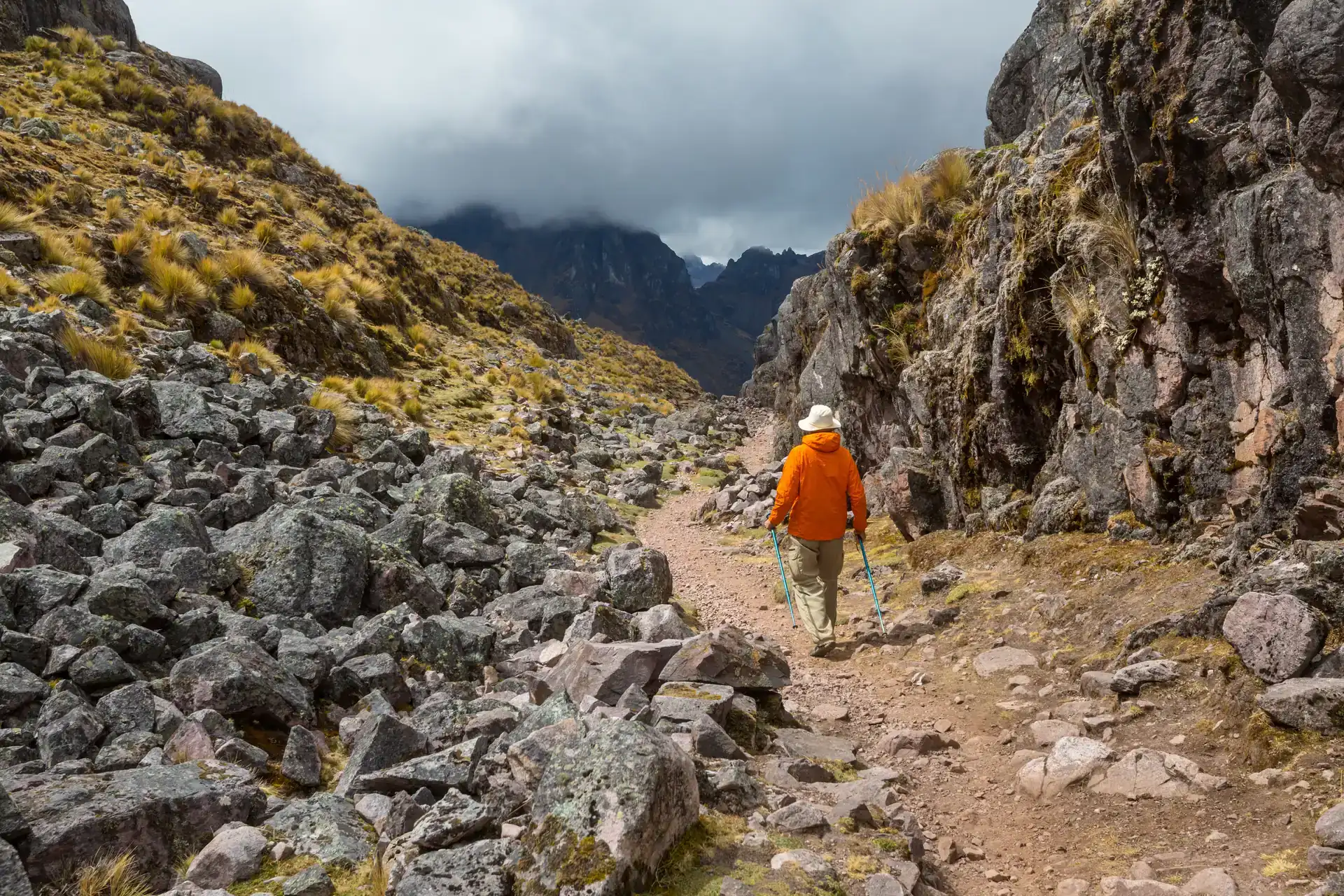
All these treks go above 3,000 m at some point. Spend at least two or three days in Cusco or the Sacred Valley before starting, walk around the city to get in shape and drink plenty of water. Bring broken-in boots, layers, a rain jacket and trekking poles. Many agencies rent sleeping bags and poles if you don't want to carry your own.
- Altitude sickness in Cusco: how to prevent it and what to do
- Trekking gear rental and shops in Cusco: what to rent, what to bring and tips
- What to pack for Cusco and Machu Picchu: a packing list by season
Best time
The dry season, May to September, is best for all the treks: clear skies, but very cold nights at the high camps. From November to March it rains often and trails get muddy; the Inca Trail closes in February. April and October are good shoulder months with fewer people.
- Cusco weather by month: temperatures, rain and what to expect
- Rainy season in Cusco and Machu Picchu: what to expect and how to make the most of it
Frequently asked questions
- What is the easiest trek to Machu Picchu?
- The one-day Short Inca Trail, followed by the Inca Jungle, which is lower and partly done by bike.
- Which treks don't need a permit?
- Salkantay, Inca Jungle and Lares need no permit; only the Inca Trail (classic and short) requires one.
- How far ahead should I book the Inca Trail?
- For May–August, 4–6 months ahead; for other months, at least 2–3 months.
- Which trek goes highest?
- Lares and Salkantay, with passes of 4,400–4,700 m depending on the variant.
Book this plan
- Inca Trail to Machu PicchuCompareSee dates →
- Salkantay trekCompareSee dates →
- Inca Jungle trek to Machu PicchuCompareSee dates →
Notice: This guide shares advice and recommendations based on research and local experience. Prices, opening hours and rules may change: always check with official sources and operators. Cusco Tips is not responsible for third-party services, bookings or decisions made using these guides; some links are affiliate links (see our affiliate policy).
Related guides
Inca Trail to Machu Picchu: permits, when to book, the 4-day route and the short version
How to get Inca Trail permits: limited spaces, licensed operators only, when to book, the February closure, the classic 4-day route, the 2-day version and what to pack.
Read guide →
Salkantay Trek to Machu Picchu: route, difficulty, best season and how to plan it
Salkantay Trek guide: 4–5 day route over a pass of about 4,600 m, Humantay Lake, cloud forest, arrival in Aguas Calientes, difficulty, best season and agency vs independent.
Read guide →
Inca Jungle Trek: biking, rafting, ziplining and hiking to Machu Picchu
Inca Jungle guide: 3–4 day route with a bike descent from Abra Málaga, optional rafting and zipline, a hike to Santa Teresa, hot springs and arrival in Aguas Calientes.
Read guide →
Lares Trek to Machu Picchu: route, difficulty, communities and comparison
Lares trek guide: a 3–4 day route through weaving communities, hot springs, altitude and difficulty, best season, how it links to Machu Picchu and how it compares with Salkantay and the Inca Trail.
Read guide →
Short Inca Trail (2 days): the route from km 104, permits and what to expect
Short Inca Trail guide: the one-day hike from km 104 via Chachabamba and Wiñay Wayna to the Sun Gate, permits, difficulty, season, inclusions and differences from the classic trail.
Read guide →