
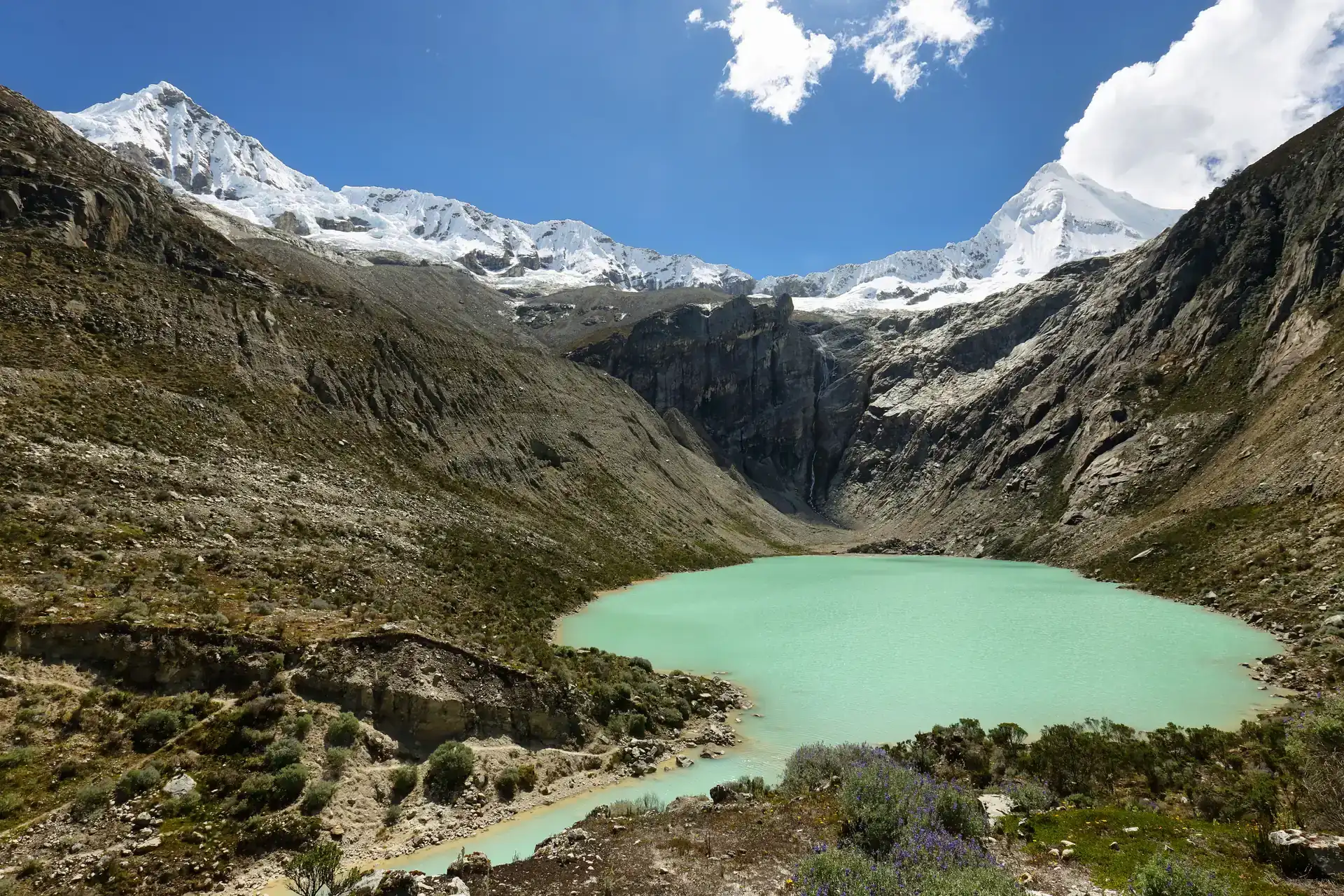
Humantay Lake is a glacial lake of almost unreal turquoise, tucked beneath the peak of the same name. It's one of the most popular day trips from Cusco and, together with Rainbow Mountain, the big altitude test of most trips. Here's how to get there, what the climb is like and how to prepare.
Start here: Cusco tips · things to do in Cusco
What and where it is
The lake sits at roughly 4,200 m in the Vilcabamba range, near the village of Mollepata and the Soraypampa camp, right where the Salkantay route begins. Its colour comes from glacial meltwater and the fine sediment suspended in it.
For local communities, Humantay peak is an apu, a sacred mountain, and the lake is a sacred place too. Swimming isn't appropriate or allowed: enjoy it from the shore, respectfully, and quietly if you see offerings or ceremonies.
Popular activities on GetYourGuide
Getting there
On a full-day tour
The easiest option and what most people choose. Pick-up is usually around 4–5 am; the drive takes roughly 3 hours each way via Mollepata to the trailhead at Soraypampa (around 3,900 m). Breakfast and lunch are usually included, and you're back in Cusco by late afternoon.
Independently
Take a shared colectivo from Cusco to Mollepata, then a taxi or local transport to Soraypampa. It's cheaper, but timing the climb and the return on the same day is tricky, especially coming back. If you go on your own, consider staying overnight at Soraypampa.
The hike
From Soraypampa it's about 3 km one way with roughly 400 m of elevation gain. The climb usually takes 1–1.5 hours (sometimes up to 2) and a bit less on the way down. It's short but steep, especially the final stretch, and the altitude makes it much harder than it looks on paper.
- Horses: can be hired for part of the way up; the last section is on foot.
- Entry: a community fee is payable in cash. The amount changes; confirm beforehand.
- Time at the lake: tours usually allow 30–60 minutes at the top.
Tip
For a wider view there's a slightly higher viewpoint beside the lake. Only go up if you feel fine.
Altitude
Heads up
Do Humantay after at least 2–3 days acclimatizing in Cusco or the Sacred Valley. If you get a severe headache, confusion, vomiting or breathlessness at rest, descend immediately.
Many travellers do Humantay before Rainbow Mountain because it's a little lower and the hike is shorter — a good altitude 'rehearsal'. Read our altitude sickness guide before you go.
Best time to go
The dry season (roughly May–September) brings the clearest skies and the most vivid colour. The rainy season means more cloud, mud and sometimes a hidden peak. Year-round, early mornings can be freezing and the midday sun intense.
What to bring
- Layers and a waterproof, windproof jacket.
- Hat and gloves for the early start.
- High-factor sunscreen and sunglasses.
- Water and snacks.
- Cash for the entry fee, horse and toilets.
- Trekking poles — very handy on the way down.
How to combine it
Humantay is the first stop of the Salkantay trek, a 4–5 day route ending in Aguas Calientes and Machu Picchu, and a popular alternative when Inca Trail permits are gone. See our guide to getting to Machu Picchu.
Another option is spending a night at Soraypampa, where there are campsites and even glamping domes. That lets you visit the lake at a calmer time, before or after the day-tour groups.
Final tips
- Climb slowly with breaks; don't get pulled along by the group's pace.
- Respect the lake: no swimming, no litter, and don't disturb the apachetas (stone cairns).
- Bring something to sit on; the ground by the lake is usually cold and damp.
- Eat a light dinner and go to bed early the night before.
Book this plan
- Humantay LakeCompareSee dates →
- Rainbow Mountain (Vinicunca)CompareSee dates →
Notice: This guide shares advice and recommendations based on research and local experience. Prices, opening hours and rules may change: always check with official sources and operators. Cusco Tips is not responsible for third-party services, bookings or decisions made using these guides; some links are affiliate links (see our affiliate policy).
Related guides

Altitude sickness in Cusco: how to prevent it and what to do
Cusco sits at about 3,400 m. Altitude sickness symptoms, warning signs, how to acclimatize, coca tea, medication and when to do the highest day trips.
Read guide →
Rainbow Mountain (Vinicunca): a practical guide to visiting
How to visit Rainbow Mountain from Cusco: tours, the hike, altitude (~5,000 m), horses, Red Valley, Palccoyo, best season and what to pack.
Read guide →
How to get to Machu Picchu: train, Inca Trail or Hidroeléctrica
Every way to reach Machu Picchu from Cusco: PeruRail and Inca Rail trains, the Inca Trail, the Hidroeléctrica route, buses to the citadel and tickets.
Read guide →