
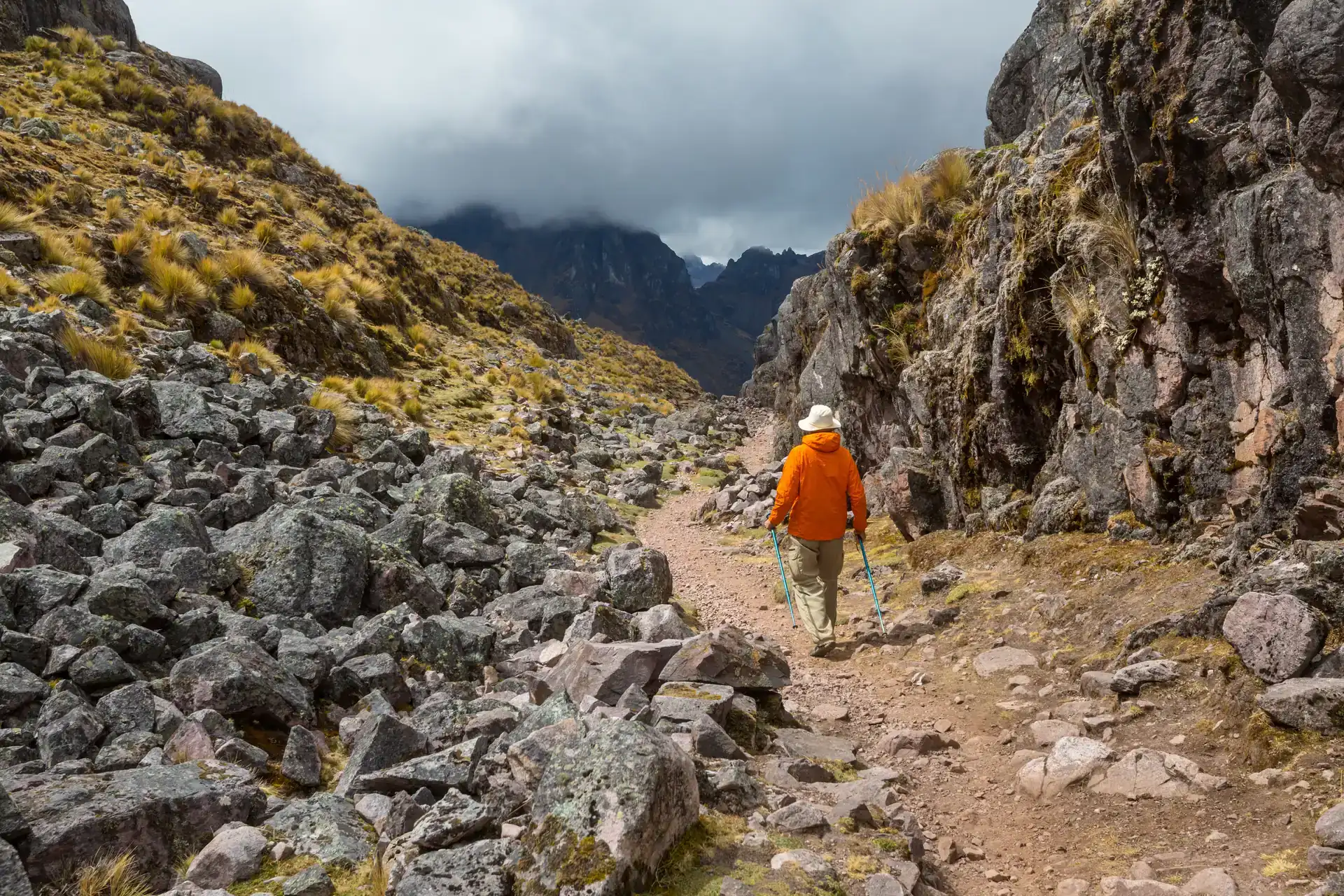
Inca Trail to Machu Picchu: permits, when to book, the 4-day route and the short version
Updated:
The classic Inca Trail is South America's most famous hike: around 42 km of original stone paths and stairways over mountain passes, through cloud forest and past a string of archaeological sites before reaching Machu Picchu through the Sun Gate. But you can't do it independently or on a whim: access is regulated by limited daily permits that sell out months ahead. This guide explains how the system works and how to plan for it.
Start here: Cusco tips · things to do in Cusco
How permits work
- Access to the Inca Trail network in the Machu Picchu Sanctuary is regulated by Peru's Ministry of Culture, with a limited daily quota of people that includes porters, cooks and guides, not just trekkers.
- Permits are only issued through licensed tour operators with an official guide. There are no independent permits to hike without an agency.
- Each permit is in your name with your passport number and can't be transferred or easily changed. Travel with the same passport you booked with.
- The Inca Trail permit includes Machu Picchu entry on arrival day. Climbing Huayna Picchu or another mountain usually needs an extra booking, subject to availability.
Beware last-minute offers
If an agency offers the classic Inca Trail a few days out in high season, ask for the permit in your name. Real spaces sell out; sometimes what's sold is a different route.
Popular activities on GetYourGuide
When to book
Permits for each year usually go on sale at the start of the year or late in the previous one. High-season dates (May to September, especially June to August) sell out fast, often 4–6 months ahead or more. In the rainy season (November to March) there's more availability but more mud and cloud.
- Fix your Inca Trail dates first and build the rest of the trip around them.
- Allow at least 2 days in Cusco or the Sacred Valley before starting to acclimatise.
- Ask the agency to confirm the permit in your name once issued.
February: closed
The whole Inca Trail network, both the classic 4-day route and the 2-day short trail from km 104, closes every February for maintenance and reopens on 1 March. Machu Picchu stays open that month.
- Best time to visit Cusco and what to pack
- Cusco weather by month: temperatures, rain and what to expect
The classic 4-day route
The classic route starts at Kilometre 82 (Piskacucho) on the Urubamba River, about 2–3 hours from Cusco by road. Broadly:
- Day 1: a fairly gentle stretch along the river, with the Llactapata (Patallacta) site in view. First night camping.
- Day 2: the hardest day. Climb to Warmiwañusca ("Dead Woman's Pass") at about 4,215 m, then a steep descent to camp.
- Day 3: the longest and perhaps most beautiful day, with two more passes and the sites of Runkurakay, Sayacmarca, Phuyupatamarca and Wiñay Wayna.
- Day 4: a pre-dawn start to reach Inti Punku (the Sun Gate) and see Machu Picchu from above; guided visit and bus down to Aguas Calientes.
- Machu Picchu circuits explained: which to choose (1, 2 or 3) and what you see
- Aguas Calientes (Machu Picchu Town): getting there, things to do and where to stay
The short Inca Trail (2 days)
If you can't get a classic permit or don't want to camp, there's the short Inca Trail: it starts at Kilometre 104, climbs to Wiñay Wayna and reaches the Sun Gate in about 6–7 hours of hiking; you sleep in a hotel in Aguas Calientes and visit Machu Picchu the next day. It also needs a permit and a licensed agency, but usually has a bit more availability.
Difficulty and preparation
- It's demanding but doable for reasonably fit people: the hard parts are the altitude and the stairs, not technique.
- Train with long walks and stairs in the weeks before.
- Acclimatise first: don't start the day after arriving in Cusco.
- Porters carry the camping gear; you carry a daypack. Many agencies offer an extra porter for personal gear.
- Altitude sickness in Cusco: how to prevent it and what to do
- Trekking gear rental and shops in Cusco: what to rent, what to bring and tips
What to pack
- Original passport (checked at control points).
- Broken-in hiking boots, poles (with rubber tips), warm layers and a waterproof jacket.
- A sleeping bag rated for sub-zero nights at high camps (can be rented).
- Sunscreen, insect repellent, head torch, personal first-aid kit and some cash for tips.
Choosing an agency
The price includes permits, guide, porters, meals, camping and the return train; it varies with group size and service. Cheaper isn't always better: ask about porter welfare, group size, included equipment and the cancellation policy.
Frequently asked questions
- Can I hike the Inca Trail without an agency?
- No. Permits are only issued through licensed operators with an official guide.
- How far ahead should I book?
- For May–September, ideally 4–6 months or more. The rainy season gives more leeway.
- Is it open in February?
- No. Both the classic Inca Trail and the 2-day short trail close in February and reopen on 1 March. Machu Picchu stays open.
Official sources
Book this plan
- Inca Trail to Machu PicchuCompareSee dates →
- Short Inca Trail (2 days)CompareSee dates →
Notice: This guide shares advice and recommendations based on research and local experience. Prices, opening hours and rules may change: always check with official sources and operators. Cusco Tips is not responsible for third-party services, bookings or decisions made using these guides; some links are affiliate links (see our affiliate policy).
Related guides
Things to do in Cusco: 30 essentials in the city and beyond
Things to do in Cusco: the city's essentials, Machu Picchu, the Sacred Valley, day trips, treks, food, markets and festivals, with 1- to 3-day plans.
Read guide →
Short Inca Trail (2 days): the route from km 104, permits and what to expect
Short Inca Trail guide: the one-day hike from km 104 via Chachabamba and Wiñay Wayna to the Sun Gate, permits, difficulty, season, inclusions and differences from the classic trail.
Read guide →
Salkantay Trek to Machu Picchu: route, difficulty, best season and how to plan it
Salkantay Trek guide: 4–5 day route over a pass of about 4,600 m, Humantay Lake, cloud forest, arrival in Aguas Calientes, difficulty, best season and agency vs independent.
Read guide →
How to choose a tour agency in Cusco: a checklist to get it right
What to check before booking a tour in Cusco: licence, what's included, group size, guide, porter welfare, cancellation, payment and booking online vs on the street.
Read guide →
Machu Picchu tickets: how to buy them on the official site and not miss out
Where to buy official Machu Picchu tickets, how far ahead, approximate prices, entry time slots, in-person tickets in Aguas Calientes and common mistakes.
Read guide →