
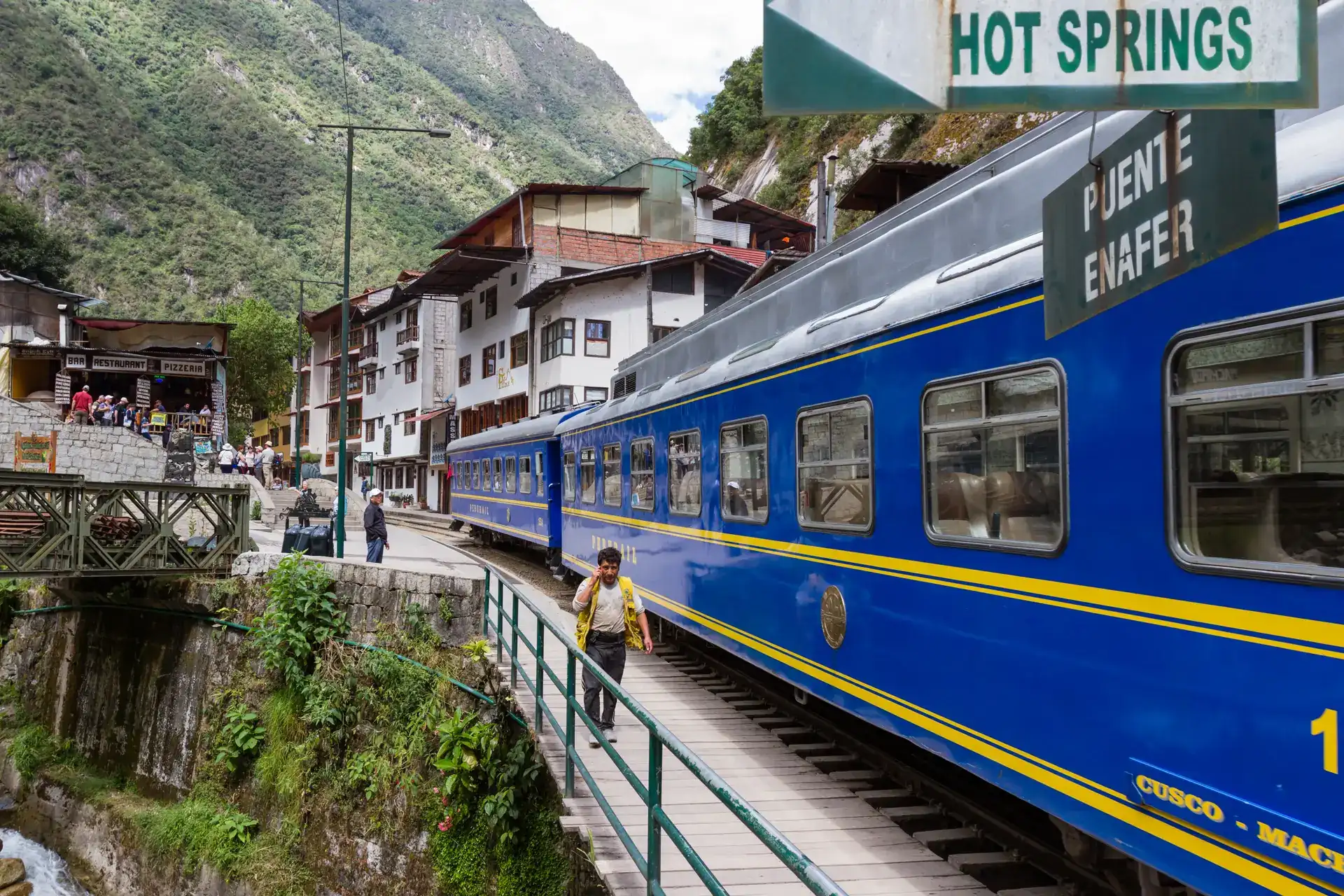
Aguas Calientes (Machu Picchu Town): getting there, things to do and where to stay
Updated:
Aguas Calientes, officially Machu Picchu Pueblo, is the town at the foot of Machu Picchu. Squeezed between mountains and the Urubamba River at about 2,000 m, it has no road link to Cusco: you arrive by train or on foot. Almost every traveller passes through, for a few hours or a night. This guide covers getting there, getting up to the citadel and making the most of the town.
Start here: Cusco tips · things to do in Cusco
How to get to Aguas Calientes
- By train: the most common option. Trains run from the Cusco area (Poroy station or bus + train combos) and, above all, from Ollantaytambo in the Sacred Valley. From Ollantaytambo the ride takes around 1.5–2 hours.
- Walking from Hidroeléctrica: the budget route. Take a bus or shared van to the hydroelectric plant (via Santa Teresa), then walk about 10 km along the railway, roughly 2.5–3 hours on mostly flat ground.
- On a trek: the Inca Trail ends at Machu Picchu, and routes like Salkantay or the Inca Jungle usually finish in Aguas Calientes.
Limited luggage on the train
Train companies limit hand luggage (roughly 5–8 kg depending on the company). Leave big bags at your hotel in Cusco or Ollantaytambo.
Popular activities on GetYourGuide
Getting up to Machu Picchu from town
- Bus: buses leave from the town centre and take about 25–30 minutes on a winding road. The ticket is separate from your entrance ticket, and in high season queues start before dawn.
- On foot: a stepped trail climbs from the Ruinas bridge to the entrance. Allow 1–1.5 hours of hard climbing. The bridge opens early in the morning.
First slot
If you have an early entry, join the bus queue earlier than you think, or walk up with a headlamp.
Things to do in Aguas Calientes
- Hot springs: the municipal pools that gave the town its name, at the top of the main street. Simple but pleasant after hiking.
- Machu Picchu site museum: by the Ruinas bridge, explaining the sanctuary's archaeology and nature. Highly recommended for context.
- Botanical garden next to the museum, with orchids and birds.
- Mandor gardens and waterfall: a walk of about 3–4 km along the railway to a forested area with a waterfall (private access, entry fee).
- Craft market by the station: you walk through it when leaving the train.
- Stroll by the river and eat around the plaza; prices are higher than in Cusco.
Is it worth staying overnight?
Sleeping in town has clear advantages: you can take the earliest slots, go up calmly and avoid same-day train timing. It also makes it easier to visit two circuits on different days or climb a mountain. The downside: the town is small, very touristy and fairly pricey for what it offers.
- The night before: ideal for early entry, Huayna Picchu or the Mountain.
- The night after: useful with an afternoon ticket or after a trek.
- Day visit: possible from Ollantaytambo or Cusco, but a very long day.
Practical information
- Money: there are a few ATMs but they can run out of cash in high season. Bring soles from Cusco.
- Weather: warmer and more humid than Cusco; bring insect repellent and a rain jacket.
- Altitude: being lower than Cusco, many travellers feel relief from altitude symptoms.
- In-person tickets: the Ministry of Culture sells a limited quota in town, usually for the next day.
The Machu Picchu bus in 2026
The bus up the Hiram Bingham road is the only motorised way from town to the citadel; the ride takes about 25–30 minutes. Consettur held the concession for almost 30 years until it expired in September 2025, and since then the service has run on a provisional basis: in 2026 both Consettur (which is rebranding as Camino a la Maravilla) and San Antonio de Torontoy operate while the Provincial Municipality of Urubamba prepares a new tender. For you this means three things:
- Buy your ticket online or at the ticket office in town, and check which company you are travelling with and where its bus leaves from.
- In high season, buy it days ahead if you have an early entry time.
- Check recent news before you travel: disputes over the concession have caused protests and occasional service stoppages. If the buses are not running, the alternative is to walk up the stairs from Puente Ruinas.
A plan for your arrival afternoon
If you arrive by train in the afternoon and visit Machu Picchu the next day, use the free hours like this: drop your bag at the hotel, walk to Puente Ruinas to see the site museum and the botanical garden, return to town to buy your bus ticket if you do not have one yet, and finish at the hot springs. Eat early and go to bed early: the first buses leave at dawn.
Rains from December to March
In the rainy season, landslides can temporarily cut the railway or the road. Get travel insurance, follow the train companies' notices and leave a buffer day before important flights.
Tours and packages
If you'd rather not juggle trains and buses, many packages include a night in Aguas Calientes, the ticket and a guide.
Frequently asked questions
- Can you drive to Aguas Calientes?
- No. Only by train or on foot (from Hidroeléctrica or on a trek). Vehicles go as far as Hidroeléctrica.
- How long do I need in Aguas Calientes?
- One night is usually enough. With two you can visit Machu Picchu twice or add Mandor and the site museum.
- Where do I buy the Machu Picchu bus ticket?
- Online on the company's website or at the ticket office in Aguas Calientes. In 2026 two companies operate provisionally; check which one you are travelling with.
Book this plan
- Machu Picchu day trip from CuscoCompareSee dates →
- Sacred Valley and Machu Picchu in 2 daysCompareSee dates →
- Machu Picchu entry with a guided visitCompareSee dates →
Notice: This guide shares advice and recommendations based on research and local experience. Prices, opening hours and rules may change: always check with official sources and operators. Cusco Tips is not responsible for third-party services, bookings or decisions made using these guides; some links are affiliate links (see our affiliate policy).
Related guides
Things to do in Cusco: 30 essentials in the city and beyond
Things to do in Cusco: the city's essentials, Machu Picchu, the Sacred Valley, day trips, treks, food, markets and festivals, with 1- to 3-day plans.
Read guide →
Machu Picchu tickets: how to buy them on the official site and not miss out
Where to buy official Machu Picchu tickets, how far ahead, approximate prices, entry time slots, in-person tickets in Aguas Calientes and common mistakes.
Read guide →
Machu Picchu circuits explained: which to choose (1, 2 or 3) and what you see
Differences between Machu Picchu circuits 1, 2 and 3 and their routes: classic view, temples, Huayna Picchu, the Mountain and the Sun Gate. How to choose.
Read guide →
How to get to Machu Picchu: train, Inca Trail or Hidroeléctrica
Every way to reach Machu Picchu from Cusco: PeruRail and Inca Rail trains, the Inca Trail, the Hidroeléctrica route, buses to the citadel and tickets.
Read guide →
Where to stay in Cusco: best areas for your trip and budget
Historic centre, San Blas, Sacred Valley or Aguas Calientes: pros and cons of each area, accommodation types and practical tips.
Read guide →