
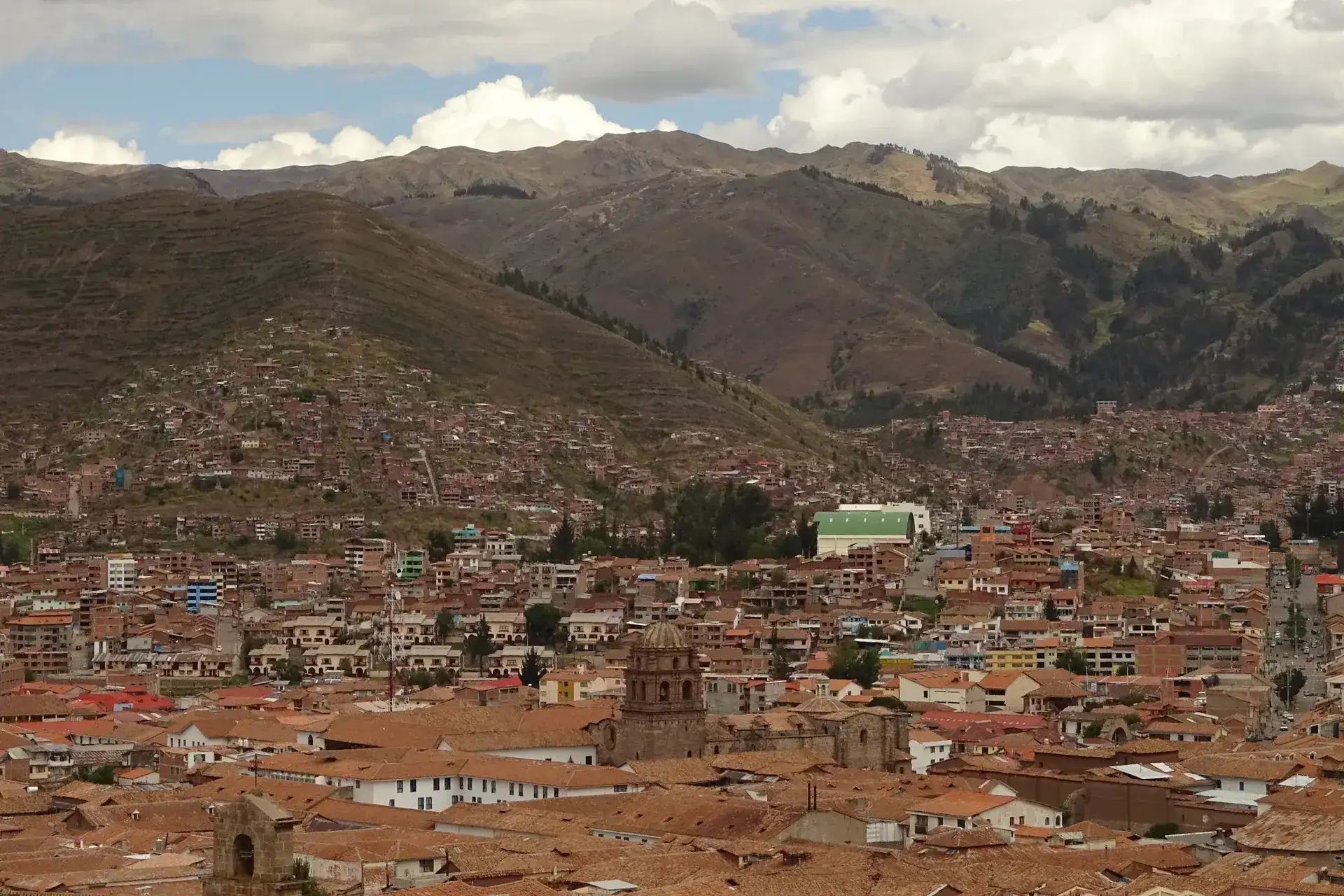
Cusco doesn't have four seasons like Europe or North America, but two: a dry season and a rainy season. Daytime temperatures barely change through the year, but nights and the chance of rain vary a lot. This guide summarises month by month what weather to expect in the city, with notes on Machu Picchu (lower and wetter) and high-altitude routes. Figures are approximate: for your exact dates, check the forecast from Peru's weather service (SENAMHI).
Start here: Cusco tips · things to do in Cusco
The general pattern
- Dry season (May to September): clear skies, strong sun, mild days and cold nights, sometimes below freezing in June and July.
- Rainy season (November to March): cloudier days, frequent rain, often in the afternoon, and less cold nights. The peak is usually January and February.
- Shoulder months (April and October): a mix of sunny days and showers; good months to travel with fewer crowds.
- Daytime in Cusco is usually around 18–21 °C most of the year. At night, 0–7 °C depending on the season.
The sun is deceptive
Above 3,300 m UV radiation is very high all year, even when it's cloudy. Use sunscreen, sunglasses and a hat.
January, February and March
- January: full rainy season. Near-daily rain, though mornings often have sunny spells. Fewer tourists, except during South American summer holidays.
- February: the wettest month. The whole Inca Trail network (classic and 2-day short trail) closes all month for maintenance. Landslides can affect roads and trains. Carnival brings water fights in the streets.
- March: still rainy, easing towards the end of the month. The landscape is very green. Easter may fall in March or April, with processions and more visitors.
April and May
- April: shoulder month. Occasional rain, green fields and good visibility on many days. Great for photos and avoiding crowds.
- May: the dry season begins. Sunny days, cold nights and still-green scenery. Festivals such as Qoyllur Rit'i and Corpus Christi can fall in May or June depending on the calendar.
June, July and August
- June: dry, blue skies and the coldest nights of the year. Inti Raymi is held on 24 June; there are festivals all month and the city fills up.
- July: dry with cold nights. High season due to northern-hemisphere holidays and Peru's national holidays (28–29 July). Book ahead.
- August: dry and sunny, windy afternoons. The month of Pachamama, with traditional offerings. Still high season.
Below-freezing nights
In June and July early mornings can drop below 0 °C in Cusco, and much lower on high routes like Salkantay, Ausangate or Rainbow Mountain. Pack thermal layers and a proper jacket.
September to December
- September: end of the dry season. Good weather, slightly fewer people than July and August.
- October: shoulder month. Some showers begin, mostly in the afternoon. Pleasant temperatures and slightly lower prices.
- November: rain becomes more regular, though there are still many good days.
- December: rainy season. On 24 December the Santurantikuy, a huge Christmas craft fair, fills the Plaza de Armas. More visitors over Christmas and New Year.
What about Machu Picchu?
Machu Picchu sits about 1,000 metres lower than Cusco, on the edge of the cloud forest. It's warmer, more humid and rainier; even in the dry season showers are possible. Mornings often start foggy, clearing by mid-morning. Always carry a light rain jacket.
What about treks?
The best time for multi-day routes (Inca Trail, Salkantay, Lares, Ausangate) is the dry season, May to September. In the rainy season trails get muddy and some high routes may have snow or temporary closures.
- Best time to visit Cusco and what to pack
- Rainy season in Cusco and Machu Picchu: what to expect and how to make the most of it
What to wear by month
- All year: layers (thermal top, fleece, windproof jacket), hat and gloves for the evening, sunscreen.
- Dry season: a warmer coat for early mornings.
- Rainy season: a properly waterproof jacket, quick-drying shoes and a backpack cover.
- For the full packing list, see our best time and what to pack guide.
Before you go

eSIM for Peru
Land connected: install an Airalo data eSIM before you travel and switch it on when you land. Check first that your phone supports eSIM and is unlocked.
Get online in Peru →Frequently asked questions
- What is the coldest month in Cusco?
- June and July have the coldest nights, often near or below 0 °C, though days are sunny.
- When does it rain most in Cusco?
- Between December and March, peaking in January and February.
Official sources
Book this plan
- Cusco city tourCompareSee dates →
- Sacred Valley tourCompareSee dates →
- Machu Picchu day trip from CuscoCompareSee dates →
Notice: This guide shares advice and recommendations based on research and local experience. Prices, opening hours and rules may change: always check with official sources and operators. Cusco Tips is not responsible for third-party services, bookings or decisions made using these guides; some links are affiliate links (see our affiliate policy).
Related guides
Best time to visit Cusco and what to pack
Dry and rainy seasons month by month, main festivals, approximate temperatures and a practical packing list for Cusco and Machu Picchu.
Read guide →
Rainy season in Cusco and Machu Picchu: what to expect and how to make the most of it
Visiting Cusco and Machu Picchu in the rainy season (November to March): weather, the February Inca Trail closure, treks, what to pack, upsides and planning tips.
Read guide →
Cusco festivals: a month-by-month calendar
Calendar of the main festivals in and around Cusco: Carnival, Holy Week, Qoyllur Rit'i, Corpus Christi, Inti Raymi, Virgen del Carmen, Pachamama, Santurantikuy and more.
Read guide →
Altitude sickness in Cusco: how to prevent it and what to do
Cusco sits at about 3,400 m. Altitude sickness symptoms, warning signs, how to acclimatize, coca tea, medication and when to do the highest day trips.
Read guide →