
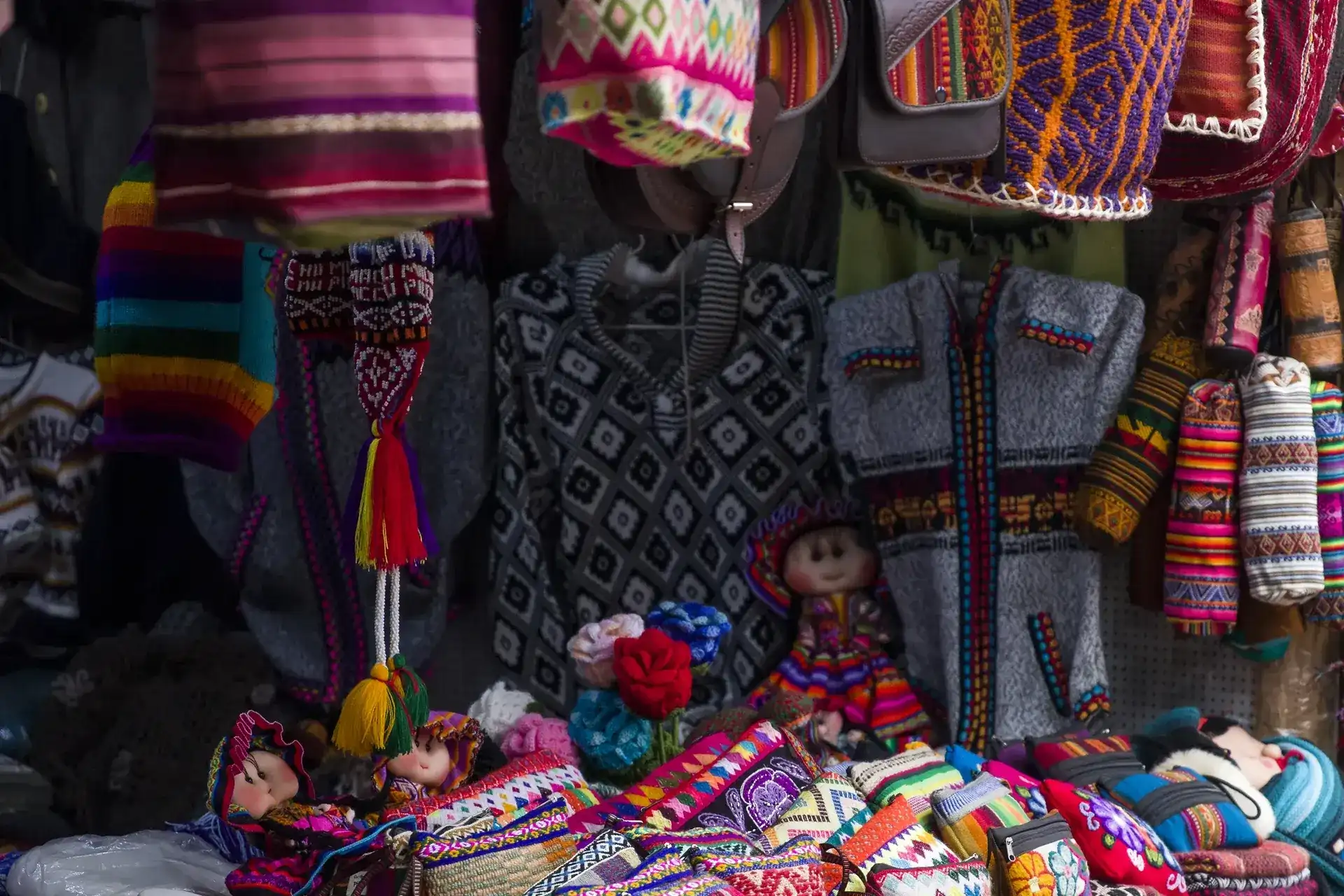
Andean textiles in Cusco: weaving workshops, weaving communities and buying well
Updated:
Textiles are one of the most vibrant cultural expressions of the Andes. Long before the Incas, Andean peoples wove pieces of astonishing complexity, and in Inca times fine cloth was worth more than gold. Today, in communities across the Cusco region, many women and men still weave with techniques handed down for generations, and you can learn from them, watch them work and buy directly. This guide helps you understand what you see and choose well.
Tours to explore Cusco's markets
Start here: Cusco tips · things to do in Cusco
Traditional techniques
- Spinning: alpaca, llama or sheep wool is hand-spun on a pushka (drop spindle), often while walking or herding.
- Backstrap loom: one end is tied to a post and the other to the weaver's waist, who controls tension with her body. The most traditional loom.
- Staked loom: a horizontal loom pegged to the ground, used for larger pieces.
- Warp-faced weaving: in many Andean textiles the design is formed by the warp threads, producing very durable pieces, sometimes with the same pattern on both sides.
A traditional poncho or blanket can take weeks or months.
Natural dyes
Traditional colours come from plants, minerals and insects:
- Cochineal: a cactus-dwelling insect giving reds, pinks, purples and maroons.
- Chilca: a plant giving greens.
- Q'olle and other flowers: yellows.
- Indigo or tara: blues and dark tones.
- Mosses and lichens: browns and beiges.
Mordants such as salt — or fermented urine in old techniques — fix the colours. Many demonstrations show how one dye changes colour depending on the mordant.
What the designs mean
Designs, or pallay, have names and meanings: lakes, rivers, flowers, the Inca road, partridge eyes, constellations, the serpent or the condor. Each community has its own designs, and an expert can tell where a garment comes from at a glance. Chumpis (belts), lliqllas (shoulder cloths worn by women) and ch'ullos (earflap hats) are classic pieces.
Weaving workshops and classes
- Demonstrations at textile centres: in Chinchero and the Sacred Valley, weavers show the whole process, usually for free.
- Hands-on classes: some organisations and communities offer half-day or multi-day workshops to learn spinning, dyeing or weaving a simple piece on a backstrap loom.
- Museums and non-profits: Cusco has spaces devoted to preserving traditional textiles, with exhibitions, live demonstrations and shops whose profits return to communities.
- Chinchero: weaving, Inca ruins and market between Cusco and the Sacred Valley
- The best museums in Cusco: which to visit, tickets and how to plan
Visiting weaving communities
In the Sacred Valley and on trekking routes like Lares, some communities welcome visitors through community-tourism projects. You can spend a day with families, see their work and buy directly. Choose projects where the community helps run things and receives a fair share, and ask your agency how the money is split.
Respect
Ask before taking photos, don't haggle hard over handmade pieces and value the time behind each textile.
- Lares Trek to Machu Picchu: route, difficulty, communities and comparison
- Basic Quechua phrases for your trip to Cusco (with pronunciation)
How to spot handwoven textiles
- Small irregularities in the design and edges.
- Less uniform, more nuanced colours typical of natural dyes.
- The reverse shows the design threads neatly.
- Feel: genuine alpaca is soft and slightly cool; synthetic blends are shinier and can itch.
- Price: a handmade piece can't cost the same as a factory one.
Ask who wove it, in which community and with which dyes. Cooperative and textile-centre shops usually tell you.
- Buying alpaca in Cusco: how to spot the real thing, prices and where to look
- What to buy in Cusco: authentic souvenirs and what to avoid
Yarn for knitters
If you knit, Cusco is paradise: markets and specialist shops sell alpaca, baby alpaca and blends in balls and skeins, sometimes naturally dyed. Compare the label composition and ask to feel a sample. Hand-dyed skeins from communities make a unique souvenir.
- San Pedro Market in Cusco: what to eat, what to buy, opening hours and tips
- Cusco's artisan markets: San Blas, Centro Artesanal, Pisac and Chinchero
Caring for your textiles
Hand-wash in cold water with mild soap, don't wring, dry flat in the shade and store with moth protection. Natural dyes may bleed a little in the first washes.
Frequently asked questions
- Where can I see weavers at work near Cusco?
- In Chinchero and several Sacred Valley villages, textile centres hold demonstrations. Also in community-tourism projects and some Cusco museums.
- Are there weaving classes in Cusco?
- Yes, some organisations and communities offer spinning, dyeing and backstrap-loom workshops.
- How can I tell if a textile is handmade?
- By its small irregularities, nuanced colours, reverse side and price. Ask who wove it.
- Where can I buy alpaca yarn?
- In Cusco markets and specialist shops, always checking the label composition.
Book this plan
- Cusco city tourCompareSee dates →
- Sacred Valley tourCompareSee dates →
Notice: This guide shares advice and recommendations based on research and local experience. Prices, opening hours and rules may change: always check with official sources and operators. Cusco Tips is not responsible for third-party services, bookings or decisions made using these guides; some links are affiliate links (see our affiliate policy).
Related guides
Chinchero: weaving, Inca ruins and market between Cusco and the Sacred Valley
Chinchero guide: weaving centres and natural dyes, the Inca site and colonial church, the Sunday market, the Tourist Ticket, getting there from Cusco and how to combine it.
Read guide →
Buying alpaca in Cusco: how to spot the real thing, prices and where to look
Differences between baby alpaca, alpaca, llama, vicuña and synthetic blends; how to recognise genuine garments by feel and label, price ranges and where to buy.
Read guide →
What to buy in Cusco: authentic souvenirs and what to avoid
The best souvenirs from Cusco: textiles and alpaca, ceramics, retablos, silver, coffee, chocolate, Andean grains and pisco; where to buy, how to bargain and what not to take home.
Read guide →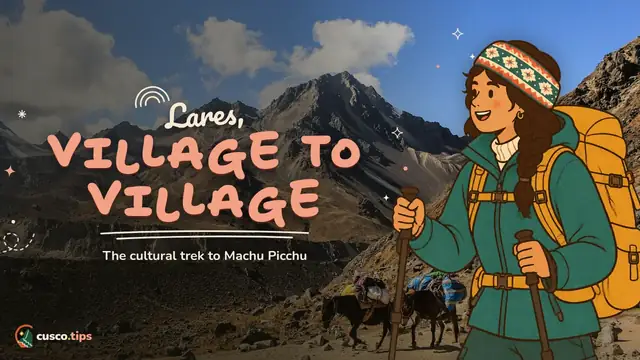
Lares Trek to Machu Picchu: route, difficulty, communities and comparison
Lares trek guide: a 3–4 day route through weaving communities, hot springs, altitude and difficulty, best season, how it links to Machu Picchu and how it compares with Salkantay and the Inca Trail.
Read guide →