
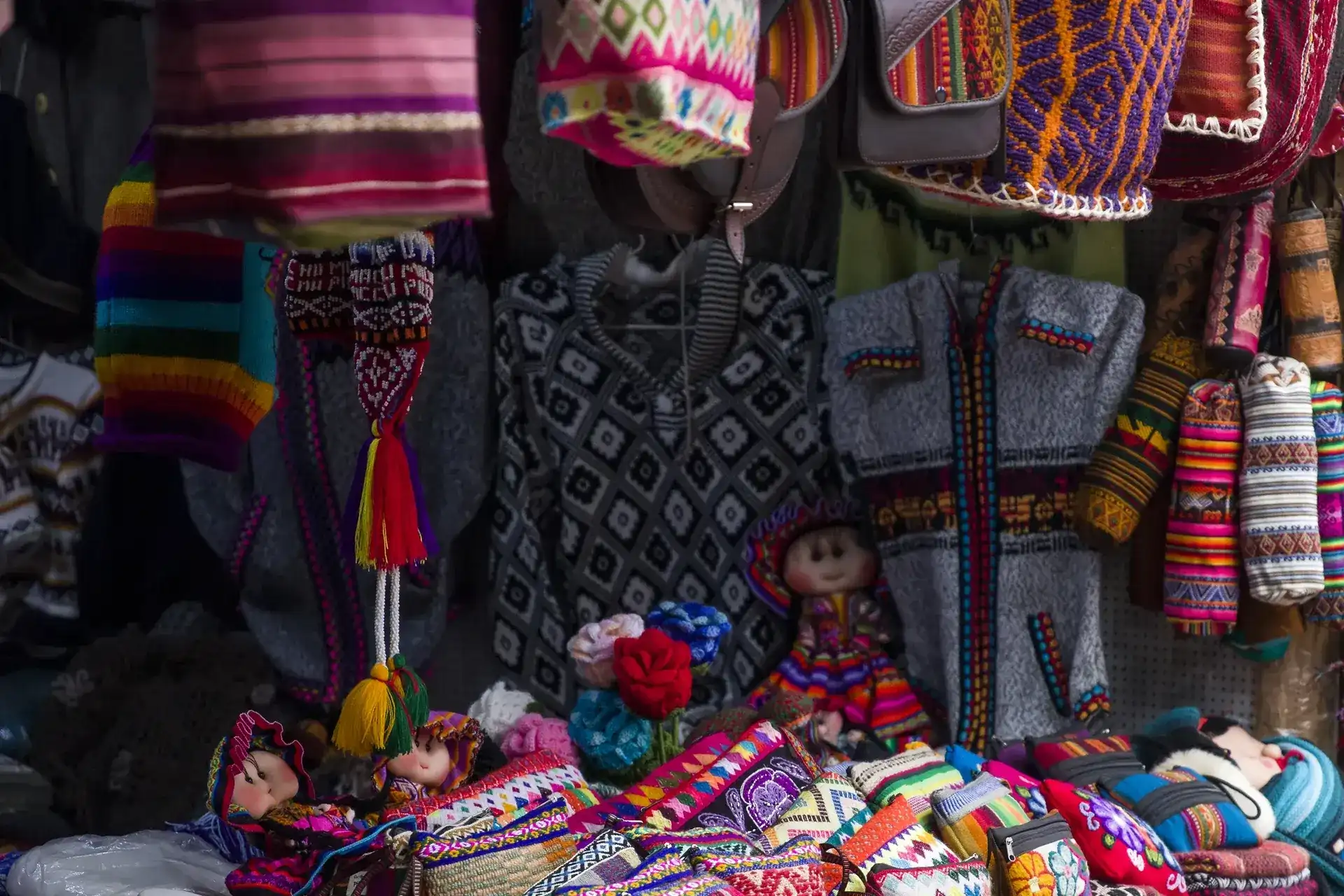
Shopping for crafts is one of Cusco's great pleasures: colourful textiles, ceramics, retablos, silver jewellery and alpaca garments fill markets in the city and the Sacred Valley. Alongside mass-produced souvenir stalls are artisans using techniques passed down for generations. This guide helps you know where to go, what to look for and how to buy fairly.
Tours to explore Cusco's markets
Start here: Cusco tips · things to do in Cusco
San Blas: the artisans' quarter
San Blas is the artisan neighbourhood par excellence. Its steep streets hold workshops and galleries of image-makers, potters and painters, some with long family traditions. On Saturdays a craft fair is often held in San Blas plaza, with jewellery, textiles, ceramics and art, smaller and calmer than other markets. Wandering the neighbourhood and stepping into open workshops lets you watch artisans at work.
Workshops
Buying directly from a workshop usually guarantees authentic pieces and that the money reaches the artisan.
Centro Artesanal Cusco
At the end of Avenida El Sol, towards the bus terminal, is the large Centro Artesanal Cusco, a covered complex with hundreds of stalls. It's handy for comparing prices and finding everything in one place: sweaters, chullos, blankets, bags, alpaca toys, ceramics and souvenirs. Quality varies widely, so check each piece.
Central markets
Around San Pedro market and in several galleries in the centre there are craft and textile stalls. San Pedro market itself has a textiles and souvenir section as well as its food area. Streets near the Plaza de Armas have higher-end craft and alpaca shops with fixed prices.
Pisac market
Pisac market in the Sacred Valley is one of the region's most famous. It runs daily but is liveliest on traditional market days such as Sunday, when farmers also come to sell produce. It pairs perfectly with a visit to the Pisac ruins.
- Pisac: Inca ruins, craft market and how to visit from Cusco
- Sacred Valley of the Incas: what to see and how to visit
Chinchero and textiles
Chinchero is known for its weavers. Several associations and cooperatives demonstrate the whole process: washing wool with roots, dyeing with plants, insects like cochineal and minerals, and weaving on backstrap looms. It's a fascinating visit, though it's part of many tours and sales-oriented. There's a local market in the village on Sundays.
- Chinchero: weaving, Inca ruins and market between Cusco and the Sacred Valley
- Andean textiles in Cusco: weaving workshops, weaving communities and buying well
What to buy
- Textiles: hand-woven blankets, tapestries, scarves and bags.
- Alpaca garments: sweaters, scarves and gloves.
- Chullos: Andean hats with ear flaps.
- Ceramics: Inca-style pieces, Pucará bulls and San Blas pottery.
- Retablos: small wooden altars with scenes of Andean life.
- Silver jewellery, often with stones such as chrysocolla.
- Edibles: coffee, chocolate, quinoa or Andean herbs.
- What to buy in Cusco: authentic souvenirs and what to avoid
- Coffee in Cusco: where it comes from, specialty cafés and farm visits
- Chocolate and cacao in Cusco: workshops, chuncho cacao and what to buy
Is it real alpaca?
Much of what's sold as "baby alpaca" in markets is actually blended with synthetic fibres or sheep's wool. Some clues:
- Real alpaca feels cool at first touch, then warms up.
- Synthetics are shinier and may build static.
- Very low prices for large garments usually mean a blend.
- Specialist shops with clear labels and composition are more reliable, if pricier.
How to bargain respectfully
Bargaining is normal in markets, but keep it moderate and good-humoured. Ask the price, offer a bit less if it seems high and settle on something fair. A small difference for you can matter a lot to the seller. Buying several items at one stall often gets a discount. Don't haggle in fixed-price shops. Carry small notes: many stalls don't take cards.
Buying fairly and getting it home
- Look for cooperatives and artisan associations that explain where pieces come from.
- Ask who made the item and how long it took to weave: the answer says a lot.
- Never buy archaeological objects or supposed antiques: exporting them is illegal.
- Avoid products from protected species, such as wild feathers or skins.
- For large textiles or ceramics, ask for careful wrapping or check shipping options.
Frequently asked questions
- When is the San Blas fair?
- It's usually held on Saturdays in San Blas plaza.
- Where is Cusco's biggest craft market?
- Centro Artesanal Cusco, at the end of Avenida El Sol.
- Can I bargain in Cusco markets?
- Yes, moderately and respectfully; not in fixed-price shops.
- How do I know if it's real alpaca?
- Be wary of very low prices and buy where labels state the composition.
Book this plan
- Cusco food tourCompareSee dates →
- Cusco city tourCompareSee dates →
Notice: This guide shares advice and recommendations based on research and local experience. Prices, opening hours and rules may change: always check with official sources and operators. Cusco Tips is not responsible for third-party services, bookings or decisions made using these guides; some links are affiliate links (see our affiliate policy).
Related guides
What to buy in Cusco: authentic souvenirs and what to avoid
The best souvenirs from Cusco: textiles and alpaca, ceramics, retablos, silver, coffee, chocolate, Andean grains and pisco; where to buy, how to bargain and what not to take home.
Read guide →
Buying alpaca in Cusco: how to spot the real thing, prices and where to look
Differences between baby alpaca, alpaca, llama, vicuña and synthetic blends; how to recognise genuine garments by feel and label, price ranges and where to buy.
Read guide →
Andean textiles in Cusco: weaving workshops, weaving communities and buying well
Guide to Andean textiles in Cusco: techniques and natural dyes, the meaning of designs, workshops and classes, visits to weaving communities, yarn for knitters and spotting handmade pieces.
Read guide →
San Blas, Cusco's artisan quarter: what to see, viewpoints and tips
Guide to Cusco's San Blas neighbourhood: the church and its carved pulpit, the little plaza, artisan workshops, Hatun Rumiyoc street, viewpoints, nightlife and whether to stay there.
Read guide →