
Handling money well saves you unnecessary fees and the odd scare. In Cusco, cash, essential at markets, in taxis and villages, coexists with card payments at hotels, agencies and many restaurants. This guide explains how Peru's currency works, where to withdraw or exchange money and how to stay safe. Fees and exchange rates change often: treat them as a guide and always check with your bank.
Start here: Cusco tips · things to do in Cusco
The currency: the Peruvian sol
The official currency is the sol (PEN), divided into 100 céntimos. There are 10, 20, 50, 100 and 200 sol notes, and 10, 20 and 50 céntimo and 1, 2 and 5 sol coins. US dollars are sometimes accepted in tourist areas, but usually at a poor rate. Paying in soles is the practical choice day to day.
Keep small change
100 and 200 sol notes are hard to break in taxis, markets and small shops. Ask for small notes when you can and keep coins for public toilets, tips and colectivos.
Popular activities on GetYourGuide
ATMs
Central Cusco has plenty of ATMs, especially around the Plaza de Armas and Avenida El Sol, from the country's main banks. There are also ATMs at the airport.
- Local fee: many ATMs charge a flat fee per withdrawal with a foreign card, which varies by bank. Some charge less or nothing; check the screen before accepting.
- Your bank's fee: your bank may also charge per withdrawal and for currency conversion. Fee-free travel cards and accounts can save a lot.
- Withdrawal limit: there's usually a maximum per transaction, so you may need several withdrawals.
- Always choose to be charged in soles, not your home currency: the ATM's dynamic conversion usually uses a worse rate.
- Use ATMs inside banks or malls, in daylight, and cover the keypad when entering your PIN.
Exchange offices
If you carry dollars or euros in cash, exchange offices (casas de cambio) in the centre usually give better rates than banks, hotels or the airport. Dollars are easy to change; euros too, with slightly less competition. Tips:
- Compare the buying rate at two or three offices first.
- Count the money in front of the cashier before leaving.
- Avoid street money changers unless you know the routine well.
- Bring foreign notes in perfect condition: torn, stained or very old notes are often refused.
Cards and digital payments
Visa and Mastercard are accepted at hotels, agencies, mid-range and upscale restaurants, supermarkets and many shops. Some add a card surcharge; ask first. Markets, street stalls, taxis, small shops and rural villages are almost always cash. Peruvians widely use mobile payment apps linked to local banks, but these usually require a Peruvian account.
Machu Picchu tickets and trains are bought online by card, which reduces the cash you need.
Fake notes
Counterfeit notes circulate, especially 50, 100 and 200 soles, plus 5 sol coins. To reduce the risk:
- Check the watermark, security thread and the colour-shifting number when you tilt the note.
- Feel the paper: genuine notes have raised print in places.
- Check your change calmly, especially at night or in taxis.
- If in doubt, politely ask for another note; it's common practice.
Tipping
Tipping isn't mandatory but is appreciated. At tourist restaurants around 10% is usual if service isn't included. On tours and treks it's customary to tip guides, cooks and porters; agencies usually suggest typical amounts. Taxi drivers aren't usually tipped, as the fare is agreed beforehand.
- How to choose a tour agency in Cusco: a checklist to get it right
- Inca Trail to Machu Picchu: permits, when to book, the 4-day route and the short version
How much cash to carry
Estimate cash by your plans: market meals and set lunches, taxis, colectivos, tips, craft-market shopping and entrances that don't take cards. A good strategy is withdrawing moderate amounts every few days rather than carrying everything. Before heading to villages or Aguas Calientes, bring enough cash: there are fewer ATMs and they can run dry in high season.
- Cusco on a budget: saving on accommodation, food, transport and Machu Picchu
- Aguas Calientes (Machu Picchu Town): getting there, things to do and where to stay
Safety tips
- Split money and cards between places: wallet, backpack and accommodation.
- Carry a backup card on another network and keep it separate.
- Tell your bank you're travelling if required and turn on payment notifications.
- In crowds, such as markets and the plaza during festivals, wear your backpack in front.
- Keep your bank's number handy to block a lost card.
- Is Cusco safe? Real risks and practical tips for a worry-free trip
- SIM, eSIM and internet in Cusco: how to stay connected in Peru
Before you go
eSIM for Peru
Land connected: install an Airalo data eSIM before you travel and switch it on when you land. Check first that your phone supports eSIM and is unlocked.
Get online in Peru →Frequently asked questions
- What currency is used in Cusco?
- The Peruvian sol (PEN). Dollars are sometimes accepted, at a poor rate.
- Do ATMs in Cusco charge fees?
- Many charge a flat fee for foreign cards; compare banks and always choose to be charged in soles.
- Where can I exchange money in Cusco?
- At exchange offices in the centre, which usually beat banks, hotels and the airport.
- Can I pay by card?
- Yes at hotels, agencies and many restaurants; markets, taxis and villages are mostly cash.
Book this plan
- Cusco city tourCompareSee dates →
- Sacred Valley tourCompareSee dates →
- Machu Picchu day trip from CuscoCompareSee dates →
Notice: This guide shares advice and recommendations based on research and local experience. Prices, opening hours and rules may change: always check with official sources and operators. Cusco Tips is not responsible for third-party services, bookings or decisions made using these guides; some links are affiliate links (see our affiliate policy).
Related guides
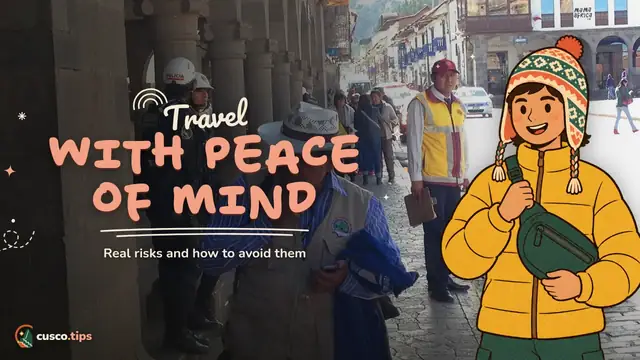
Is Cusco safe? Real risks and practical tips for a worry-free trip
How safe Cusco is for tourists: theft, taxis, nightlife, protests, altitude and adventure tours. Areas, times of day and what to do in an emergency.
Read guide →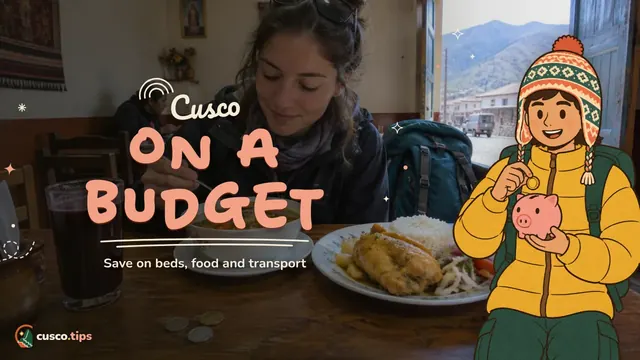
Cusco on a budget: saving on accommodation, food, transport and Machu Picchu
How to visit Cusco cheaply: an indicative daily budget, hostels, set lunches, local transport, the Tourist Ticket, budget Machu Picchu, free things to do and costly mistakes.
Read guide →
SIM, eSIM and internet in Cusco: how to stay connected in Peru
How to get mobile data in Cusco and Machu Picchu: an eSIM before you travel, a local SIM with your passport, coverage in the Sacred Valley and on treks, wi-fi and tips to stay online.
Read guide →
Cusco airport to the city centre: taxi, ride apps, transfers and approximate prices
How to get from Alejandro Velasco Astete airport to central Cusco or straight to the Sacred Valley: options, times, approximate prices and safety tips.
Read guide →