
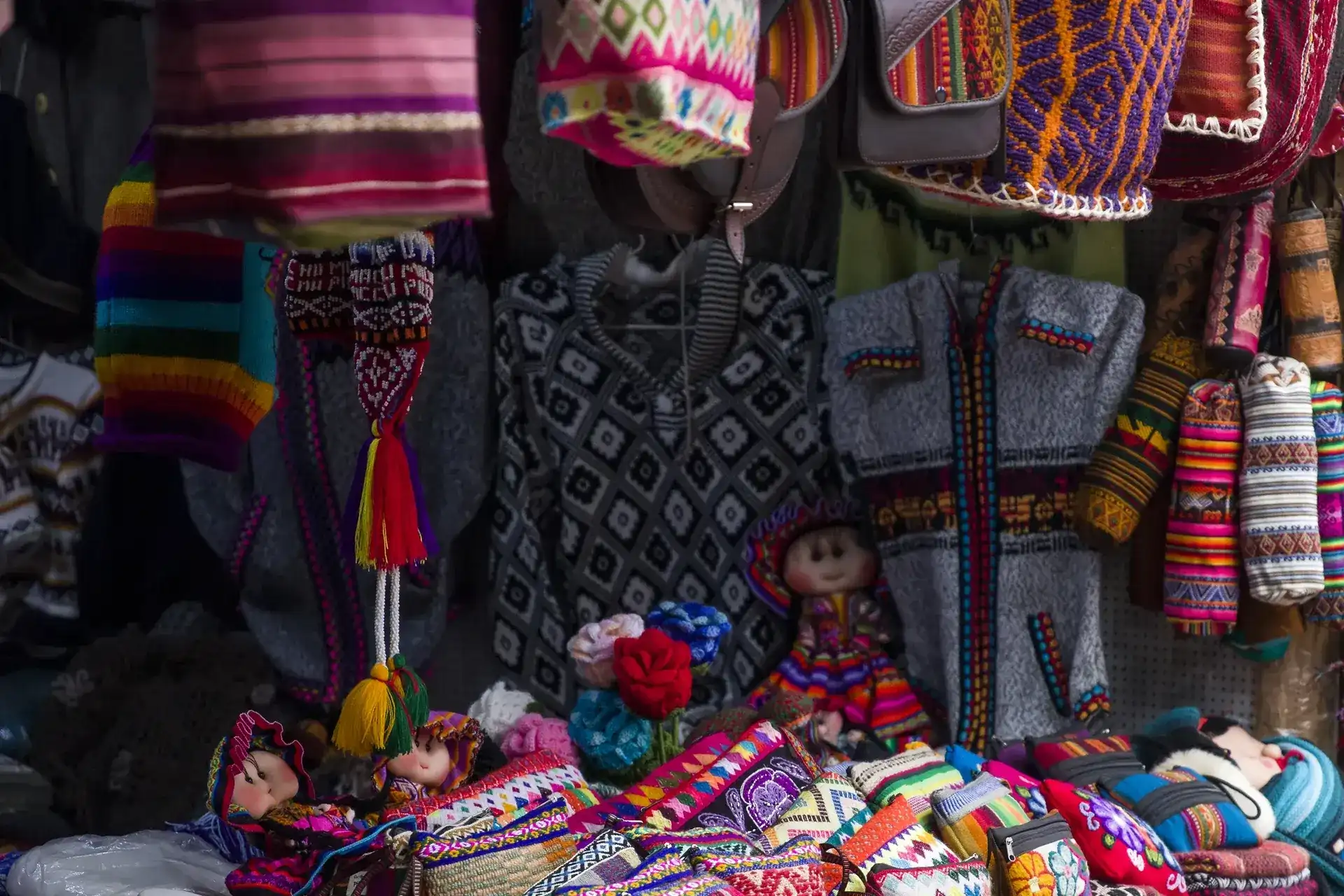
Cusco is one of the best places in Peru to buy crafts: textile traditions from Andean communities, ceramics from different regions and food products from the valleys and the jungle all meet here. This guide covers what's worth buying, where to look and what to avoid.
Tours to explore Cusco's markets
Start here: Cusco tips · things to do in Cusco
Textiles and alpaca
Textiles are the star souvenir: blankets, chullos (hats with earflaps), scarves, ponchos and tapestries. Pieces handwoven on a loom with natural dyes are pricier and unique; many market garments are machine-made. If you're after alpaca, learn to tell it from synthetics.
- Buying alpaca in Cusco: how to spot the real thing, prices and where to look
- Andean textiles in Cusco: weaving workshops, weaving communities and buying well
Ceramics and folk art
- Toritos de Pucará: a pair of ceramic bulls placed on rooftops for protection and good luck.
- Inca- and colonial-style ceramics, and contemporary pieces from San Blas workshops.
- Retablos: wooden boxes with miniature scenes, a tradition from Ayacucho.
- Mates burilados: carved gourds with scenes of Andean life.
- Cusco religious imagery: religious figures and the Niño Manuelito, typical of the city's artisans.
Silver and jewellery
Peru is a major silver producer. You'll find jewellery with Andean motifs such as the chakana (Andean cross). For sterling silver look for the "925" stamp; in markets much of what's sold is alpaca metal (a silver-free alloy), cheaper but not silver.
Coffee, chocolate and Andean products
- Coffee from Cusco's jungle valleys, such as La Convención, increasingly well regarded.
- Peruvian chocolate and cacao, in bars or nibs.
- Andean grains: quinoa, kiwicha and varied corn (check your country's food import rules).
- Maras salt in various forms — light and original.
- Pisco: Peru's grape brandy. Check alcohol limits for luggage and customs.
- Coffee in Cusco: where it comes from, specialty cafés and farm visits
- Chocolate and cacao in Cusco: workshops, chuncho cacao and what to buy
- Moray and the Maras salt mines: how to visit from Cusco or the Sacred Valley
Where to buy
- Craft markets and fairs in the centre: variety and bargaining.
- San Pedro Market: food, spices and some textiles at local prices.
- San Blas: artisan workshops and galleries with signature pieces.
- Pisac and Chinchero: markets and textile centres in the Sacred Valley.
- Specialist shops: fixed prices, better quality assurance.
- San Pedro Market in Cusco: what to eat, what to buy, opening hours and tips
- Pisac: Inca ruins, craft market and how to visit from Cusco
- Chinchero: weaving, Inca ruins and market between Cusco and the Sacred Valley
Bargaining respectfully
Bargaining is normal in markets, but be friendly and don't push too hard: for many artisans a small difference matters. Compare prices first, buy several items from one stall to ask for a discount and carry small notes.
What NOT to buy
- Archaeological pieces or pre-Columbian or colonial "antiques": exporting them is prohibited, and replicas sold as originals are a scam.
- Products from protected wildlife: feathers, skins, shells or dried insects.
- Coca leaves: legal in Peru but illegal in many countries; don't pack them for the trip home (nor sweets or derived products without checking the rules).
- Very cheap "vicuña" garments: they almost certainly aren't.
Customs
Every country has its own restrictions on food, seeds, animal products and alcohol. Check before flying home.
How much to pay: general guidance
Prices vary by quality, technique and place, so rather than exact figures, follow these guidelines:
- Compare the same type of product at three or four stalls before buying.
- Handmade items (loom-woven, embroidered, carved) always cost more than factory-made; if the price is the same, it's probably not handmade.
- Fair-trade shops and cooperatives usually state the origin and the artisan or community who made it.
- In high season and very touristy areas, starting prices are higher — and so is the room to bargain.
Getting your purchases home
- Textiles can be squeezed into vacuum bags to save space.
- Ceramics and retablos are fragile: ask for good wrapping and carry them in hand luggage if possible.
- For large pieces, some shops offer international shipping; ask for an invoice and tracking number.
- Liquids like pisco go in checked luggage, well protected and within your destination's limits.
Keep receipts
They're useful at your home country's customs, especially for jewellery and big purchases.
Frequently asked questions
- What's the best souvenir from Cusco?
- Andean textiles and alpaca are the most popular; ceramics, silver and coffee are also excellent choices.
- Can I take coca leaves home?
- Not advisable: they're banned in many countries.
Book this plan
- Cusco city tourCompareSee dates →
- Sacred Valley tourCompareSee dates →
Notice: This guide shares advice and recommendations based on research and local experience. Prices, opening hours and rules may change: always check with official sources and operators. Cusco Tips is not responsible for third-party services, bookings or decisions made using these guides; some links are affiliate links (see our affiliate policy).
Related guides
Things to do in Cusco: 30 essentials in the city and beyond
Things to do in Cusco: the city's essentials, Machu Picchu, the Sacred Valley, day trips, treks, food, markets and festivals, with 1- to 3-day plans.
Read guide →
Buying alpaca in Cusco: how to spot the real thing, prices and where to look
Differences between baby alpaca, alpaca, llama, vicuña and synthetic blends; how to recognise genuine garments by feel and label, price ranges and where to buy.
Read guide →
Andean textiles in Cusco: weaving workshops, weaving communities and buying well
Guide to Andean textiles in Cusco: techniques and natural dyes, the meaning of designs, workshops and classes, visits to weaving communities, yarn for knitters and spotting handmade pieces.
Read guide →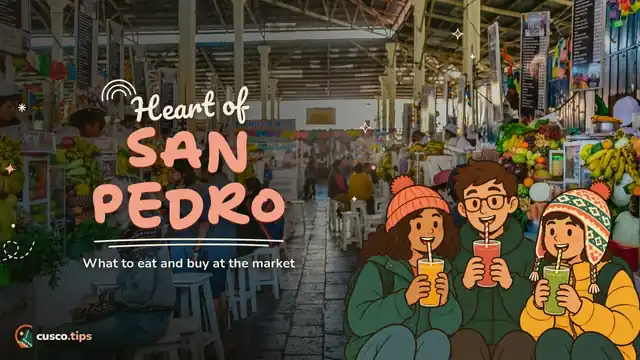
San Pedro Market in Cusco: what to eat, what to buy, opening hours and tips
Guide to San Pedro Central Market: sections, juices, cheap food, breads, cheeses and Andean produce, approximate hours, safety and how to get there from the Plaza de Armas.
Read guide →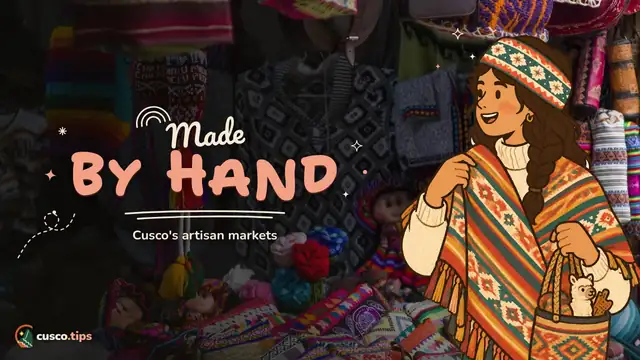
Cusco's artisan markets: San Blas, Centro Artesanal, Pisac and Chinchero
Guide to artisan markets in Cusco: the San Blas fair, Centro Artesanal, Pisac and Chinchero markets, what to buy, how to bargain respectfully and spot real alpaca.
Read guide →