
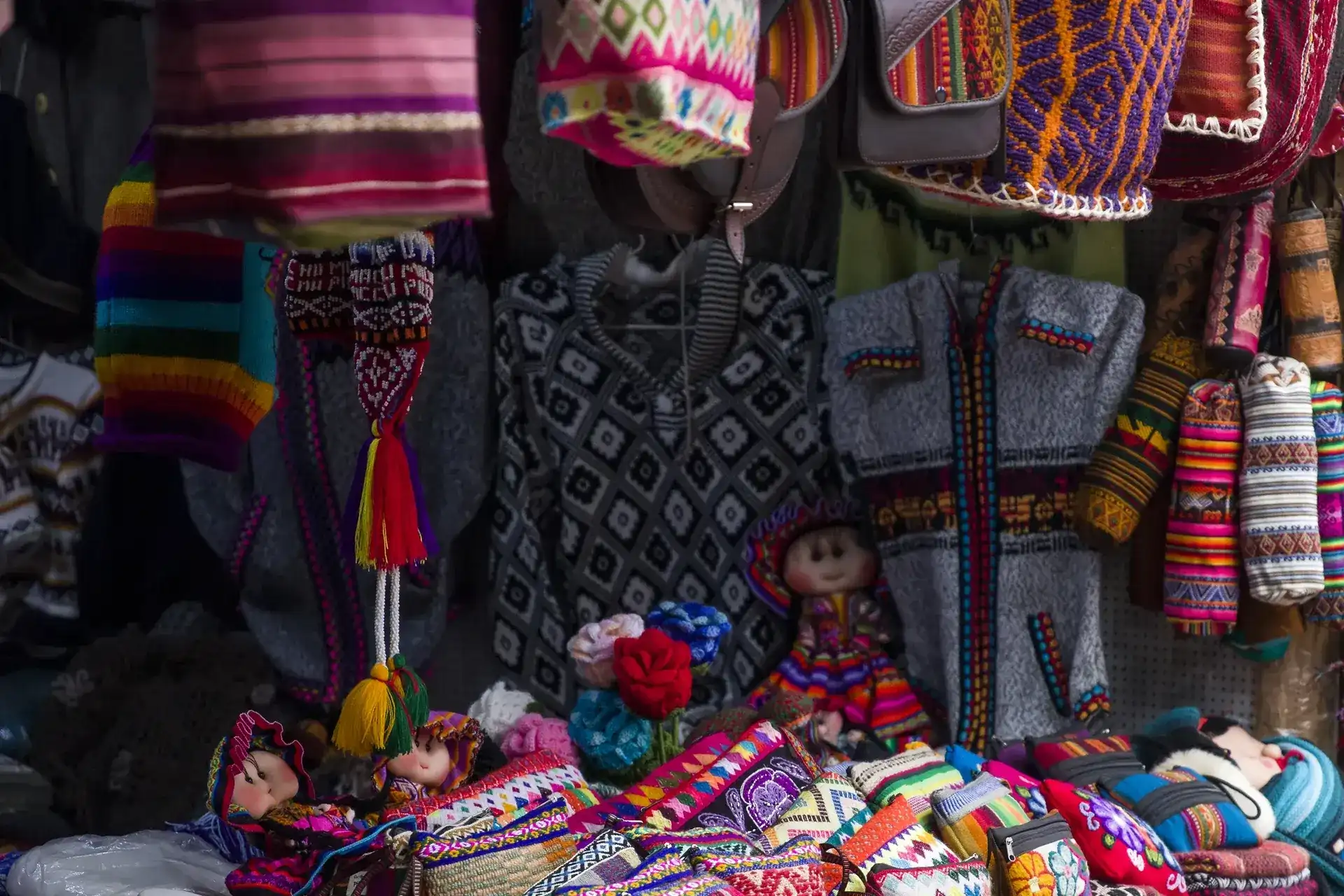
San Pedro Central Market is Cusco's best-known market and one of the best windows into everyday life in the city. Under its large metal roof you'll find juice stalls, home-cooking counters, giant breads, cheeses, dozens of potato and corn varieties, medicinal herbs and some crafts. It's practically a must: cheap, authentic and a few minutes' walk from the centre.
Tours to explore Cusco's markets
Start here: Cusco tips · things to do in Cusco
Where it is and how to get there
The market is about a 10-minute walk southwest of the Plaza de Armas. From the plaza, walk down Calle Mantas to Plaza San Francisco and continue along Calle Santa Clara under the Santa Clara arch: the market is straight ahead, next to San Pedro church. It's a flat walk, fine for your first days of acclimatisation.
Opening hours
The market opens daily from early morning until late afternoon, roughly 6:00 to 18:00 or 19:00, though each stall keeps its own hours. Sundays and holidays are livelier and some stalls close earlier. The best time is morning, between 8:00 and 11:00: everything is fresh, the food counters start serving and it's less crowded than at midday.
What you'll find: the sections
- Juices: one of the most famous areas. Vendors blend tropical and Andean fruit juices on the spot and often top you up with what's left in the jug.
- Food counters: long shared tables serving soups, broths, set meals and breakfasts at very low prices.
- Breads: huge round loaves such as chuta from Oropesa, sweet breads and anise breads.
- Cheese and dairy: fresh Andean cheeses and homemade yoghurt.
- Potatoes, corn and grains: an impressive show of Andean biodiversity, with native potatoes of every colour, chuño (freeze-dried potato), quinoa and giant corn.
- Fruit: from the highlands and the nearby jungle, many unknown outside Peru, such as granadilla, aguaymanto (golden berry) and cherimoya.
- Herbs and ritual items: medicinal plants, coca leaves and items for Pachamama offerings.
- Meat: a section some visitors find confronting, with cuts on open display.
- Crafts and souvenirs: textiles, hats, souvenirs and bags around the edges.
What to eat at San Pedro
- A fresh fruit juice: try combinations with papaya, mango, banana or Andean fruits.
- A soup at the counters: chicken broth, quinoa soup or chairo, depending on the day.
- A local breakfast: bread with cheese, tamales or hot emoliente, a typical herbal drink.
- Exotic fruits: ask the vendor to let you taste before buying.
- Chicharrón or roast pork at some stalls, mainly in the morning.
Hygiene without paranoia
Pick stalls with lots of local customers, where food turns over quickly. In your first days, while acclimatising, start with something gentle like a soup or a juice from peeled fruit.
What to buy
- Peruvian coffee, cacao and bar chocolate.
- Quinoa, purple corn and Andean spices to take home (check your country's food import rules).
- Textiles and simple souvenirs, usually cheaper than in shops around the Plaza de Armas, though not always handmade.
- Don't buy products from protected animals or coca leaves to take out of Peru: in many countries it's illegal.
Safety and respect
- It's one of the busiest pickpocket spots in Cusco: keep your phone and wallet in front pockets and wear your backpack on your front.
- Carry small notes and coins; many stalls can't change large notes.
- Ask before photographing vendors and their products. Many agree if you buy something.
- It's a working market: make way for porters and don't block the aisles.
What's nearby
- San Pedro church, opposite the market.
- The Santa Clara arch and church, on the way from the centre.
- Plaza San Francisco, with its church and convent.
- Other, less touristy local markets such as Wanchaq or San Blas.
- Local markets in Cusco: Wanchaq, Huancaro, Vinocanchón and beyond San Pedro
- Cusco's artisan markets: San Blas, Centro Artesanal, Pisac and Chinchero
Guided visits and cooking classes
Many cooking classes and food tours start with a guided visit to San Pedro to discover Andean fruits, potatoes and grains. A great way to understand what you see and taste with confidence.
Frequently asked questions
- What time does San Pedro Market open?
- From early morning (around 6:00) until late afternoon, with hours varying by stall.
- Is it safe to eat at San Pedro Market?
- Plenty of people do without problems. Choose busy stalls, hot dishes and peeled fruit, especially in your first days.
Book this plan
- Cusco food tourCompareSee dates →
- Cusco city tourCompareSee dates →
Notice: This guide shares advice and recommendations based on research and local experience. Prices, opening hours and rules may change: always check with official sources and operators. Cusco Tips is not responsible for third-party services, bookings or decisions made using these guides; some links are affiliate links (see our affiliate policy).
Related guides
Things to do in Cusco: 30 essentials in the city and beyond
Things to do in Cusco: the city's essentials, Machu Picchu, the Sacred Valley, day trips, treks, food, markets and festivals, with 1- to 3-day plans.
Read guide →
What and where to eat in Cusco: typical dishes, markets and tips
Cusco dishes worth trying, typical drinks, types of places to eat, markets and food-safety tips at altitude.
Read guide →
Local markets in Cusco: Wanchaq, Huancaro, Vinocanchón and beyond San Pedro
Cusco's local markets beyond San Pedro: Wanchaq, Huancaro, Vinocanchón, Rosaspata, the Baratillo and Cascaparo. What to find, when to go, what to eat and safety tips.
Read guide →
Cusco's artisan markets: San Blas, Centro Artesanal, Pisac and Chinchero
Guide to artisan markets in Cusco: the San Blas fair, Centro Artesanal, Pisac and Chinchero markets, what to buy, how to bargain respectfully and spot real alpaca.
Read guide →
Cooking classes in Cusco: what to expect, typical dishes and how to choose
Peruvian cooking classes in Cusco: market visit, ceviche, lomo saltado, pisco sour, vegetarian options, duration, rough price and tips for choosing a good class.
Read guide →