
Cusco is one of the best places in Peru to discover Andean cuisine: native potatoes, giant-kernel corn, quinoa, trout, guinea pig and recipes passed down for generations. In this guide we don't recommend specific restaurants (they open, close and change, and we can't vouch for them). Instead we explain which dishes to try, what kinds of places to look for, and how to eat well without altitude or your stomach ruining the trip.
Start here: Cusco tips · things to do in Cusco
Typical dishes to try
Cusco's cooking blends Andean ingredients with Creole influences. These are the dishes most worth seeking out:
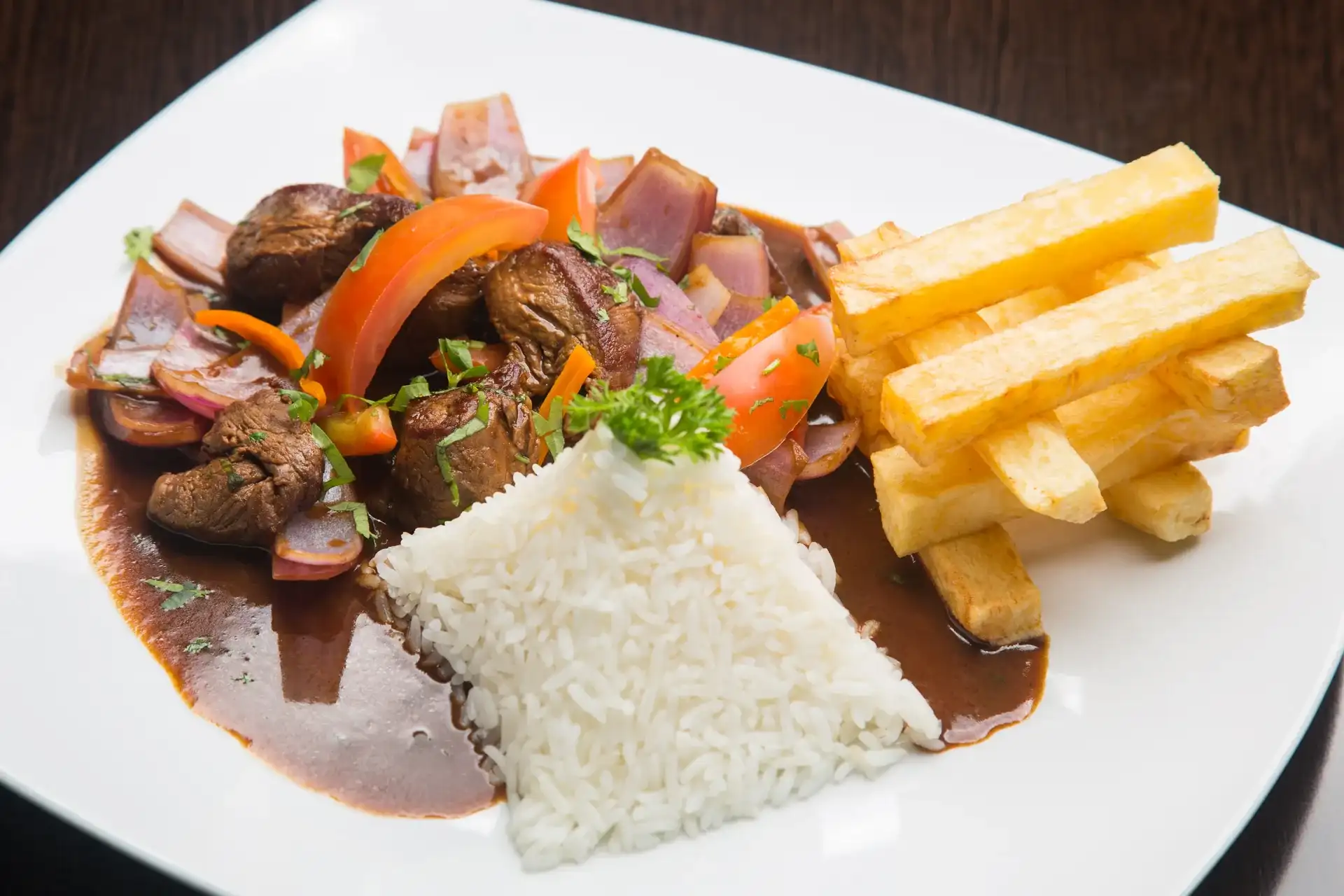
Lomo saltado
Stir-fried beef with onion, tomato and chili, served with fries and rice. A Peruvian classic with chifa (Chinese-Peruvian) roots, found on almost every menu.
Ají de gallina
Shredded hen in a mild, creamy sauce of yellow chili, bread and milk, with rice, potato and olive. Comforting and not very spicy.
Rocoto relleno
Rocoto (a large, fleshy pepper) stuffed with minced meat, onion and spices, baked with cheese. It can be quite hot — ask first.
Cuy al horno (Cusco style)
Guinea pig has been a ceremonial Andean dish since pre-Hispanic times. In Cusco it is usually roasted whole and stuffed with herbs. The town of Tipón and its surroundings are famous for it.
Chicharrón cusqueño
Pork pieces cooked in their own fat until golden, served with mote (hominy), potato and mint. The town of Saylla, just outside Cusco, is known for its chicharrón houses.
Adobo cusqueño
Pork marinated in chicha de jora and spices, served in its broth. Traditionally eaten on Sunday mornings — often as a cure for the night before.
Chiriuchu
A cold festive platter with guinea pig, hen, jerky, sausage, fish roe, seaweed, cheese and a corn fritter. It's tied to the Corpus Christi festival and hard to find at other times.
More Andean classics
- Quinoa soup: light and nourishing, ideal for your first days at altitude.
- Trout: from Andean lakes and fish farms — fried, grilled or as ceviche.
- Choclo con queso: huge-kernel Andean corn with fresh cheese, a classic roadside snack.
- Alpaca meat: lean and tender, usually grilled or in a stir-fry.
- Native potatoes: Peru has thousands of varieties — order dishes that mix several.
- Anticuchos: grilled beef-heart skewers, an evening street-food favourite.
- Pan chuta: large round bread from Oropesa, a bread-baking town near Cusco.
Popular activities on GetYourGuide
Typical drinks
- Coca tea and other herbal infusions such as muña: traditional and very common at altitude.
- Chicha morada: a non-alcoholic drink made from purple corn, pineapple and cinnamon.
- Chicha de jora: fermented corn beer. By tradition, chicherías are marked with a pole bearing a red flag or bag at the door.
- Pisco sour: the national cocktail — pisco, lime, egg white and bitters.
- Inca Kola: the sweet yellow soda Peruvians love.
- Local craft beer: Cusco and the Sacred Valley have a growing brewery scene.
Alcohol and altitude
At altitude alcohol tends to hit harder and dehydrates you. Avoid it for the first 24–48 hours and drink in moderation afterwards.
Where to eat, by type of place
Markets: San Pedro Market and the Sacred Valley
San Pedro Market, near the centre, is the most authentic way to see how Cusco eats: fresh fruit juice stalls, cheap set lunches, soups, breads and cheeses. The markets in Pisac and other Sacred Valley towns also have food sections.
- Pick stalls with lots of local customers — food turns over faster and is fresher.
- Check the stall is clean and that hot food is served hot.
- Carry small notes and watch bags and phones: it's crowded and pickpockets can operate.
Menú del día (set lunch)
Many simple places offer a lunchtime set menu with a starter (often soup), a main and a drink at an economical price. It's the best way to eat like a local.
Picanterías and quintas
The tradition of home-style Cusco cooking: courtyards or houses serving regional dishes in generous portions, often with chicha. They mostly open at lunchtime.
Cafés in San Blas
The San Blas neighbourhood is full of cafés, bakeries and breakfast spots serving single-origin Peruvian coffee. Perfect for a slow morning.
Novoandina and fine dining
Cusco has restaurants serving novoandina cuisine, which reinterprets native ingredients with modern techniques. Popular ones tend to fill up — book ahead.
Vegetarian and vegan
The centre has plenty of vegetarian and vegan options, and Andean staples (quinoa, potatoes, corn, broad beans) adapt well.
Food safety in Cusco
- Drink bottled or filtered water; don't drink from the tap.
- In the first days, be careful with raw salads and unpeeled fruit.
- Eat light for the first 24–48 hours at altitude — digestion slows down.
- Have ceviche at lunchtime, in busy and reputable places.
- Carry hand sanitiser and something for an upset stomach.
Food experiences
A cooking class or food tour is a great way to understand Andean cuisine: many include a market visit, an introduction to ingredients and making dishes like ceviche or lomo saltado. Chocolate workshops using Peruvian cacao exist too.
Stay close to the good food
If you want markets, cafés and restaurants within walking distance, staying in the historic centre or San Blas is the most practical choice.
- Where to stay in Cusco: best areas for your trip and budget
- How many days in Cusco + 3, 5 and 7-day itineraries
Book this plan
- Cusco food tourCompareSee dates →
- Peruvian cooking classCompareSee dates →
Notice: This guide shares advice and recommendations based on research and local experience. Prices, opening hours and rules may change: always check with official sources and operators. Cusco Tips is not responsible for third-party services, bookings or decisions made using these guides; some links are affiliate links (see our affiliate policy).
Related guides
Things to do in Cusco: 30 essentials in the city and beyond
Things to do in Cusco: the city's essentials, Machu Picchu, the Sacred Valley, day trips, treks, food, markets and festivals, with 1- to 3-day plans.
Read guide →
Where to stay in Cusco: best areas for your trip and budget
Historic centre, San Blas, Sacred Valley or Aguas Calientes: pros and cons of each area, accommodation types and practical tips.
Read guide →
How many days in Cusco + 3, 5 and 7-day itineraries
How many days do you need in Cusco? Short answer, key factors (altitude, Machu Picchu, treks) and day-by-day 3, 5 and 7-day itineraries.
Read guide →
Altitude sickness in Cusco: how to prevent it and what to do
Cusco sits at about 3,400 m. Altitude sickness symptoms, warning signs, how to acclimatize, coca tea, medication and when to do the highest day trips.
Read guide →