
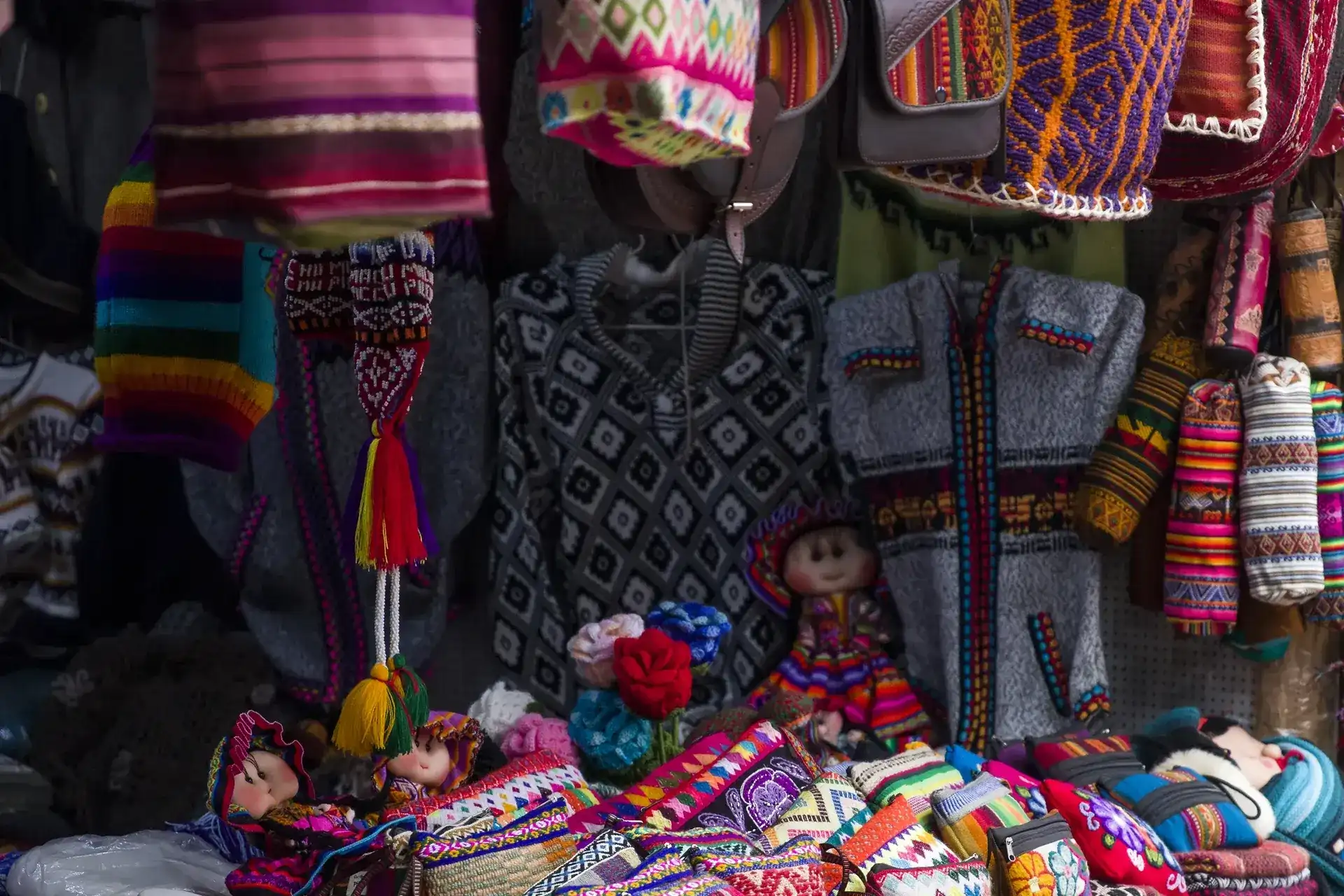
Quechua (Runasimi, "the people's language") was the lingua franca of the Inca empire and today is spoken by millions of people across the Andes of Peru, Bolivia, Ecuador and beyond. In Peru it's an official language alongside Spanish, and in the Cusco region you'll hear it in markets, Sacred Valley villages and the communities along the treks. Nobody expects travellers to speak it, but a few words bring smiles and show respect for local culture.
Start here: Cusco tips · things to do in Cusco
Before you start
- There are several varieties of Quechua; we use forms common in Cusco. You'll see different spellings (for example Qosqo, Cusco or Cuzco) because the writing system was standardised at different times.
- "Q" is pronounced at the back of the throat, further back than "k". An apostrophe (as in k'acha) marks a more explosive sound.
- Pronunciation guides are approximate.
- Stress usually falls on the second-to-last syllable.
Popular activities on GetYourGuide
Greetings and courtesy
- Allillanchu (a-yee-YAN-choo): How are you? / Hello. The most useful greeting.
- Imaynallam kashanki (ee-my-na-YAM ka-SHAN-kee): How are you?
- Allinmi (a-YEEN-mee): Fine.
- Sulpayki (sool-PIE-kee) or Añay (a-NYAI): Thank you. You'll also hear "añaychay".
- Ari (AH-ree): Yes.
- Mana (MAH-na): No.
- Tupananchiskama (too-pa-nan-chees-KA-ma): Until we meet again.
- Allin p'unchay (a-YEEN POON-chai): Good day.
Mixing is fine
In Cusco people mix Quechua and Spanish all the time. Opening with "allillanchu" and carrying on in Spanish is perfectly natural.
Introducing yourself
- Imataq sutiyki? (ee-MA-tak soo-TEE-kee): What's your name?
- Sutiymi … (soo-TEE-mee): My name is …
- Maymanta kanki? (my-MAN-ta KAN-kee): Where are you from?
- … manta kani (… MAN-ta KA-nee): I'm from …
- Kusikuni (koo-see-KOO-nee): I'm happy / glad.
At the market and in the street
- Hayk'ataq? (hai-KA-tak): How much is it?
- Yaku (YA-koo): Water.
- Mikhuy (MEE-khooy): To eat / food.
- Sumaq (SOO-mak): Beautiful, delicious, good. "Sumaq mikhuy" means "delicious food".
- K'acha (KA-cha): Pretty, elegant.
- Yanapawankichu? (ya-na-pa-wan-KEE-choo): Can you help me?
At markets, a "sulpayki" when you pay or get your change is always appreciated.
- San Pedro Market in Cusco: what to eat, what to buy, opening hours and tips
- What to buy in Cusco: authentic souvenirs and what to avoid
Numbers 1 to 10
- Huk (hook)
- Iskay (ees-KAI)
- Kimsa (KEEM-sa)
- Tawa (TA-wa)
- Pichqa (PEECH-ka)
- Suqta (SOK-ta)
- Qanchis (KAN-chees)
- Pusaq (POO-sak)
- Isqun (EES-kon)
- Chunka (CHOON-ka)
Words you'll see everywhere
- Pachamama: Mother Earth, who receives offerings, especially in August.
- Apu: the spirit of sacred mountains such as Ausangate or Salkantay.
- Inti: the sun — hence Inti Raymi, the festival of the sun.
- Ayni: reciprocity, mutual help between families and communities.
- Wasi: house. You'll see it in names of hostels and restaurants.
- Qhapaq Ñan: the great Inca road network.
- Tawantinsuyu: the Inca empire's name, "the four united regions".
- Qosqo: Cusco in Quechua, often translated as "navel" or centre of the world.
- Inti Raymi in Cusco: date, schedule, tickets and how to experience the Festival of the Sun
- Cusco festivals: a month-by-month calendar
- Machu Picchu history: who built it, why, and how the world found out
Use it respectfully
- Speak naturally and don't turn it into a joke.
- Ask before photographing people, especially women and children in traditional dress; asking in Spanish is usually fine.
- Don't assume everyone in traditional clothing speaks Quechua, or that they don't speak Spanish.
- In rural communities, greeting everyone on arrival is an important gesture.
Where to learn more
Some language schools in Cusco offer Quechua classes, sometimes combined with Spanish. Community tourism tours in the Sacred Valley can include time with Quechua-speaking families — a great chance to practise and learn about daily life and weaving.
- Sacred Valley of the Incas: what to see and how to visit
- Andean textiles in Cusco: weaving workshops, weaving communities and buying well
A little Quechua history
Quechua wasn't born with the Incas: it's a much older language family that spread across the central Andes before the empire. The Incas adopted it for administration and spread it from Ecuador to Chile and Argentina. After the conquest, missionaries used it to evangelise and wrote the first grammars and dictionaries. For centuries it faced discrimination, and many families stopped passing it on so their children wouldn't be marginalised. Today it's having a revival — music, radio, literature, social media and even dubbing in Quechua — and more young people in Cusco are proud to speak it.
Fun fact: many everyday words come from Quechua, such as condor, llama, puma, pampa and jerky (from ch'arki).
Useful phrases on a trek or in a community
- Rimaykullayki (ree-my-koo-YAI-kee): a very respectful greeting, especially for elders.
- Haku (HA-koo): Let's go!
- Samariy (sa-MA-ree): Rest.
- Chiri (CHEE-ree): Cold. "Chirin" means "it's cold".
- Ruphay (ROO-pai): Heat, strong sun.
- Mamay / Taytay: warm, respectful ways to address a woman or a man.
If you trek with Quechua-speaking horsemen or cooks, asking how to say what you see — mountain (urqu), lake (qucha), river (mayu) — is a great way to connect.
- Salkantay Trek to Machu Picchu: route, difficulty, best season and how to plan it
- Ausangate trek: the great circuit of the sacred peak (route, altitude and preparation)
Before you go
eSIM for Peru
Land connected: install an Airalo data eSIM before you travel and switch it on when you land. Check first that your phone supports eSIM and is unlocked.
Get online in Peru →Frequently asked questions
- How do you say "thank you" in Quechua?
- Usually "sulpayki" or "añay" (also "añaychay").
- How do you say "hello" in Quechua?
- The most common greeting is "allillanchu", roughly "are you well?".
- Is Quechua spoken in Cusco?
- Yes. It's an official language in Peru and widely spoken in the Cusco region, especially in rural areas and markets, alongside Spanish.
- Do I need Quechua to travel?
- No. Spanish or basic English works in tourist areas, but a few Quechua words are warmly received.
Book this plan
- City tour of the Tourist Ticket sitesCompareSee dates →
- Cusco walking tourCompareSee dates →
Notice: This guide shares advice and recommendations based on research and local experience. Prices, opening hours and rules may change: always check with official sources and operators. Cusco Tips is not responsible for third-party services, bookings or decisions made using these guides; some links are affiliate links (see our affiliate policy).
Related guides
Cusco festivals: a month-by-month calendar
Calendar of the main festivals in and around Cusco: Carnival, Holy Week, Qoyllur Rit'i, Corpus Christi, Inti Raymi, Virgen del Carmen, Pachamama, Santurantikuy and more.
Read guide →
San Pedro Market in Cusco: what to eat, what to buy, opening hours and tips
Guide to San Pedro Central Market: sections, juices, cheap food, breads, cheeses and Andean produce, approximate hours, safety and how to get there from the Plaza de Armas.
Read guide →
Sacred Valley of the Incas: what to see and how to visit
Sacred Valley guide: Pisac, Chinchero, Moray, the Maras salt pans and Ollantaytambo, tickets, how to visit (tour, independently or with a driver) and a 2-day plan.
Read guide →
Is Cusco worth it? What to do beyond Machu Picchu and how long to stay
Is Cusco worth it beyond Machu Picchu? What to see in the city, the Sacred Valley and the mountains, who it suits, real downsides and 3 to 7-day itineraries.
Read guide →