
Urubamba: the central base of the Sacred Valley (things to do, getting there and where to stay)
Updated:
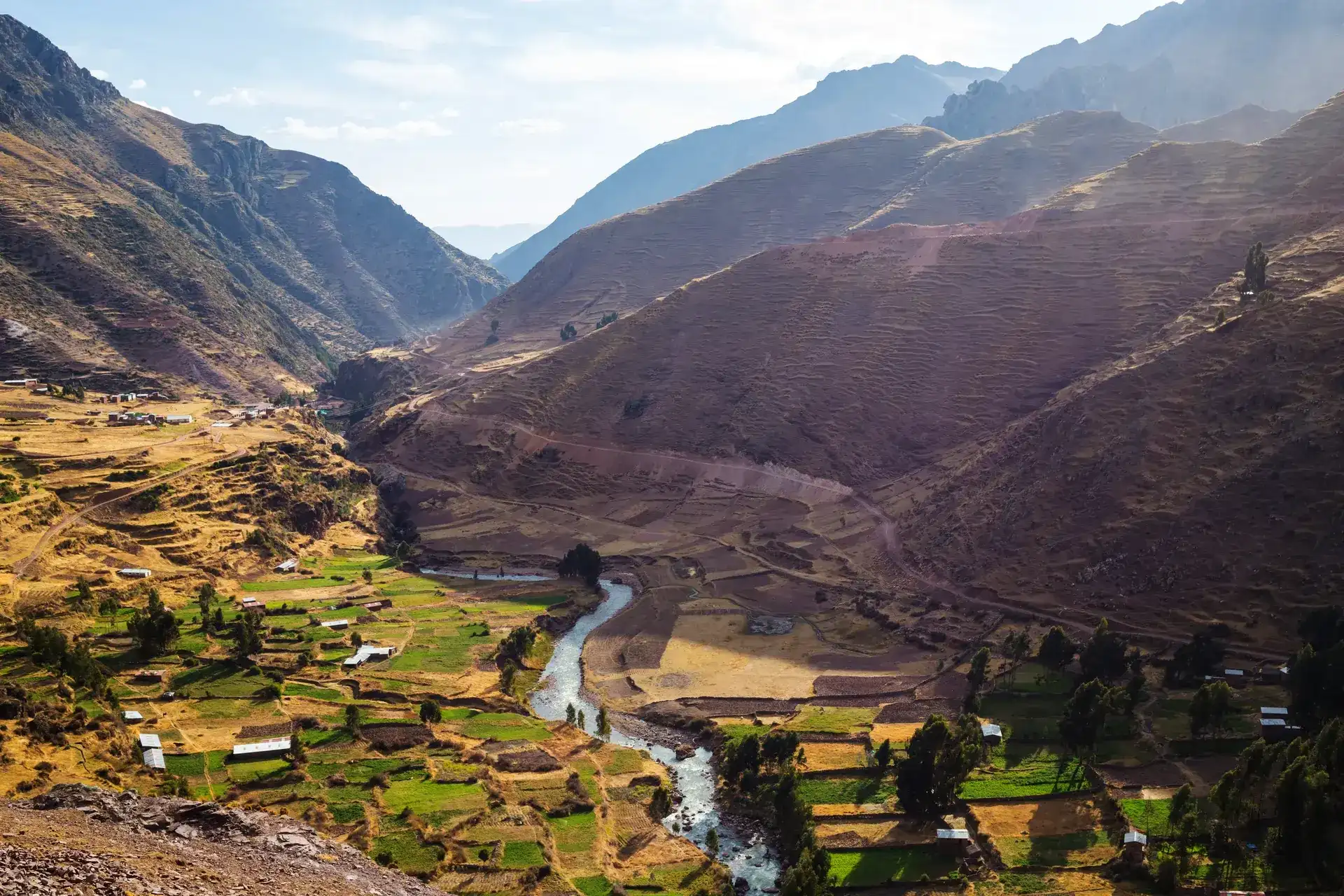
Urubamba is the capital of the province of the same name and the geographic centre of the Sacred Valley of the Incas. It has no famous ruins like Pisac or Ollantaytambo, which may be why many travellers just pass through. But its position is exactly what makes it interesting: from here you quickly reach Moray, Maras, Ollantaytambo, Chinchero and Pisac, the climate is milder than Cusco's and the altitude, about 2,870 m, helps you acclimatise. That's why many of the valley's spacious hotels, haciendas and lodges are in Urubamba and neighbouring Yucay.
Start here: Cusco tips · things to do in Cusco
Why stay in Urubamba
- Central location: Ollantaytambo and its train station are about 20–30 minutes away; Moray and Maras about 30–40; Pisac just under an hour.
- Lower than Cusco: about 500 m lower, which you notice at night, especially in the first days.
- Mild climate: pleasant days and cool nights, with green valleys in the rainy season.
- Space and calm: many places have gardens, views of mountains such as Chicón and a rural feel.
- A good place to start: many people go from Cusco airport straight to the valley and leave the city for the end.
- Altitude sickness in Cusco: how to prevent it and what to do
- How many days in Cusco + 3, 5 and 7-day itineraries
Popular activities on GetYourGuide
Things to do in and around Urubamba
- Urubamba market: a very authentic local market with fruit, vegetables, cheese and food stalls — a window on daily valley life.
- The Plaza de Armas and town church, surrounded by quiet streets.
- Moray: the circular Inca terraces, possibly used to experiment with crops at different temperatures.
- Maras salt pans: hundreds of salt pools on the hillside, worked since pre-Inca times by community families.
- Chinchero: an Andean village with a colonial church on Inca walls, a market and textile centres.
- Yucay: a neighbouring village with a plaza and colonial houses.
- Activities: horse riding, cycling, paragliding in season, ATVs around Maras and Moray, rafting on the Urubamba depending on season.
- Moray and the Maras salt mines: how to visit from Cusco or the Sacred Valley
- Chinchero: weaving, Inca ruins and market between Cusco and the Sacred Valley
- ATV tour to Maras and Moray: what the quad-bike trip from Cusco is like
- Rafting in Cusco: Urubamba sections, the Apurímac, seasons and safety
Getting there
- From Cusco: via Chinchero, about 1–1.5 hours by car. Frequent colectivos and buses leave from stops in Cusco — cheaper but slower with less luggage space.
- From the airport: a private transfer is easiest with luggage; go straight there without passing through central Cusco.
- From Ollantaytambo or Pisac: valley colectivos or mototaxis for short hops.
- Getting around the valley is easy by taxi or with a driver hired for the day, especially to combine several sites.
- Cusco airport to the city centre: taxi, ride apps, transfers and approximate prices
- Cusco to the Sacred Valley and Ollantaytambo: colectivo, taxi, tour and train
Where and how to stay
Urubamba and Yucay have many of the valley's larger hotels: from simple guesthouses in town to haciendas, garden lodges and spa resorts on the outskirts. Some are several kilometres from the centre, so check the exact location and whether they offer transfers.
- To walk to restaurants and the market, stay near the centre.
- For rest and nature, the outskirts and Yucay are quieter.
- For an early train to Machu Picchu, Ollantaytambo may be more practical for the last night.
- Where to stay in the Sacred Valley: Pisac, Urubamba, Ollantaytambo and more
- Ollantaytambo: ruins, a living Inca town, the Machu Picchu train and tips
Eating in Urubamba
Besides the market stalls, the town and surroundings have Peruvian and Novo-Andean restaurants, many using valley produce. Giant local corn, trout and grilled meats are common. Out of town there are country restaurants popular with Cusco families at weekends.
A 2-day plan based in Urubamba
- Day 1: Chinchero in the morning, Moray and Maras in the afternoon; back to Urubamba.
- Day 2: Pisac in the morning (ruins and market), afternoon in Ollantaytambo and overnight there for the next day's Machu Picchu train.
Climate and best time to visit
As in the whole valley, there are two distinct seasons. From May to September, the dry season, days are sunny and nights cold, with very clear skies: the most popular time. From November to March it rains often, usually in the afternoon, and the valley turns very green; there are fewer visitors and somewhat lower lodging prices. April and October are transition months with a good balance. Thanks to its lower altitude, Urubamba is milder than Cusco year-round, but bring warm layers for the night and sun protection for the day.
- Best time to visit Cusco and what to pack
- Cusco weather by month: temperatures, rain and what to expect
Practical tips
- Carry cash in soles: markets, colectivos and small businesses don't always take cards. There are ATMs in the town centre.
- If you're staying out of town, ask your hotel for trusted taxis and save the number.
- Book ahead in high season and on holidays, when many Peruvian families also visit the valley.
Frequently asked questions
- Is Urubamba a good base for the Sacred Valley?
- Yes: it's central, lower than Cusco and has plenty of lodging.
- How long from Cusco to Urubamba?
- About 1–1.5 hours via Chinchero.
- Is there a Machu Picchu train from Urubamba?
- Usually you board in Ollantaytambo, about 20–30 minutes away.
Book this plan
- Sacred Valley tourCompareSee dates →
- Maras and MorayCompareSee dates →
Notice: This guide shares advice and recommendations based on research and local experience. Prices, opening hours and rules may change: always check with official sources and operators. Cusco Tips is not responsible for third-party services, bookings or decisions made using these guides; some links are affiliate links (see our affiliate policy).
Related guides
Sacred Valley of the Incas: what to see and how to visit
Sacred Valley guide: Pisac, Chinchero, Moray, the Maras salt pans and Ollantaytambo, tickets, how to visit (tour, independently or with a driver) and a 2-day plan.
Read guide →
Where to stay in the Sacred Valley: Pisac, Urubamba, Ollantaytambo and more
Comparing towns to stay in the Sacred Valley: Pisac, Calca, Yucay, Urubamba, Ollantaytambo and Chinchero; pros, cons, Machu Picchu connections and who each suits.
Read guide →
Ollantaytambo: ruins, a living Inca town, the Machu Picchu train and tips
Guide to Ollantaytambo in the Sacred Valley: what to see at the archaeological site, the town and Pinkuylluna, getting there from Cusco, the train station and whether to stay.
Read guide →
Moray and the Maras salt mines: how to visit from Cusco or the Sacred Valley
Guide to Moray and the Maras salt mines: what they are, tickets (Tourist Ticket and separate fee), getting there by tour, taxi or on foot, best time, combos and tips.
Read guide →