
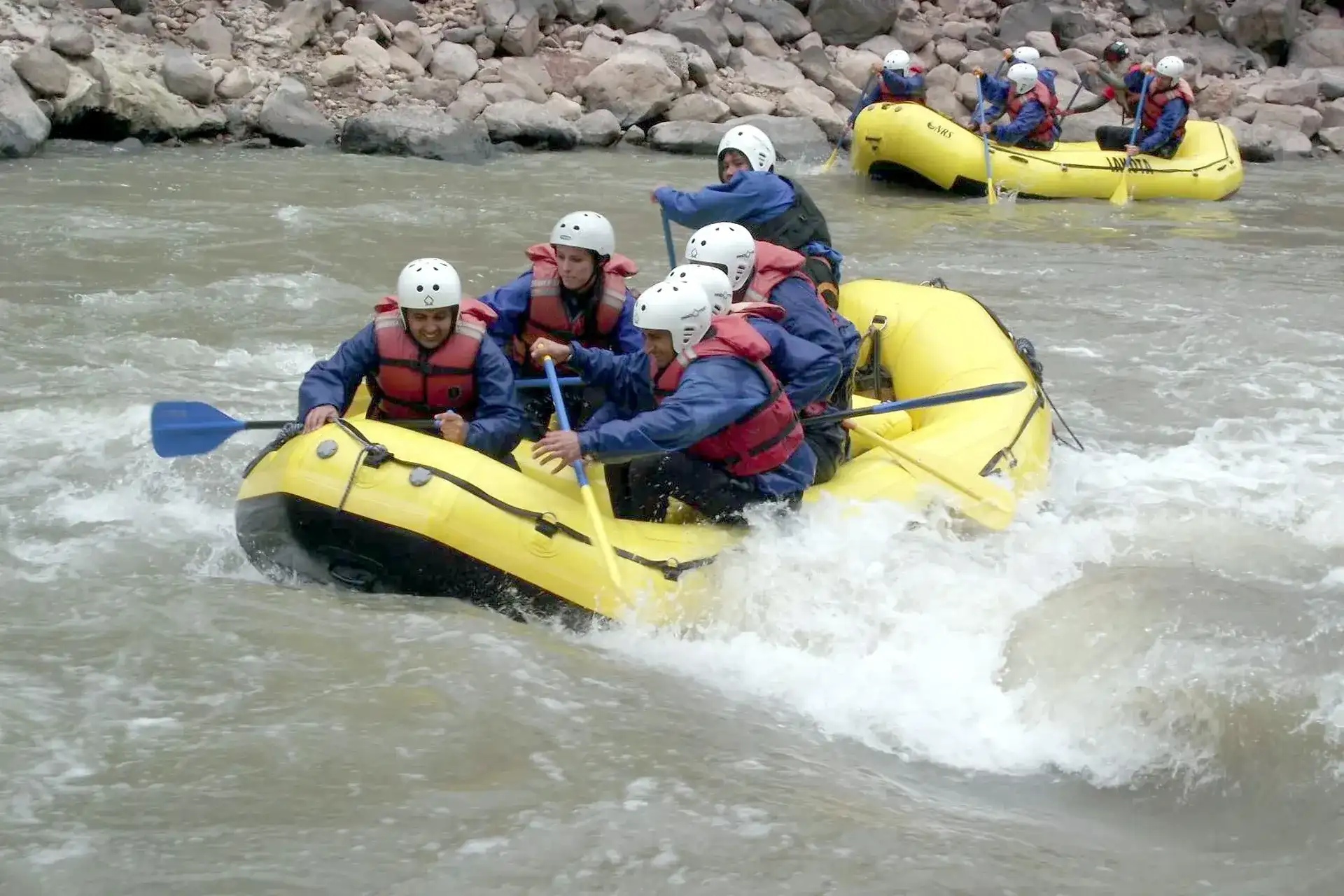
Cusco isn't just ruins and mountains: its rivers offer some of South America's best rafting. The Urubamba (or Vilcanota) has sections for every level a few hours from the city, and the Apurímac, one of the Amazon's source rivers, hosts multi-day expeditions for anyone after serious whitewater. A rafting day is also a great way to rest your legs between hikes.
Start here: Cusco tips · things to do in Cusco
Understanding difficulty grades
Rivers are graded on an international scale from I to VI:
- Class I–II: calm water with small waves; suitable for families and beginners.
- Class III: rapids with irregular waves requiring manoeuvres; exciting and fine for fit beginners with a good guide.
- Class IV: powerful, technical rapids; previous experience recommended.
- Class V: very difficult, experts only.
Each section's grade varies a lot with flow and season.
Popular activities on GetYourGuide
Main sections
Cusipata – Chuquicahuana (southern Urubamba)
The most popular day-rafting section from Cusco, about 1.5–2 hours' drive south of the city. In the dry season it offers class III rapids, with the odd III+ or IV depending on flow, and Andean canyon scenery. Tours usually include transport, gear, lunch and sometimes extras such as ziplines.
Sacred Valley (Huambutío – Pisac area)
Calmer class II–III sections, ideal for families, children above a certain age (check with the operator) or first-timers. They pair well with a visit to Pisac.
Santa Teresa
On the Inca Jungle route it's common to raft the Vilcanota near Santa Teresa, with class III–IV rapids in high-jungle surroundings.
- Inca Jungle Trek: biking, rafting, ziplining and hiking to Machu Picchu
- Pisac: Inca ruins, craft market and how to visit from Cusco
- Machu Picchu via Hidroeléctrica and Santa Teresa: the budget route step by step
Apurímac expeditions
The Apurímac runs through a deep, remote canyon with class IV and V rapids. Expeditions usually last 3–4 days, camping on sandy beaches, and only run in the dry season, roughly May to November, when flows are safe. It's an adventure for very fit people with previous experience or a strong will to learn, always with specialist operators.
Specialists only
For the Apurímac, choose operators with guides certified in swiftwater rescue, safety kayakers and gear in perfect condition. This isn't a river to improvise on.
When to go
- Dry season (roughly May to October): lower, stable flows; best for almost all sections and the only time for the Apurímac.
- Rainy season (roughly December to March): flows rise sharply and rapids get more powerful. Some sections close or are swapped for safer ones. The water is very muddy.
Urubamba water comes from glaciers and is cold year-round: operators provide wetsuits.
- Best time to visit Cusco and what to pack
- Rainy season in Cusco and Machu Picchu: what to expect and how to make the most of it
Safety: choosing an operator
- Guides trained in swiftwater rescue and first aid.
- A full safety briefing before getting on the water, with paddle practice and what to do if you fall in.
- Helmet, well-fitted life jacket and wetsuit for everyone.
- A safety kayak accompanying rafts on class III and above.
- Rafts and gear in good condition; ask to see equipment if in doubt.
- Insurance covering the activity — check your own travel insurance too.
Be wary of prices far below average: they usually cut corners on guides, gear or safety.
- How to choose a tour agency in Cusco: a checklist to get it right
- Is Cusco safe? Real risks and practical tips for a worry-free trip
What a rafting day looks like
- Morning pick-up in Cusco and drive to the river.
- Gear-up and safety talk.
- About 2–3 hours on the water, with rest stops.
- Lunch, a hot shower at some bases and back to Cusco in the afternoon.
What to bring
- Swimsuit or synthetic clothing to wear under the wetsuit.
- Sport sandals or old trainers that can get wet.
- Dry clothes and a towel for afterwards.
- Water-resistant sunscreen.
- Nothing valuable: leave phones and documents at the base or in Cusco unless the operator provides dry bags.
Altitude
The Urubamba sections are a bit lower than Cusco, but you'll feel the physical effort. Raft after one or two days of acclimatisation.
Frequently asked questions
- What level is rafting in Cusco?
- The most popular section, Cusipata – Chuquicahuana, is class III in the dry season. There are calmer sections in the Sacred Valley and class IV–V expeditions on the Apurímac.
- Do I need experience?
- Not for class II–III sections if you can swim and follow your guide. For the Apurímac, experience is recommended.
- When is the best time?
- The dry season, roughly May to October. In the rains flows rise and some sections close.
- Can children go rafting?
- On calm Sacred Valley sections, above the operator's minimum age. Check before booking.
Book this plan
- Urubamba river raftingCompareSee dates →
- Sacred Valley ziplineCompareSee dates →
Notice: This guide shares advice and recommendations based on research and local experience. Prices, opening hours and rules may change: always check with official sources and operators. Cusco Tips is not responsible for third-party services, bookings or decisions made using these guides; some links are affiliate links (see our affiliate policy).
Related guides

Things to do in Cusco: 30 essentials in the city and beyond
Things to do in Cusco: the city's essentials, Machu Picchu, the Sacred Valley, day trips, treks, food, markets and festivals, with 1- to 3-day plans.
Read guide →
Inca Jungle Trek: biking, rafting, ziplining and hiking to Machu Picchu
Inca Jungle guide: 3–4 day route with a bike descent from Abra Málaga, optional rafting and zipline, a hike to Santa Teresa, hot springs and arrival in Aguas Calientes.
Read guide →
ATV tour to Maras and Moray: what the quad-bike trip from Cusco is like
Guide to the ATV tour to Maras and Moray: route, duration, licence questions, entrance fees, safety, best season and alternatives like biking or the classic tour.
Read guide →
Ziplining and via ferrata in Cusco: the Sacred Valley and Santa Teresa
Guide to ziplines and via ferrata in Cusco: what the Sacred Valley via ferrata is like, the Santa Teresa ziplines, difficulty, ages, safety, combos and what to bring.
Read guide →
Sacred Valley of the Incas: what to see and how to visit
Sacred Valley guide: Pisac, Chinchero, Moray, the Maras salt pans and Ollantaytambo, tickets, how to visit (tour, independently or with a driver) and a 2-day plan.
Read guide →