
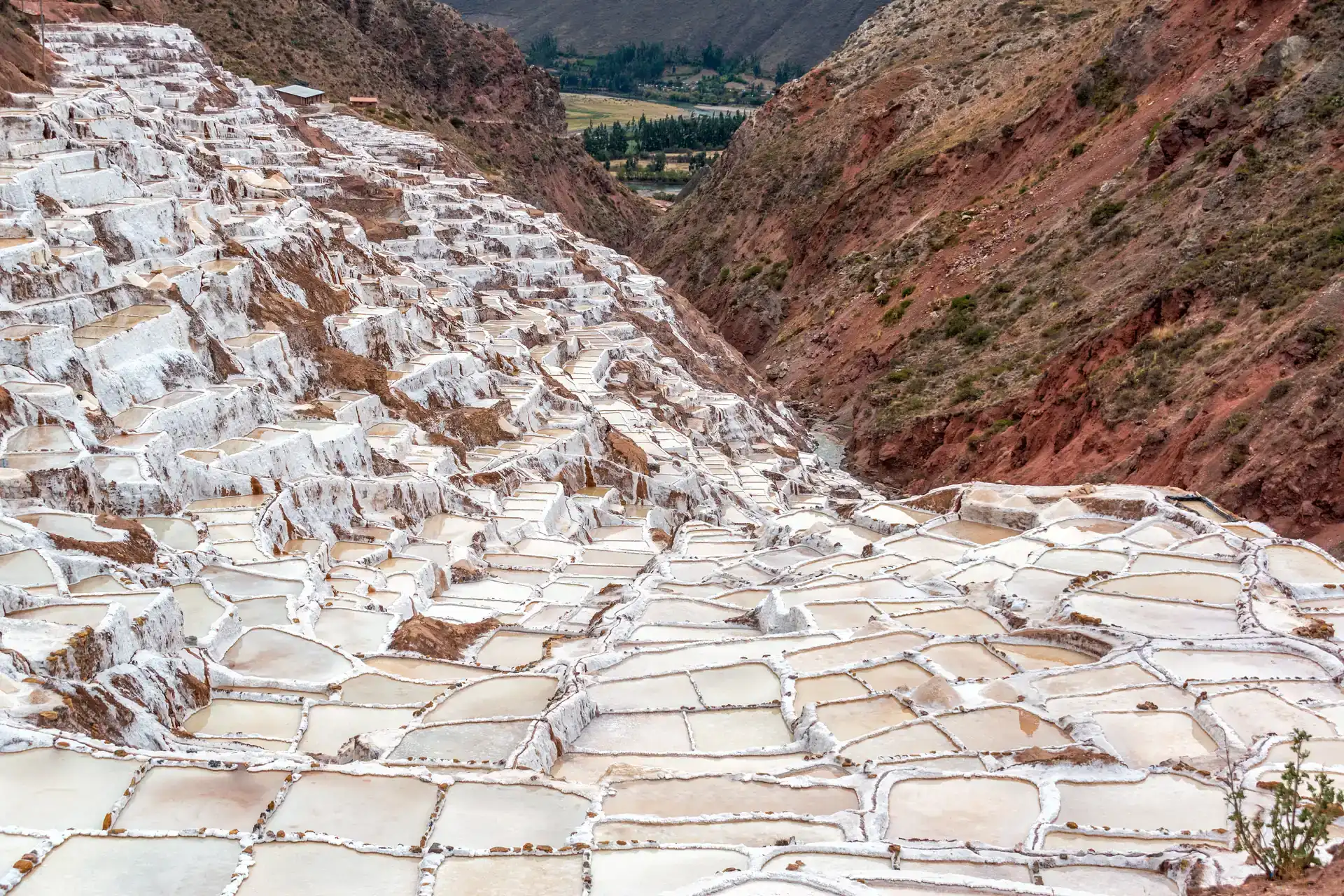
Riding the high plateau between Chinchero and the Sacred Valley on a quad bike (ATV) has become one of Cusco's most popular adventure activities. The tour combines dirt roads between fields, views of the Urubamba range's snow peaks and two of the region's most photogenic sites: the circular terraces of Moray and the Maras salt pans. It's a fun, different way to see them, but it's worth knowing what's included and what precautions to take.
Start here: Cusco tips · things to do in Cusco
The typical route
- Morning pick-up in Cusco (or midday for the afternoon departure) and a roughly 1-hour drive to the ATV base on the plateau near Maras.
- Safety talk, helmet and a test ride on a short circuit.
- Ride along rural tracks to Moray, with photo stops, and visit the terraces.
- Continue to the Maras salt pans and their viewpoint over thousands of salt pools.
- Return to the base and transfer to Cusco.
Some variants add Huaypo lake or viewpoints over the Sacred Valley. The tour lasts about 5–6 hours in total, with 2–3 hours of riding.
- Moray and the Maras salt mines: how to visit from Cusco or the Sacred Valley
- Huaypo and Piuray lakes: a quiet escape near Chinchero
Popular activities on GetYourGuide
What you'll see
- Moray: an Inca complex of concentric circular terraces thought to have been an agricultural research centre, using temperature differences between levels.
- Maras salt pans: thousands of stepped pools where salt is produced by evaporating water from a salty spring, worked by community families for centuries.
- The scenery: fields of potato, quinoa and barley, adobe villages and the Urubamba range with Chicón and Verónica peaks behind.
Entrance fees: usually not included
Many ATV tours don't include site entrances. Moray is included in the Cusco Tourist Ticket (general or the partial Sacred Valley circuit), and the Maras salt pans have a separate entrance charged by the community. Check what's included before booking and carry cash in soles. Fees change; check current information.
Do I need a driving licence?
Operators usually don't require a specific licence to ride ATVs on these tracks, but they do ask that solo riders be adults with some vehicle experience. Minors or those who'd rather not drive can ride as passengers on double ATVs. Ask the operator for exact conditions and check whether your travel insurance covers the activity.
Safety
- Insist on a helmet, goggles or visor and a test ride first.
- Respect the speed your guide sets and keep your distance from the vehicle ahead: dust cuts visibility.
- Tracks have potholes, bends and gravel; ride carefully.
- Choose operators with well-maintained vehicles and insurance for the activity.
- Don't ride after drinking alcohol or if you feel unwell from the altitude.
Accidents
ATVs can roll on bends or slopes if ridden fast. If you're inexperienced, go slowly or ride as a passenger.
- How to choose a tour agency in Cusco: a checklist to get it right
- Is Cusco safe? Real risks and practical tips for a worry-free trip
Best season
In the dry season (roughly May to October) tracks are in good shape, though very dusty. In the rainy season mud makes riding tougher — more fun for some, but slippery; some operators change the route.
What to bring
- Comfortable clothes that can get dirty and a windbreaker.
- A bandana or buff for the dust.
- Sunglasses and sunscreen.
- Closed shoes.
- Cash for entrances, especially the salt pans.
Alternatives
- Classic bus tour: Moray, Maras and often Chinchero, more relaxed and cheaper.
- By bike: some operators run mountain-bike routes with a descent into the Sacred Valley.
- On foot: the walk from the salt pans down to Pichingoto and the Urubamba River is short and spectacular.
- Mountain biking in Cusco: routes, tours, rental and safety
- Chinchero: weaving, Inca ruins and market between Cusco and the Sacred Valley
Frequently asked questions
- How long is the ATV tour to Maras and Moray?
- About 5–6 hours in total from Cusco, with 2–3 hours of riding.
- Are entrance fees included?
- Often not. Moray requires the Tourist Ticket and the salt pans have a separate fee. Check when booking.
- Do I need experience?
- Not essential, but caution is. If you're inexperienced, ride as a passenger on a double ATV.
- Is it safe?
- With a serious operator, protective gear and careful riding, yes. Accidents are usually due to speeding.
Book this plan
- ATV ride to Maras and MorayCompareSee dates →
- Maras and MorayCompareSee dates →
Notice: This guide shares advice and recommendations based on research and local experience. Prices, opening hours and rules may change: always check with official sources and operators. Cusco Tips is not responsible for third-party services, bookings or decisions made using these guides; some links are affiliate links (see our affiliate policy).
Related guides
Things to do in Cusco: 30 essentials in the city and beyond
Things to do in Cusco: the city's essentials, Machu Picchu, the Sacred Valley, day trips, treks, food, markets and festivals, with 1- to 3-day plans.
Read guide →
Moray and the Maras salt mines: how to visit from Cusco or the Sacred Valley
Guide to Moray and the Maras salt mines: what they are, tickets (Tourist Ticket and separate fee), getting there by tour, taxi or on foot, best time, combos and tips.
Read guide →
Rafting in Cusco: Urubamba sections, the Apurímac, seasons and safety
Guide to rafting in Cusco: Urubamba River sections (Cusipata, Sacred Valley, Santa Teresa), Apurímac expeditions, difficulty grades, seasons, safety and choosing an operator.
Read guide →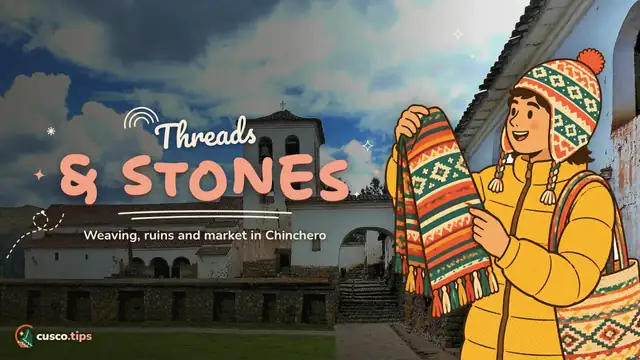
Chinchero: weaving, Inca ruins and market between Cusco and the Sacred Valley
Chinchero guide: weaving centres and natural dyes, the Inca site and colonial church, the Sunday market, the Tourist Ticket, getting there from Cusco and how to combine it.
Read guide →
Sacred Valley of the Incas: what to see and how to visit
Sacred Valley guide: Pisac, Chinchero, Moray, the Maras salt pans and Ollantaytambo, tickets, how to visit (tour, independently or with a driver) and a 2-day plan.
Read guide →