
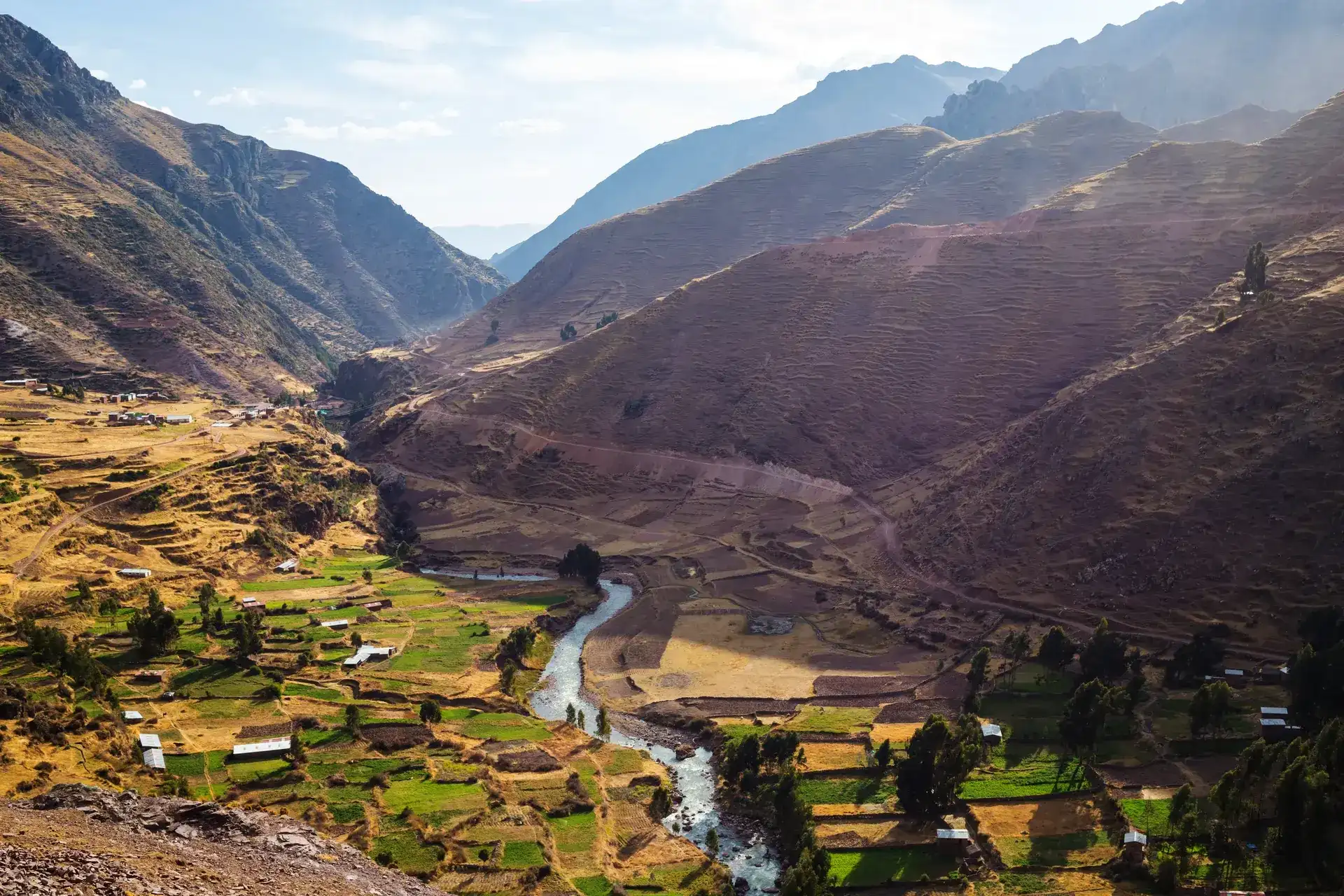
Sleeping in the Sacred Valley instead of Cusco has many advantages: it's lower (about 2,800–3,000 m vs Cusco's 3,400 m), the climate is milder, the vibe is calmer and it's on the way to Machu Picchu. Many people spend their first nights there to acclimatise, or the nights before the train. But the valley is long and each town has its own character. This guide compares the options so you can choose according to your plan.
Start here: Cusco tips · things to do in Cusco
Why stay in the Sacred Valley?
- Lower altitude: helps you acclimatise on arrival and sleep better.
- Close to Machu Picchu: most trains leave from Ollantaytambo.
- Slower pace: small towns, nature and less traffic than Cusco.
- A base for trips: Pisac, Moray, Maras, Chinchero, Ollantaytambo and treks like Lares or Huchuy Qosqo.
A common plan: fly into Cusco, head straight down to the valley (1–2 hours), spend 2–3 nights, go to Machu Picchu and finish in Cusco already acclimatised.
- Altitude sickness in Cusco: how to prevent it and what to do
- How many days in Cusco + 3, 5 and 7-day itineraries
- Sacred Valley of the Incas: what to see and how to visit
Pisac
A town with a famous craft market and one of the valley's most impressive Inca sites above it. It has an alternative vibe, with cafés, yoga centres and retreats.
- Ideal for: peace, wellness and being close to Cusco (about 45 minutes).
- Downsides: far from Ollantaytambo and the Machu Picchu train (around 1.5 hours).
Calca, Yucay and Huayllabamba
Between Pisac and Urubamba are smaller towns and rural areas with lodges and country houses surrounded by gardens.
- Ideal for: restful stays, families and those with a car or booked transfers.
- Downsides: fewer restaurants and services on foot; you depend on transport.
Urubamba
The valley's largest town and transport hub, with a market, banks, restaurants and plenty of hotels of every category around it.
- Ideal for: a central base to explore the whole valley, with easy access to Moray, Maras and Chinchero.
- Downsides: the centre is less picturesque and noisier; the best stays are on the outskirts.
- Urubamba: the central base of the Sacred Valley (things to do, getting there and where to stay)
- Moray and the Maras salt mines: how to visit from Cusco or the Sacred Valley
Ollantaytambo
A living Inca town with cobbled streets and original water channels below a great fortress. It's the main train station for Machu Picchu.
- Ideal for: the night before or after the train, history lovers and early starts to Machu Picchu.
- Downsides: busy by day with tour groups; smaller places that get pricier in high season.
- Ollantaytambo: ruins, a living Inca town, the Machu Picchu train and tips
- Machu Picchu day trip from Cusco: timings, logistics and whether it's worth it
Chinchero
On the plateau between Cusco and the valley, higher than Cusco, known for its weavers and views.
- Ideal for: short stays focused on textiles or combined with Moray and Maras.
- Downsides: colder and higher, so no help with acclimatisation.
Quick summary
- To acclimatise and rest: Pisac, Yucay or Urubamba.
- For the Machu Picchu train: Ollantaytambo.
- To explore the whole valley by car: Urubamba.
- For an alternative, wellness vibe: Pisac.
- For families with kids: garden lodges between Calca and Urubamba.
Getting around the valley
- Colectivos and buses: link Cusco with Pisac, Urubamba and Ollantaytambo, and the towns with each other. Cheap and frequent by day.
- Taxis and private transfers: convenient for out-of-town hotels and combining several sites.
- Tours: many Sacred Valley tours pick up from valley hotels on request.
Direct transfers run from Cusco airport to the valley; avoid informal taxis at the exit.
- Getting around Cusco: taxis, ride apps, city buses and colectivos
- Cusco airport to the city centre: taxi, ride apps, transfers and approximate prices
- Cusco to the Sacred Valley and Ollantaytambo: colectivo, taxi, tour and train
Booking tips
- Check the exact location on a map: "Sacred Valley" can mean far from any town.
- Without a car, choose somewhere within walking distance of a town centre.
- In Ollantaytambo, check the distance to the train station.
- Nights are cool year-round; ask about heating or extra blankets.
- In high season (roughly June to August) book ahead.
- Where to stay in Cusco: best areas for your trip and budget
- Best time to visit Cusco and what to pack
By travel style
- First visit, short on time: Ollantaytambo, close to the Machu Picchu train.
- Families and longer stays: Urubamba or Yucay, with spacious lodgings, gardens and good links.
- Wellness and retreats: around Pisac and Calca, with a calmer vibe.
- Tight budget: Pisac, Urubamba and Ollantaytambo have simple hostels and guesthouses.
- Luxury: several upscale hotels are spread around Urubamba, Yucay and Huayllabamba.
Whatever you choose, sleeping in the valley helps acclimatisation as it's lower than Cusco.
Before you go

Airport transfer
Book a private Welcome Pickups transfer from Cusco airport to your hotel before you land, with your driver waiting in arrivals. Check the price and cancellation terms when booking.
Book your airport transfer →Frequently asked questions
- Is it better to sleep in Cusco or the Sacred Valley?
- For your first nights, the Sacred Valley: it's lower and helps you acclimatise. Cusco is better for city life and central sights.
- Which town is best for the Machu Picchu train?
- Ollantaytambo, where most trains depart.
- How many nights in the Sacred Valley?
- Two or three nights let you explore calmly before Machu Picchu.
- Pisac or Urubamba?
- Pisac for a calm vibe close to Cusco; Urubamba as a central base for the whole valley.
Book this plan
- Cusco city tourCompareSee dates →
- Sacred Valley tourCompareSee dates →
Notice: This guide shares advice and recommendations based on research and local experience. Prices, opening hours and rules may change: always check with official sources and operators. Cusco Tips is not responsible for third-party services, bookings or decisions made using these guides; some links are affiliate links (see our affiliate policy).
Related guides
Things to do in Cusco: 30 essentials in the city and beyond
Things to do in Cusco: the city's essentials, Machu Picchu, the Sacred Valley, day trips, treks, food, markets and festivals, with 1- to 3-day plans.
Read guide →
Sacred Valley of the Incas: what to see and how to visit
Sacred Valley guide: Pisac, Chinchero, Moray, the Maras salt pans and Ollantaytambo, tickets, how to visit (tour, independently or with a driver) and a 2-day plan.
Read guide →
Ollantaytambo: ruins, a living Inca town, the Machu Picchu train and tips
Guide to Ollantaytambo in the Sacred Valley: what to see at the archaeological site, the town and Pinkuylluna, getting there from Cusco, the train station and whether to stay.
Read guide →
Urubamba: the central base of the Sacred Valley (things to do, getting there and where to stay)
Urubamba guide: why it's the best base for exploring the Sacred Valley, things to do in town and nearby, getting there from Cusco and the airport, and what kind of lodging there is.
Read guide →
Pisac: Inca ruins, craft market and how to visit from Cusco
Pisac guide in the Sacred Valley: what to see in the archaeological park, the market, getting there from Cusco, entry with the Tourist Ticket, the walk down and tips.
Read guide →