
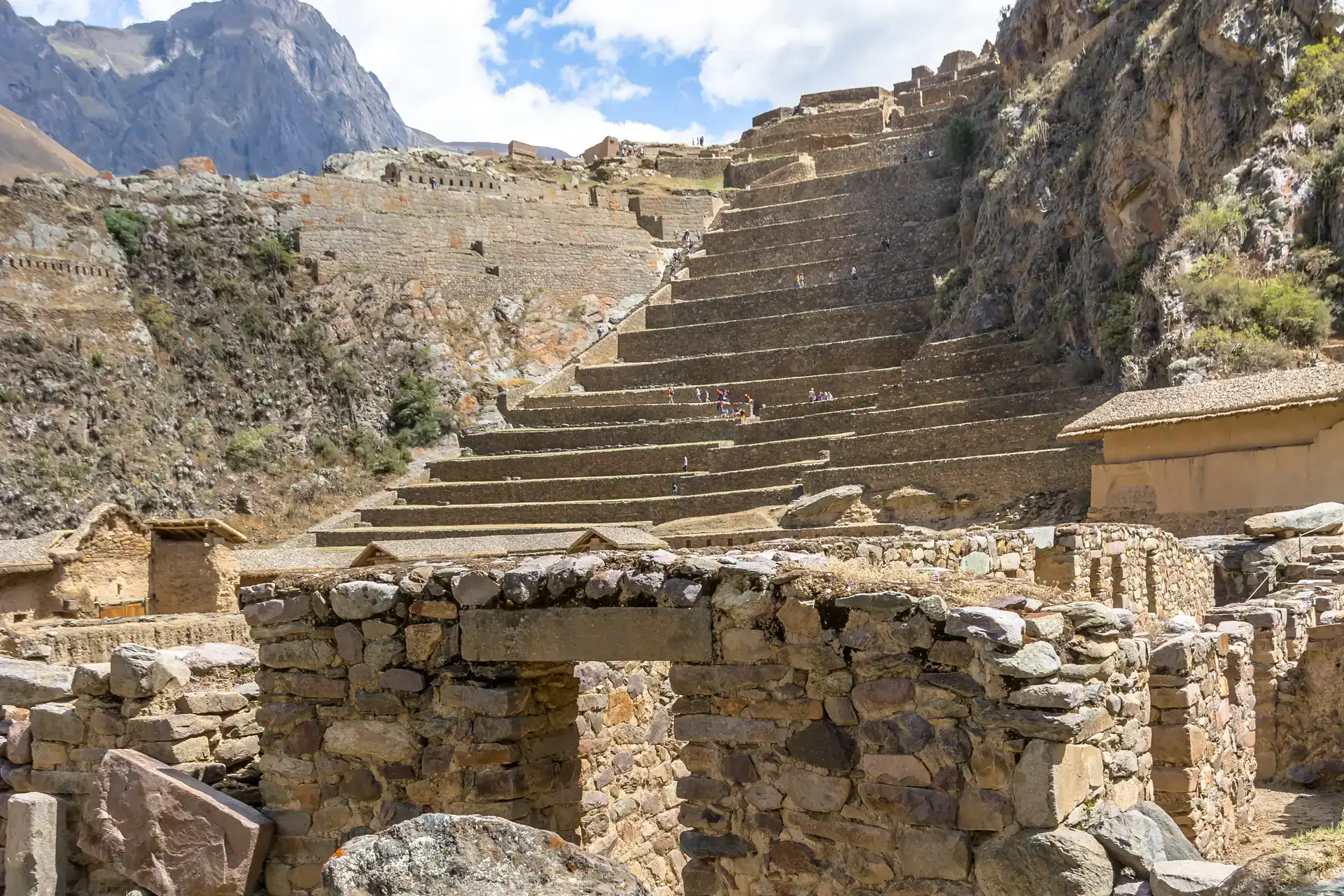
Ollantaytambo is one of the most special places in the Sacred Valley: a town that keeps its Inca street plan, with narrow lanes, water channels still flowing and houses built on original walls, beneath an impressive complex of terraces and temples. It's also the most-used train station for Machu Picchu, so many travellers pass through. It deserves more than a quick stop.
Start here: Cusco tips · things to do in Cusco
Why visit Ollantaytambo
- It's a "living Inca town": its blocks (canchas) keep their original layout and are still lived in.
- Its archaeological site is one of the region's most spectacular, with huge terraces and the unfinished Temple of the Sun.
- At about 2,800 m it's lower than Cusco — ideal for acclimatising.
- Most trains to Aguas Calientes and Machu Picchu leave from here.
Popular activities on GetYourGuide
The archaeological site
The complex is linked to Pachacútec, who conquered the area in the 15th century and turned it into a royal estate. In 1537 it saw one of the few Inca victories over the Spaniards: Manco Inca held out here by flooding the plain through channels.
- The terraces: a staircase of huge terraces climbing the hillside. Short but steep.
- The Temple of the Sun: six enormous pinkish granite monoliths joined by thin stone inserts, at the top. The stones were brought from a quarry across the river.
- The Baths of the Ñusta: ceremonial fountains carved into the rock, at the bottom.
- The views: from the top you see the town, the valley and the Pinkuylluna storehouses on the opposite mountain.
Entry is included in the Cusco Tourist Ticket (full or Sacred Valley partial). Allow 1.5–2 hours.
The town and Pinkuylluna
- Wander the old quarter north of the plaza and notice the stone doorways and channels.
- Pinkuylluna: on the mountain opposite the site are ancient Inca storehouses (qollqas). A steep trail reaches them in about 30–45 minutes, with one of the best views of town. Access has been free, but conditions can change.
- The plaza and market: craft stalls, cafés and restaurants, calmer in the late afternoon once tour groups leave.
Go early or late
Sacred Valley tours arrive around midday. If you stay overnight, enter the site at opening time or late afternoon for fewer crowds.
Getting there from Cusco
- Shared vans (colectivos): run from Cusco to Urubamba and Ollantaytambo during the day. Cheap, around 1.5–2 hours. Frequent connections from Urubamba.
- Taxi or private transfer: about 1.5–2 hours, the most comfortable option with luggage.
- Sacred Valley tour: most stop at Ollantaytambo in the afternoon.
- From the airport: many travellers head straight here on arrival in Cusco.
- Cusco to the Sacred Valley and Ollantaytambo: colectivo, taxi, tour and train
- Cusco airport to the city centre: taxi, ride apps, transfers and approximate prices
The train station
The station is a 10–15-minute walk from the plaza, by the river. Trains from the companies serving Aguas Calientes leave from here, with different service classes. In high season, book the train as soon as you have your Machu Picchu ticket. Allow time: access streets get congested at peak hours.
- How to get to Machu Picchu: train, Inca Trail or Hidroeléctrica
- Machu Picchu tickets: how to buy them on the official site and not miss out
Stay in Ollantaytambo?
It's one of the best bases in the Sacred Valley: lower altitude, a nice evening atmosphere and the Machu Picchu train minutes away. One or two nights let you see the site unhurried, climb Pinkuylluna and do nearby trips such as Moray, Maras or the Pumamarca ruins.
- Where to stay in the Sacred Valley: Pisac, Urubamba, Ollantaytambo and more
- Moray and the Maras salt mines: how to visit from Cusco or the Sacred Valley
Practical tips
- Carry cash: there are ATMs, but they can fail or run dry.
- Narrow cobbled streets aren't kind to wheeled suitcases.
- Respect the inhabited houses: don't enter private courtyards without permission.
- Evenings get cold; bring a warm layer.
Sacred Valley tours
The classic Sacred Valley tour combines Pisac, Urubamba and Ollantaytambo in a day; others add Chinchero, Moray and Maras.
Frequently asked questions
- How much time do I need in Ollantaytambo?
- Half a day for the site and town. One night lets you see it calmly and connect with the Machu Picchu train.
- Is Ollantaytambo included in the Boleto Turístico?
- Yes, the archaeological site is included in the Cusco Tourist Ticket (full or Sacred Valley partial).
Book this plan
- Sacred Valley tourCompareSee dates →
- Sacred Valley and Machu Picchu in 2 daysCompareSee dates →
Notice: This guide shares advice and recommendations based on research and local experience. Prices, opening hours and rules may change: always check with official sources and operators. Cusco Tips is not responsible for third-party services, bookings or decisions made using these guides; some links are affiliate links (see our affiliate policy).
Related guides
Things to do in Cusco: 30 essentials in the city and beyond
Things to do in Cusco: the city's essentials, Machu Picchu, the Sacred Valley, day trips, treks, food, markets and festivals, with 1- to 3-day plans.
Read guide →
Sacred Valley of the Incas: what to see and how to visit
Sacred Valley guide: Pisac, Chinchero, Moray, the Maras salt pans and Ollantaytambo, tickets, how to visit (tour, independently or with a driver) and a 2-day plan.
Read guide →
Pisac: Inca ruins, craft market and how to visit from Cusco
Pisac guide in the Sacred Valley: what to see in the archaeological park, the market, getting there from Cusco, entry with the Tourist Ticket, the walk down and tips.
Read guide →
Moray and the Maras salt mines: how to visit from Cusco or the Sacred Valley
Guide to Moray and the Maras salt mines: what they are, tickets (Tourist Ticket and separate fee), getting there by tour, taxi or on foot, best time, combos and tips.
Read guide →
Where to stay in the Sacred Valley: Pisac, Urubamba, Ollantaytambo and more
Comparing towns to stay in the Sacred Valley: Pisac, Calca, Yucay, Urubamba, Ollantaytambo and Chinchero; pros, cons, Machu Picchu connections and who each suits.
Read guide →