
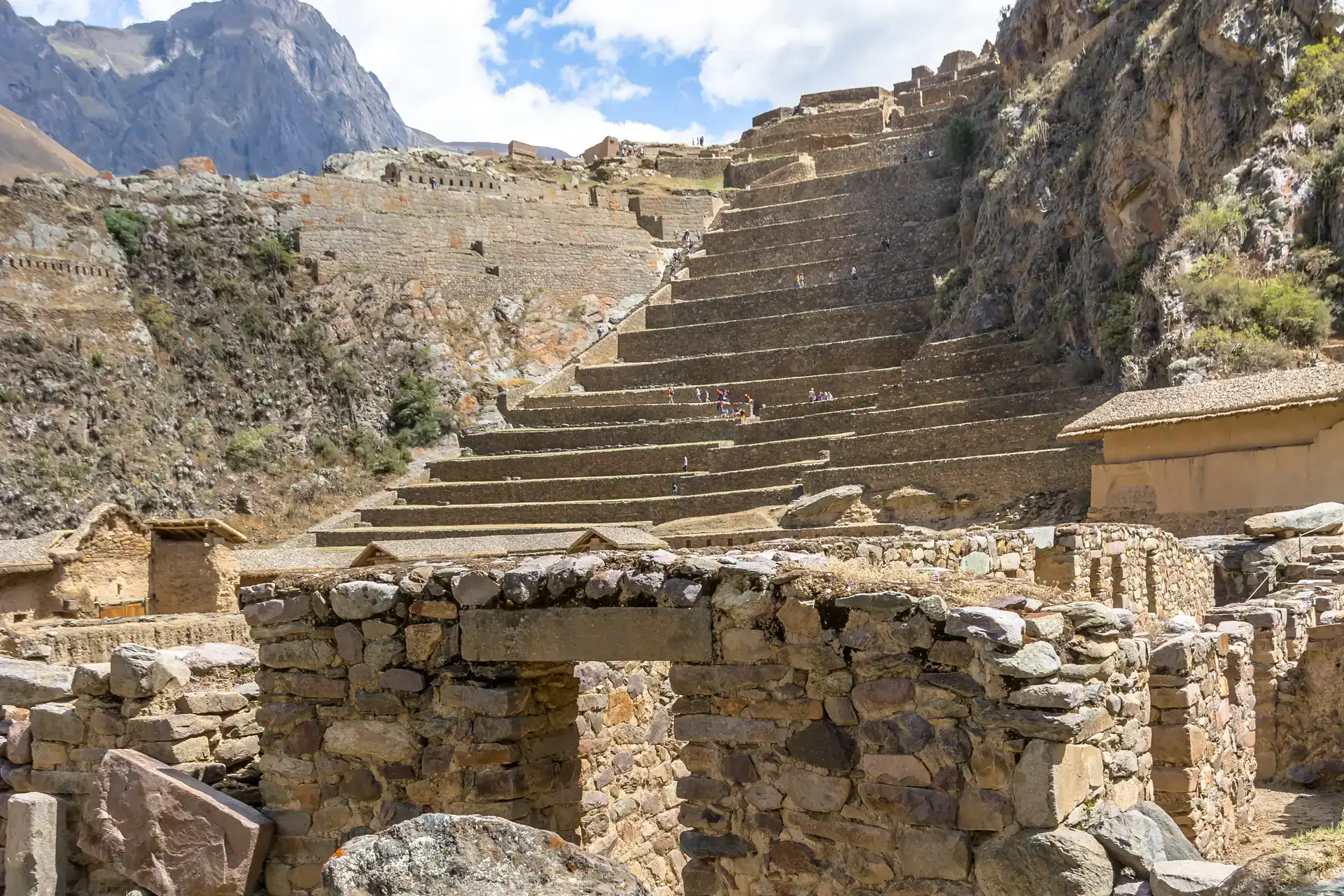
Ollantaytambo is one of Peru's most special towns. Its streets keep the original Inca layout, with water channels still running beside the houses, and above the town rise the impressive terraces of its fortress. It's also the most practical departure point for trains to Machu Picchu. That's why more and more travellers spend one or two nights here instead of returning to Cusco every day. This guide explains when it makes sense to stay in Ollantaytambo, which areas there are and what to consider when booking.
Start here: Cusco tips · things to do in Cusco
Why sleep in Ollantaytambo
- Train to Machu Picchu: the ride from Ollantaytambo to Aguas Calientes is much shorter than from Cusco. Sleeping here lets you catch the first trains without extreme early starts.
- Lower altitude: the town sits at around 2,800 metres, much lower than Cusco, which helps you acclimatise and sleep better.
- Atmosphere: at night, when the day-trip groups leave, the town goes quiet again.
- Base for the Sacred Valley: Moray, Maras, Chinchero, Urubamba and Pisac are within reasonable distance.
- Ollantaytambo: ruins, a living Inca town, the Machu Picchu train and tips
- Altitude sickness in Cusco: how to prevent it and what to do
- Machu Picchu day trip from Cusco: timings, logistics and whether it's worth it
Areas to stay
The square and centre
Around the main square there are hostels, small hotels, restaurants and cafés. It's the liveliest, most practical area, with everything close. There can be traffic and group noise during the day.
The Inca quarter (Qosqo Ayllu)
North of the square, the Inca blocks, called canchas, survive with their stone walls and channels. Staying here means sleeping inside a living historic site. They're usually small houses turned into guesthouses; the streets are narrow and cobbled, with no car access in many stretches.
Near the train station
The avenue leading down to the station has mid-range and upscale hotels, some with gardens by the river. Convenient if you're taking a very early train with luggage.
The outskirts
Along the river and on the road to Urubamba there are roomier, quieter places surrounded by countryside. Ideal if you have a car or want rest, but you'll need transport to reach town.
What kind of accommodation there is
Ollantaytambo mostly has family-run hostels, guesthouses and small boutique hotels. There are some upscale hotels, especially near the station and on the outskirts. Don't expect big chains. Many places offer early or packed breakfasts if you have a dawn train: ask when booking.
- Hostels in Cusco: areas, what to check before booking and backpacker tips
- Luxury Cusco: boutique hotels, premium trains and private experiences
When it makes sense and when it doesn't
It makes sense if
- You're going to Machu Picchu by train and want to avoid the long ride from Cusco.
- You want to explore the Sacred Valley at a relaxed pace.
- You're arriving in Cusco and prefer to acclimatise at lower altitude.
- You're doing the short or classic Inca Trail, which start nearby.
Maybe not
- If you only have one or two days in the region and want to see Cusco.
- If you want lots of nightlife: the town is quiet.
- Short Inca Trail (2 days): the route from km 104, permits and what to expect
- Inca Trail to Machu Picchu: permits, when to book, the 4-day route and the short version
- How many days in Cusco + 3, 5 and 7-day itineraries
Sample itinerary with a night in Ollantaytambo
- Day 1: leave Cusco in the morning, tour the Sacred Valley (Chinchero, Moray, Maras) and reach Ollantaytambo in the afternoon.
- Day 2: visit the Ollantaytambo ruins early and take the train to Aguas Calientes; sleep there.
- Day 3: visit Machu Picchu first thing and return by train to Ollantaytambo or straight to Cusco.
- Moray and the Maras salt mines: how to visit from Cusco or the Sacred Valley
- Chinchero: weaving, Inca ruins and market between Cusco and the Sacred Valley
- Aguas Calientes (Machu Picchu Town): getting there, things to do and where to stay
Booking tips
- Book ahead in high season (May to September) and on holidays: the town is small and fills up.
- Check access: if your place is in the Inca quarter, the taxi may drop you a few minutes' walk away.
- Noise: buses and vans pass through the square and main avenue; ask for an inside room if you're a light sleeper.
- Luggage: if you're going to Machu Picchu, many places store big bags while you travel with a small backpack.
- Payment: carry cash; not every business takes cards and there are few ATMs.
- Luggage storage in Cusco: hotels, left-luggage, the Machu Picchu train and treks
- Money in Cusco: soles, ATMs, exchange offices and cards
Getting there from Cusco
There are shared vans from Cusco, private taxis and transfers, plus trains linking with Cusco (Poroy) at some times. The road trip usually takes an hour and a half to two hours, depending on the route.
Eating and going out
The town has Peruvian and international restaurants, cafés and bakeries, mostly around the square and the avenue to the station. Nights are quiet: dinner and a stroll through the lit Inca streets is the typical plan.
Tip
Check opening hours before you go: some places close early outside high season.
Before you go

Airport transfer
Book a private Welcome Pickups transfer from Cusco airport to your hotel before you land, with your driver waiting in arrivals. Check the price and cancellation terms when booking.
Book your airport transfer →Frequently asked questions
- Is it worth sleeping in Ollantaytambo?
- Yes, especially if you're going to Machu Picchu by train or want to explore the Sacred Valley calmly.
- Which is better, staying in Ollantaytambo or Urubamba?
- Ollantaytambo is more practical for the train and more charming; Urubamba is more central in the valley with more services.
- Are there ATMs in Ollantaytambo?
- Only a few, so bring cash from Cusco.
- What is Ollantaytambo's altitude?
- About 2,800 metres, lower than Cusco.
Book this plan
- Cusco city tourCompareSee dates →
- Sacred Valley tourCompareSee dates →
Notice: This guide shares advice and recommendations based on research and local experience. Prices, opening hours and rules may change: always check with official sources and operators. Cusco Tips is not responsible for third-party services, bookings or decisions made using these guides; some links are affiliate links (see our affiliate policy).
Related guides
Ollantaytambo: ruins, a living Inca town, the Machu Picchu train and tips
Guide to Ollantaytambo in the Sacred Valley: what to see at the archaeological site, the town and Pinkuylluna, getting there from Cusco, the train station and whether to stay.
Read guide →
Where to stay in the Sacred Valley: Pisac, Urubamba, Ollantaytambo and more
Comparing towns to stay in the Sacred Valley: Pisac, Calca, Yucay, Urubamba, Ollantaytambo and Chinchero; pros, cons, Machu Picchu connections and who each suits.
Read guide →
Machu Picchu day trip from Cusco: timings, logistics and whether it's worth it
How to visit Machu Picchu in a single day from Cusco or Ollantaytambo: typical schedule, trains, buses, tickets, tour or DIY, and when it's better to sleep in Aguas Calientes.
Read guide →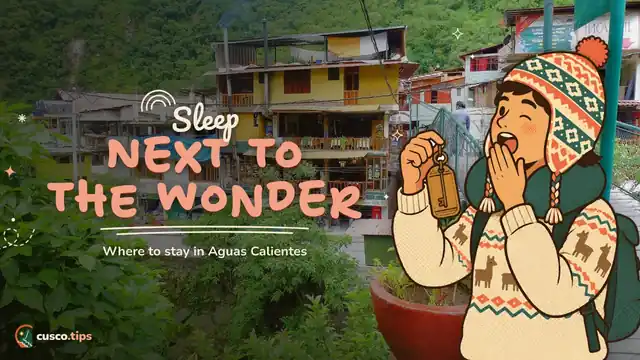
Where to stay in Aguas Calientes: areas, accommodation types and tips
Where to stay in Aguas Calientes (Machu Picchu Pueblo): when to spend the night, town areas, hostels, hotels and luxury, river and train noise, luggage and booking tips.
Read guide →