
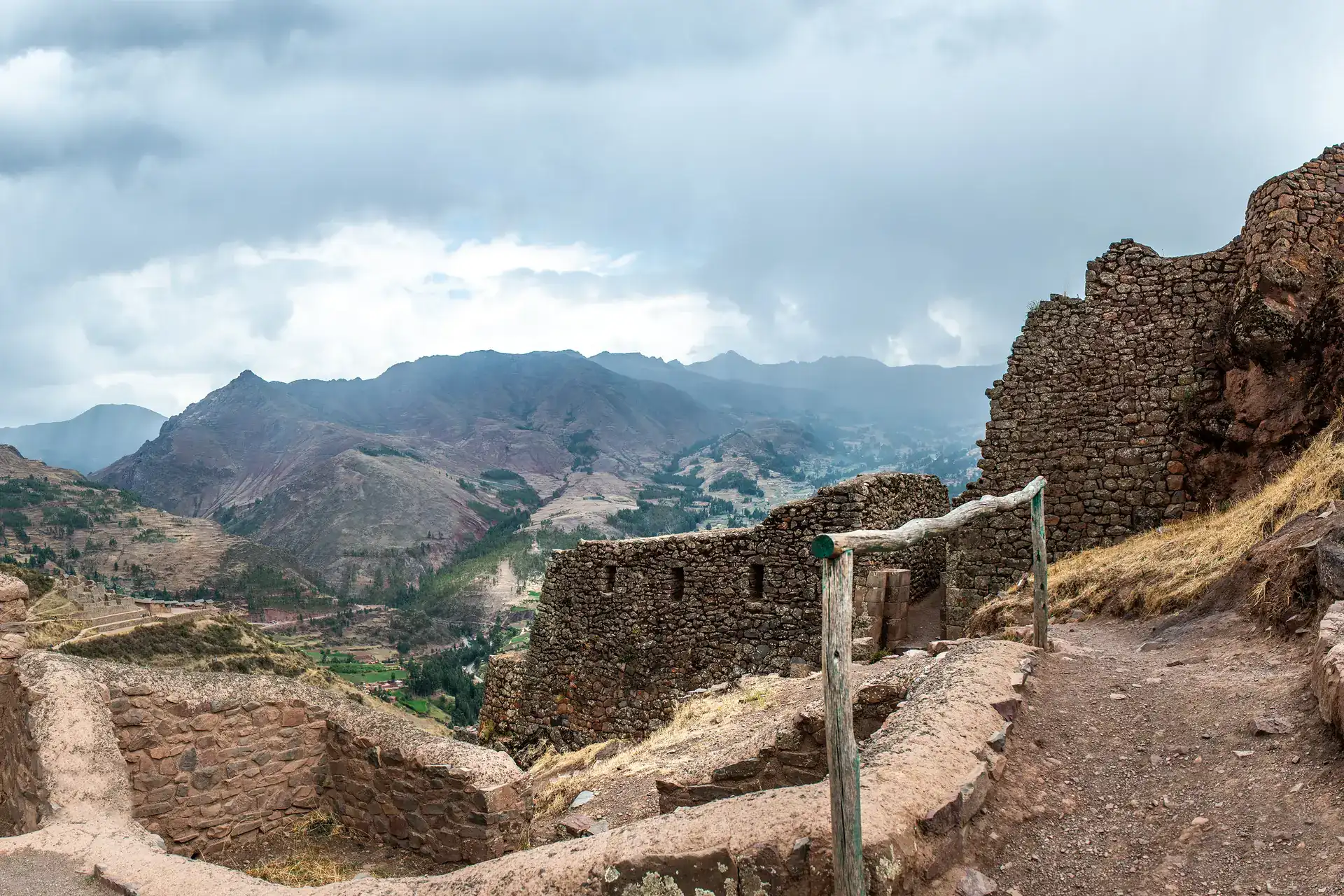
Pisac is the gateway to the Sacred Valley from Cusco. It's a small town by the Vilcanota river, with a lively square, a world-famous craft market and, high on the mountain, one of the most impressive Inca archaeological complexes in the region. In recent years it has also become a haven for travellers seeking calm, nature, yoga and wellbeing. This guide helps you decide whether to sleep in Pisac, in which area and what to keep in mind.
Start here: Cusco tips · things to do in Cusco
Why sleep in Pisac
- Close to Cusco: about an hour by road, it's the part of the valley nearest the city.
- Lower altitude: the town sits at around 2,970 metres, below Cusco, which helps you acclimatise and sleep better.
- Early ruins: sleeping here lets you go up to the archaeological park first thing, before the groups arrive.
- Quiet atmosphere: at night the town empties of day-trippers and regains its rhythm.
- Pisac: Inca ruins, craft market and how to visit from Cusco
- Altitude sickness in Cusco: how to prevent it and what to do
Areas to stay
The square and centre
Around the square and nearby streets there are guesthouses, small hotels, cafés and restaurants. It's the most practical choice without a car: everything is a few steps away and shared vans leave for Cusco and the rest of the valley. During the day, especially on market days, it's busy.
By the river and the road
Near the bridge and along the valley road there are somewhat roomier hotels, some with gardens. Convenient for getting around by transport, though there may be traffic noise.
The outskirts and countryside
Around town, among fields and on the slopes, there are plenty of wellbeing-focused places: houses with gardens, yoga retreats, ecolodges and cabins. They're quiet and very green, but you'll rely on mototaxis or taxis to get into town.
A wellbeing town
Pisac attracts many travellers interested in yoga, meditation, alternative therapies and healthy food. You'll find vegetarian cafés, natural-products shops and centres offering retreats. If that's your thing, Pisac is the ideal base; if you're after nightlife, it isn't.
Pisac market
The craft market fills the square and nearby streets. It's especially big and lively on Sunday, when producers from surrounding communities also come with their food. Sleeping in Pisac lets you browse it early and calmly, before the tours from Cusco arrive.
Tip
Market days and hours can vary. Check opening hours before you go.
- What to buy in Cusco: authentic souvenirs and what to avoid
- Ethical shopping in Cusco: fair trade, cooperatives and weavers
What kind of accommodation there is
Family guesthouses, houses with gardens and small boutique hotels predominate. There are also ecolodges and retreat centres. The valley's big luxury hotels are mostly in and around Urubamba.
- Urubamba: the central base of the Sacred Valley (things to do, getting there and where to stay)
- Luxury Cusco: boutique hotels, premium trains and private experiences
When it makes sense and when it doesn't
It makes sense if
- You want to start your trip in the valley to acclimatise before Cusco.
- You want to visit the Pisac ruins calmly and the market early.
- You're looking for rest, nature or a wellbeing retreat.
Maybe not
- If your priority is the Machu Picchu train: Ollantaytambo is better placed.
- If you want nightlife or lots of restaurants to choose from.
- Where to stay in Ollantaytambo: areas, pros and when it makes sense
- How many days in Cusco + 3, 5 and 7-day itineraries
Sample route with a night in Pisac
- Day 1: go straight from the airport to Pisac and rest.
- Day 2: go up to the ruins early, browse the market and continue through the valley to Urubamba or Ollantaytambo.
- Day 3: take the train to Aguas Calientes and visit Machu Picchu.
- Cusco to the Sacred Valley and Ollantaytambo: colectivo, taxi, tour and train
- Machu Picchu day trip from Cusco: timings, logistics and whether it's worth it
Getting there from Cusco
Shared vans and buses leave Cusco for Pisac throughout the day, and you can also take a taxi or private transfer. From the airport, many travellers book a direct transfer to the valley to avoid spending the first night in Cusco.
- Cusco to the Sacred Valley and Ollantaytambo: colectivo, taxi, tour and train
- Cusco airport to the city centre: taxi, ride apps, transfers and approximate prices
Practical tips
- Carry cash: there are few ATMs and not every business takes cards.
- Nights are cool, though less cold than in Cusco.
- To reach the ruins you can take a taxi to the upper entrance and walk down.
- You'll need the tourist ticket to enter the archaeological park.
- If you're doing a retreat, research who runs it and be wary of ceremonies involving substances without medical supervision or clear information about the risks.
- Cusco Tourist Ticket (Boleto Turístico): what's included and is it worth it
- Money in Cusco: soles, ATMs, exchange offices and cards
Frequently asked questions
- Is it worth sleeping in Pisac?
- Yes, if you want to acclimatise, visit the ruins early and enjoy a quiet atmosphere.
- Pisac or Ollantaytambo?
- Pisac is closer to Cusco and has a wellbeing vibe; Ollantaytambo is better for the Machu Picchu train.
- Which day is Pisac market?
- There are crafts every day, but Sunday is the biggest and liveliest day.
- What is Pisac's altitude?
- About 2,970 metres, lower than Cusco.
Book this plan
- Cusco city tourCompareSee dates →
- Sacred Valley tourCompareSee dates →
Notice: This guide shares advice and recommendations based on research and local experience. Prices, opening hours and rules may change: always check with official sources and operators. Cusco Tips is not responsible for third-party services, bookings or decisions made using these guides; some links are affiliate links (see our affiliate policy).
Related guides
Pisac: Inca ruins, craft market and how to visit from Cusco
Pisac guide in the Sacred Valley: what to see in the archaeological park, the market, getting there from Cusco, entry with the Tourist Ticket, the walk down and tips.
Read guide →
Where to stay in the Sacred Valley: Pisac, Urubamba, Ollantaytambo and more
Comparing towns to stay in the Sacred Valley: Pisac, Calca, Yucay, Urubamba, Ollantaytambo and Chinchero; pros, cons, Machu Picchu connections and who each suits.
Read guide →
Where to stay in Ollantaytambo: areas, pros and when it makes sense
Guide to sleeping in Ollantaytambo: why it's the best base for the Machu Picchu train, areas of town, what kind of accommodation there is and practical tips.
Read guide →
Cusco's artisan markets: San Blas, Centro Artesanal, Pisac and Chinchero
Guide to artisan markets in Cusco: the San Blas fair, Centro Artesanal, Pisac and Chinchero markets, what to buy, how to bargain respectfully and spot real alpaca.
Read guide →