
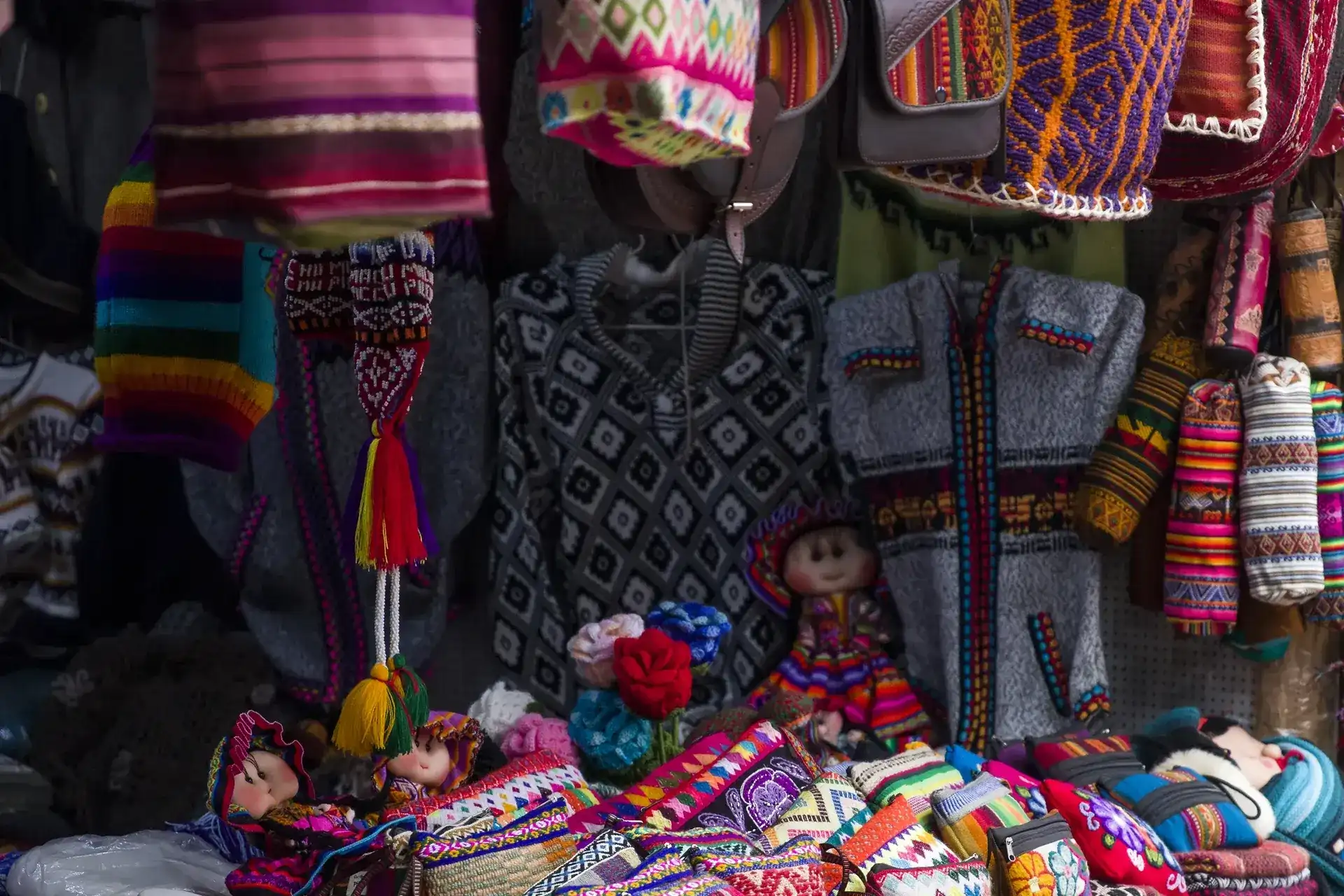
Every souvenir you buy in Cusco can be more than an object: it can help keep a centuries-old textile tradition alive and give a family of weavers in a high Andean community a decent income. But not everything that looks handmade is, and not all the money reaches the people doing the work. This guide helps you shop responsibly: where to find cooperatives, how to recognise handwork, what to ask and which products to avoid.
Tours to explore Cusco's markets
Start here: Cusco tips · things to do in Cusco
Why it matters
A quality Andean textile can take weeks or months: shearing, washing and spinning the fibre, dyeing it with plants and insects, and weaving on a backstrap loom with designs passed down from mothers to daughters. When that work competes with industrial products copying the designs, prices drop and many young women stop learning the craft. Buying from cooperatives and directly from artisans helps keep the tradition a viable way of life.
The Centro de Textiles Tradicionales del Cusco
On Avenida El Sol, near Qorikancha, the Centro de Textiles Tradicionales del Cusco (CTTC) is a non-profit created to revitalise traditional weaving. It works with weaving communities across the region, and its shop sells their pieces with information about the community of origin. It also has a small free museum explaining the whole process from fibre to fabric, and weavers often give demonstrations. Prices are higher than at a market, but reflect the real work. It closes on Sundays; check opening times before you go.
Buying in the communities
In the Sacred Valley, several weaving communities and associations welcome visitors, show natural dyeing with plants and cochineal and sell their pieces directly. Chinchero is the best-known place for this. Many Sacred Valley tours include a stop at a weaving centre; some are genuine cooperatives and others are commercial shops. Ask your agency who owns the centre.
- Chinchero: weaving, Inca ruins and market between Cusco and the Sacred Valley
- Sacred Valley of the Incas: what to see and how to visit
- How to choose a tour agency in Cusco: a checklist to get it right
Artisan workshops
- San Blas: the artisans' quarter, with family workshops of religious imagery, ceramics and painting, where you can often watch the artist at work.
- Urubamba: home to the Cerámicas Seminario workshop, known for ceramics inspired by pre-Columbian motifs, with a gallery and classes by reservation.
- Pisac: ceramic and silver workshops in the village and around the market.
- San Blas, Cusco's artisan quarter: what to see, viewpoints and tips
- San Blas religious imagery: saints, Niño Manuelito figures and retablos
- Ceramics in Cusco and the Sacred Valley: styles, workshops and what to buy
- Pisac: Inca ruins, craft market and how to visit from Cusco
How to recognise handwork
- Irregularities: hand-woven textiles have small variations in pattern; industrial ones are identical.
- Reverse side: on a backstrap-loom textile, the back often shows the same design in inverted colours or is very neat.
- Weight and texture: handmade natural-fibre pieces are denser.
- Natural colours: less garish, more nuanced tones.
- Price: if a large "hand-woven" piece costs very little, it probably isn't.
- Ask: who made it? Which community? How long did it take? An honest seller will know.
Andean fibres
- Sheep's wool: the most common in traditional community weaving, hard-wearing and easy to dye.
- Llama: a coarser fibre used for blankets, ropes and bags.
- Alpaca: soft, warm and light; "baby alpaca" comes from the first shearing and is the finest.
- Vicuña: the world's finest and most expensive fibre, from a protected wild camelid; legal only with certification.
Knowing which fibre you're buying helps you judge a fair price for each piece.
What to avoid
- Uncertified vicuña products: the vicuña is protected; only fibre from controlled, certified shearing is legal.
- Skins, feathers or wild animal parts: trading them is illegal.
- "Archaeological" objects: selling or exporting them is a crime; genuine ones aren't sold on the street.
- Excessive haggling: on handmade pieces, pushing the price down hard directly affects the weaver.
Photos and tips
If you visit a weaving centre or community, ask before photographing the weavers. Buying something, even small, or leaving a tip is the best way to say thanks for the demonstration.
On a small budget
You don't need to buy a huge blanket to help. A woven bracelet, a coin purse, a small tapestry or a doll made by a weaver carries the same symbolic value and supports families just as well. Better one small authentic item than many industrial ones.
Frequently asked questions
- Where can I buy fair-trade textiles in Cusco?
- At the Centro de Textiles Tradicionales del Cusco on Avenida El Sol, and directly from weaving associations in the Sacred Valley, such as in Chinchero.
- How can I tell if a textile is hand-woven?
- Look for small irregularities, natural colours and good density, and ask who made it and which community it's from.
- Can I buy vicuña?
- Only with certification of controlled shearing; avoid uncertified vicuña products.
- Is it OK to bargain?
- A little, at markets; on pieces sold by the weavers themselves, better not to push too hard.
Book this plan
- Cusco city tourCompareSee dates →
- Sacred Valley tourCompareSee dates →
Notice: This guide shares advice and recommendations based on research and local experience. Prices, opening hours and rules may change: always check with official sources and operators. Cusco Tips is not responsible for third-party services, bookings or decisions made using these guides; some links are affiliate links (see our affiliate policy).
Related guides
Andean textiles in Cusco: weaving workshops, weaving communities and buying well
Guide to Andean textiles in Cusco: techniques and natural dyes, the meaning of designs, workshops and classes, visits to weaving communities, yarn for knitters and spotting handmade pieces.
Read guide →
Centro Artesanal Cusco: the big craft market on Avenida El Sol
A guide to the Centro Artesanal Cusco at the end of Avenida El Sol: what's sold, telling qualities apart, bargaining, getting there and when to go. Check hours first.
Read guide →
Chinchero: weaving, Inca ruins and market between Cusco and the Sacred Valley
Chinchero guide: weaving centres and natural dyes, the Inca site and colonial church, the Sunday market, the Tourist Ticket, getting there from Cusco and how to combine it.
Read guide →
Buying alpaca in Cusco: how to spot the real thing, prices and where to look
Differences between baby alpaca, alpaca, llama, vicuña and synthetic blends; how to recognise genuine garments by feel and label, price ranges and where to buy.
Read guide →