
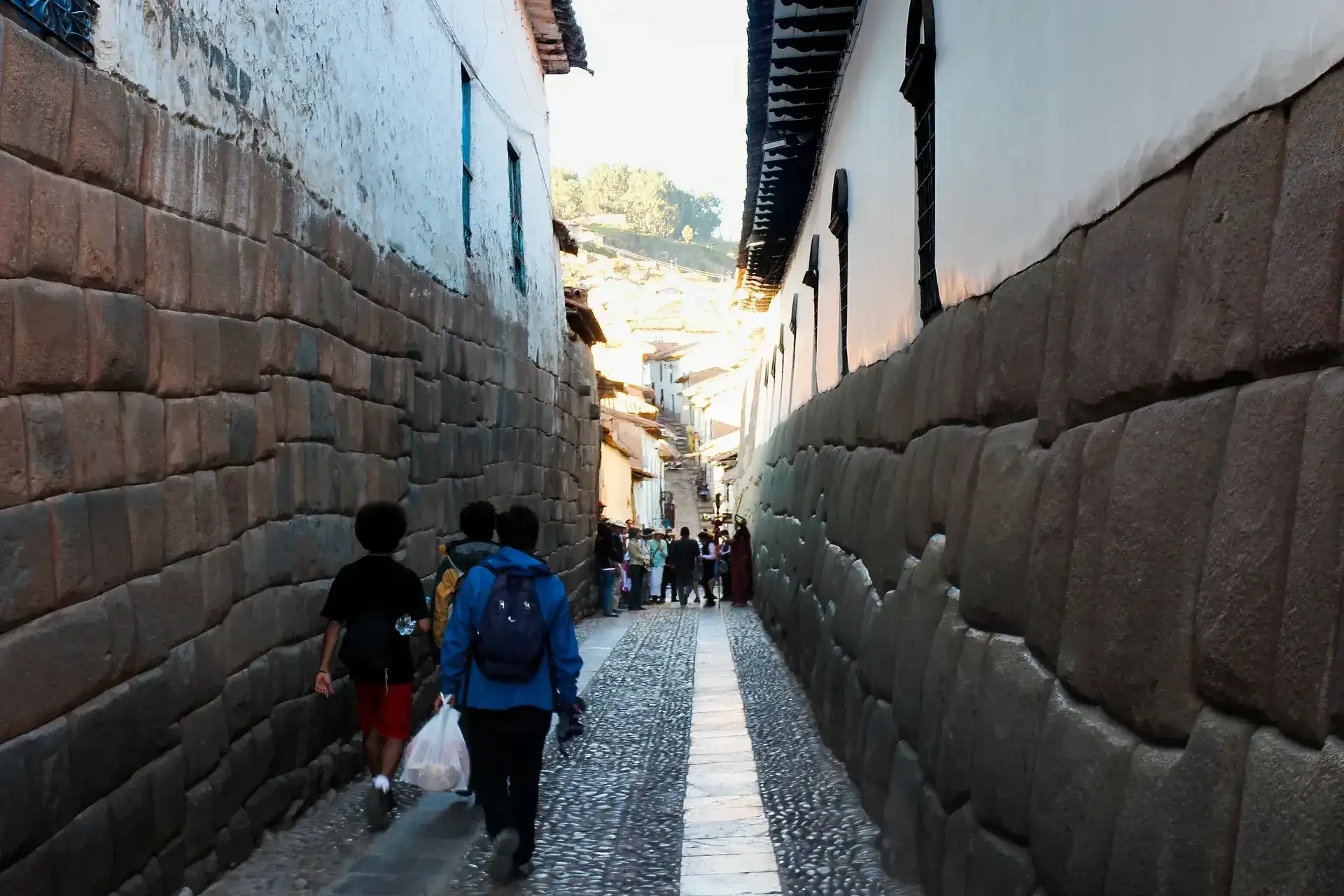
San Blas is known as Cusco's artisans' quarter, and its most characteristic art is religious imagery: the making of figures of saints, virgins, angels and the Christ Child. The tradition was born in colonial times, when churches needed images for altars and processions, and it has been passed down through generations in family workshops. Wandering the neighbourhood's steep streets and peeking into these workshops is one of the loveliest experiences in Cusco. This guide explains the technique, the styles and how to buy a piece.
Tours to explore Cusco's markets
Start here: Cusco tips · things to do in Cusco
Origins of Cusco imagery
After the conquest, Indigenous and mestizo artists learned European sculpture and painting techniques but adapted them with their own materials and sensibility. That gave rise to the Cusco School, famous for its paintings, and an equally rich sculptural tradition. Processional images had to be light enough to carry through the streets, which explains one of the most characteristic techniques.
- The Cusco School of painting: where to see it and how to buy a reproduction
- Churches of Cusco: La Compañía, San Blas, La Merced, San Francisco and more
The technique: maguey, cloth and plaster
Many Cusco images have a body built on a frame of maguey (agave stalk), a very light wood, covered with glued cloth and plaster paste. Details are then modelled, painted in bright colours and gilded. Hands and faces are sometimes carved in wood, and eyes may be glass. The result is a light, expressive and very durable figure, ideal for processions.
Look at the detail
Look at the faces: good imagineros achieve serene or dramatic expressions with just a few features. That's what sets a workshop piece apart from a mass-produced one.
The Mendívil family
San Blas's most famous imaginero was Hilario Mendívil, whose figures are instantly recognisable by their elongated necks, serene faces and gilded, colourful robes. According to family tradition, the style was inspired by the llamas he saw as a child during fiestas. His descendants keep the workshop and tradition going, and on the small San Blas square there's a museum-workshop devoted to his work, with virgins, archangels and procession scenes. Check opening times before you go.
Niño Manuelito
Niño Manuelito is Cusco's version of the Christ Child, often seated with a thorn in his foot, or dressed in Andean clothes. He's a much-loved figure: many families have one at home and dress him in different outfits depending on the season. At Christmas, the Santurantikuy fair in the Plaza de Armas is the big moment to buy figures, nativity scenes and clothes for the Niño.
Retablos and boxes
Retablos are wooden boxes with doors that open to reveal miniature scenes: nativities, fiestas, markets or everyday life. Although the best-known tradition is from Ayacucho, Cusco has many workshops and shops selling them. They're an original, colourful souvenir that's easy to carry if small.
How and where to buy
- San Blas workshops: the best option for buying from the artist. Many workshops leave their doors open so you can see work in progress.
- Streets to explore: the Cuesta de San Blas, Calle Hatun Rumiyoc, Tandapata and Carmen Alto are full of workshops and galleries.
- Price: a signed piece can be expensive because of the hours of work; small or mass-produced figures are more affordable.
- Ask about the technique: artisans are usually happy to explain how they make their pieces.
- Transport: ask for good wrapping; plaster pieces are delicate.
- Ethical shopping in Cusco: fair trade, cooperatives and weavers
- What you can take home from Peru: customs, coca, food and crafts
A route through the neighbourhood
Start on Calle Hatun Rumiyoc, by the twelve-angled stone, and climb the Cuesta de San Blas to the square. Visit the San Blas church, famous for its carved wooden pulpit, a masterpiece of Cusco Baroque. Then stroll along Tandapata and the surrounding alleys, stepping into whichever workshops catch your eye. Finish at one of the neighbourhood's viewpoints to see Cusco from above.
- San Blas, Cusco's artisan quarter: what to see, viewpoints and tips
- The best viewpoints in Cusco: where to see the city from above
- Churches of Cusco: La Compañía, San Blas, La Merced, San Francisco and more
Respect and photos
Many workshops are also the artisan's home. Ask before entering or taking photos, and remember there's no obligation to buy, but a word of thanks is always appreciated. If you buy a signed piece, ask the artisan to sign it or give you a card with their name and workshop: besides being a nice memento, it helps show customs it's a contemporary work and not an antique if you're asked.
Frequently asked questions
- What is Cusco religious imagery?
- The art of making religious figures, traditionally on a maguey frame with glued cloth and plaster, painted and gilded.
- Who was Hilario Mendívil?
- San Blas's most famous imaginero, known for his long-necked figures; his family keeps his workshop and tradition alive.
- What is Niño Manuelito?
- Cusco's version of the Christ Child, very popular at Christmas and at the Santurantikuy fair.
- Where can I buy religious imagery?
- At San Blas workshops, on streets like Hatun Rumiyoc, the Cuesta de San Blas and Tandapata.
Book this plan
- Cusco city tourCompareSee dates →
- Sacred Valley tourCompareSee dates →
Notice: This guide shares advice and recommendations based on research and local experience. Prices, opening hours and rules may change: always check with official sources and operators. Cusco Tips is not responsible for third-party services, bookings or decisions made using these guides; some links are affiliate links (see our affiliate policy).
Related guides
San Blas, Cusco's artisan quarter: what to see, viewpoints and tips
Guide to Cusco's San Blas neighbourhood: the church and its carved pulpit, the little plaza, artisan workshops, Hatun Rumiyoc street, viewpoints, nightlife and whether to stay there.
Read guide →
Santurantikuy: Cusco's Christmas market in the Plaza de Armas
Santurantikuy, Cusco's Christmas crafts fair: usual dates, what to buy (Niño Manuelito, retablos, ceramics), tips and how to avoid the crowds.
Read guide →
Churches of Cusco: La Compañía, San Blas, La Merced, San Francisco and more
Guide to Cusco's churches: the Cathedral, La Compañía, San Blas and its pulpit, La Merced, San Francisco, Santa Catalina, Santo Domingo and the religious circuit, with tips.
Read guide →
Ethical shopping in Cusco: fair trade, cooperatives and weavers
How to buy crafts in Cusco that benefit the people who make them: weaving cooperatives, the Centro de Textiles Tradicionales, buying direct and what to avoid.
Read guide →