
The Cusco School of painting: where to see it and how to buy a reproduction
Updated:
Step into any church in Cusco and you'll see walls covered with large canvases in gilded frames, Virgins with triangular cloaks and angels dressed like Spanish nobles. They're works of the Cusco School, the most important art movement of colonial America. During the 17th and 18th centuries, Indigenous and mestizo painters in Cusco created thousands of paintings sent to churches across the viceroyalty. This guide helps you recognise the style, tells you where to see it and how to buy a good reproduction from today's workshops.
Tours to explore Cusco's markets
Start here: Cusco tips · things to do in Cusco
Origins of the Cusco School
After the conquest, the Church needed images for evangelisation. European painters and Flemish prints arrived, and workshops formed in Cusco where local artists trained. Over time, Indigenous and mestizo painters broke away from Spanish-dominated guilds and developed their own style, more colourful, decorative and full of Andean elements. Among the best-known names are Diego Quispe Tito and Marcos Zapata, though most works are anonymous.
How to recognise a Cusco School painting
- Gold brocade: cloaks and robes are decorated with fine gold patterns applied over the paint, which glitter in candlelight.
- Triangular Virgins: the Virgin wears a triangular cloak, which many interpret as a mountain linked to Pachamama.
- Arquebusier angels: archangels dressed as 17th-century gentlemen with firearms and plumed hats. One of the most famous and original themes.
- Andean flora and fauna: parrots, local plants and fruit appear in biblical scenes.
- Flat perspective: little interest in realistic depth and great attention to decorative detail.
The Last Supper with guinea pig
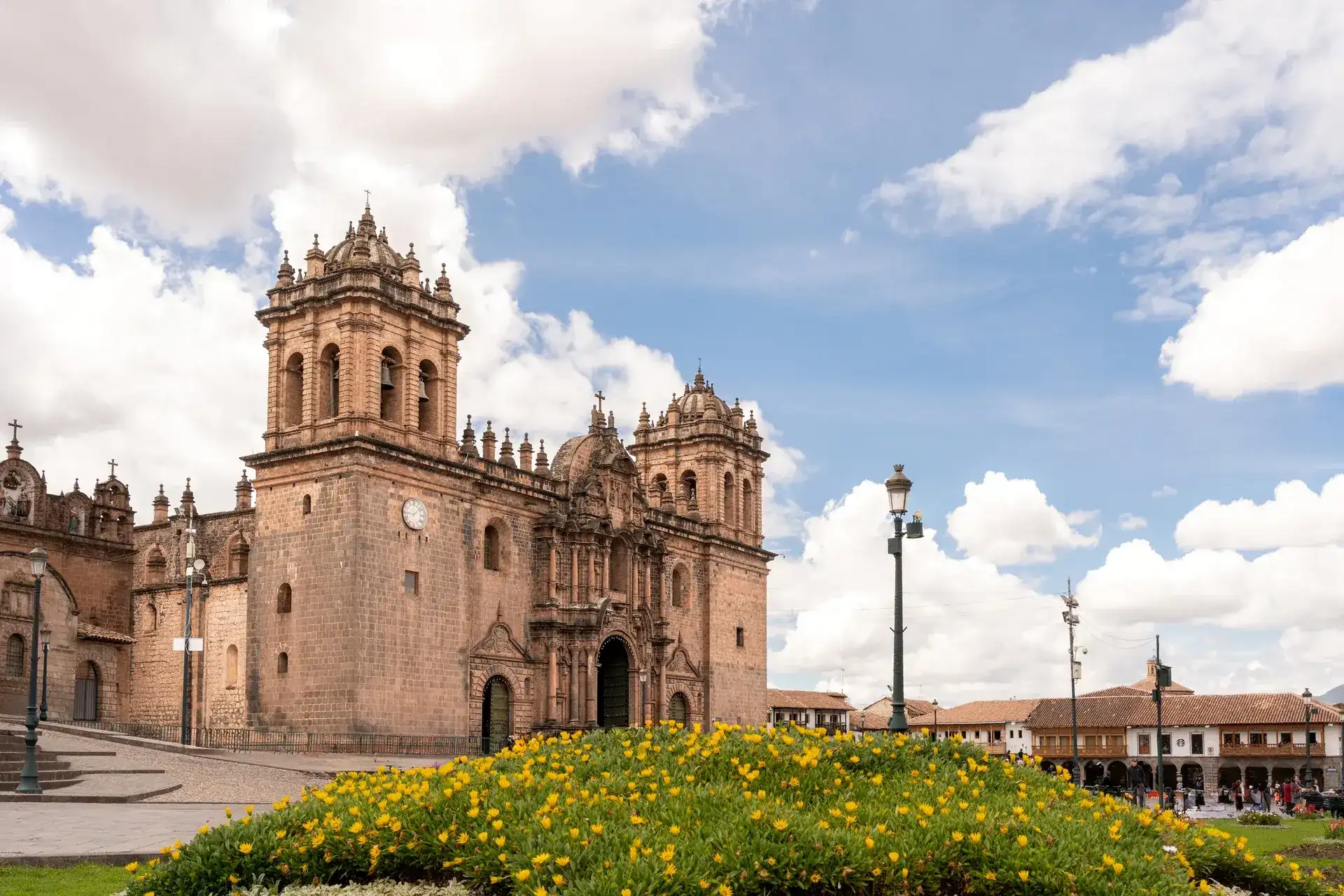
Cusco Cathedral has a Last Supper attributed to Marcos Zapata in which Jesus and the apostles share a cuy. Look for it: it's one of the best-known examples of how artists adapted European iconography.
- Cusco Cathedral: what to see inside, the Last Supper with guinea pig, tickets and hours
- Eating guinea pig (cuy) in Cusco: what it is, how it's cooked and where to try it
Where to see the Cusco School
- Cusco Cathedral: the largest collection, including the Last Supper with guinea pig.
- Museum of Religious Art: in the former Archbishop's Palace, next to the twelve-angled stone, with high-quality canvases.
- San Blas church: besides its carved pulpit, it holds Cusco School paintings.
- La Compañía and other churches: almost every church in the centre has works from the school.
- Andahuaylillas: the church known as the "Sistine Chapel of the Americas", in the South Valley, with murals and canvases.
Many of these visits are covered by the Religious Ticket (Boleto Religioso).
- Churches of Cusco: La Compañía, San Blas, La Merced, San Francisco and more
- Cusco's South Valley: Tipón, Pikillacta, Andahuaylillas and local flavours
- The best museums in Cusco: which to visit, tickets and how to plan
Buying a reproduction
In workshops and galleries in the centre and San Blas, painters reproduce Cusco School works using traditional techniques, including gold brocade. It's one of the most beautiful and authentic souvenirs you can take home.
- Hand-painted or print: check whether it's a hand-painted oil on canvas or a retouched print. Look closely at the gold: hand-applied gold leaf has relief.
- Size: small paintings are easier to carry and more affordable.
- Rolled: many workshops sell canvases unstretched, rolled in a tube, for easier travel.
- Signature: contemporary painters usually sign their copies; ask for a certificate or workshop card.
- Ethical shopping in Cusco: fair trade, cooperatives and weavers
- San Blas, Cusco's artisan quarter: what to see, viewpoints and tips
Old or new: careful at customs
Original colonial paintings are Peruvian cultural heritage and exporting them is prohibited. If you buy a reproduction that looks old, ask the seller for an invoice or certificate stating it's a contemporary work. If in doubt, airport officials may ask for a document from the Ministry of Culture.
Common themes
- Virgins: of Belén, Candelaria, the Rosary; each with its own iconography.
- Saint James (Santiago): on horseback, very popular in the Andes.
- Corpus Christi: a famous series of canvases shows the Corpus procession in colonial Cusco, with details of the society of the time.
- Christ Child: often richly dressed and surrounded by flowers.
Visiting tips
- Photography is forbidden in many churches; follow the signs.
- Hiring a guide or audio guide at the Cathedral helps a lot in understanding the paintings.
- Take it slow: it's easy to get saturated with religious art, so pick two or three places.
Frequently asked questions
- What is the Cusco School?
- A 17th–18th-century colonial painting movement created by Indigenous and mestizo artists in Cusco, with a colourful style full of gold.
- Where is the Last Supper with guinea pig?
- In Cusco Cathedral, on the Plaza de Armas.
- Where can I buy Cusco School paintings?
- At workshops and galleries in the centre and San Blas that make reproductions with traditional techniques.
- Can I take a colonial painting out of Peru?
- Originals no; contemporary reproductions yes, ideally with an invoice or certificate.
Book this plan
- Cusco city tourCompareSee dates →
- Sacred Valley tourCompareSee dates →
Notice: This guide shares advice and recommendations based on research and local experience. Prices, opening hours and rules may change: always check with official sources and operators. Cusco Tips is not responsible for third-party services, bookings or decisions made using these guides; some links are affiliate links (see our affiliate policy).
Related guides
Cusco Cathedral: what to see inside, the Last Supper with guinea pig, tickets and hours
Cusco Cathedral guide: history on an Inca palace, Marcos Zapata's Last Supper, the Lord of Earthquakes, Cusco School art, tickets, opening hours and tips for your visit.
Read guide →
Churches of Cusco: La Compañía, San Blas, La Merced, San Francisco and more
Guide to Cusco's churches: the Cathedral, La Compañía, San Blas and its pulpit, La Merced, San Francisco, Santa Catalina, Santo Domingo and the religious circuit, with tips.
Read guide →
San Blas religious imagery: saints, Niño Manuelito figures and retablos
The art of religious imagery in San Blas: maguey and plaster technique, the Mendívil family, Niño Manuelito, retablos and how to buy from the workshops.
Read guide →
The best museums in Cusco: which to visit, tickets and how to plan
Inka Museum, Pre-Columbian Art Museum, Machu Picchu Museum at Casa Concha, Tourist Ticket museums and religious art: what each offers and how to combine them.
Read guide →