
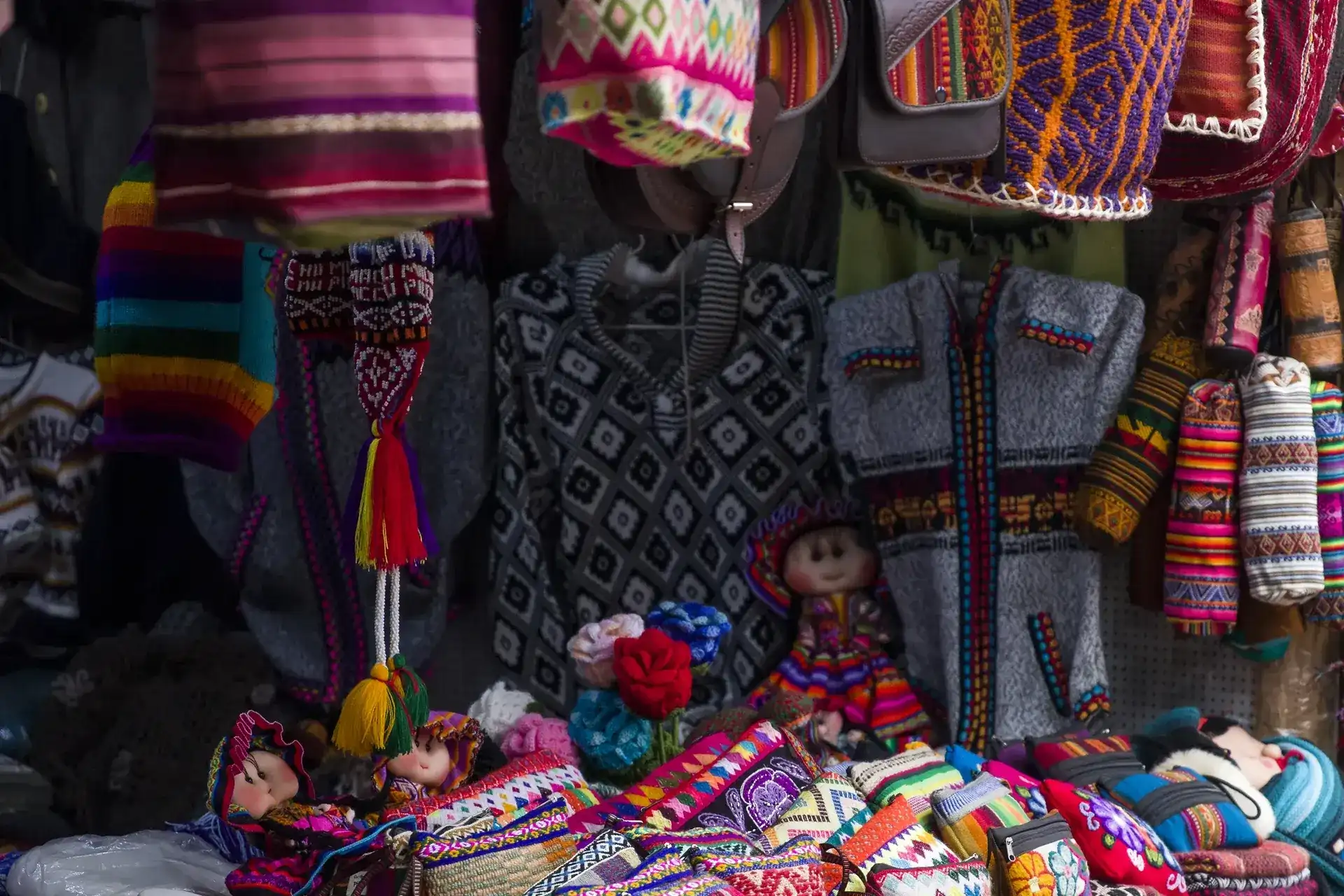
If you want to buy souvenirs in Cusco and compare many stalls in one place, the Centro Artesanal Cusco is the most practical option. It's a large covered craft market with hundreds of stalls over several levels, at the corner of Avenida El Sol and Avenida Tullumayo, opposite the Pumaqchupan monument. You'll find textiles, alpaca clothing, ceramics, jewellery, instruments and almost any souvenir imaginable. This guide explains what to expect, how to shop well and how to combine the visit with nearby sights. Hours can change: check opening times before you go.
Tours to explore Cusco's markets
Start here: Cusco tips · things to do in Cusco
Where it is and how to get there
The Centro Artesanal is at the bottom of Avenida El Sol, the main avenue running down from the Plaza de Armas past Qorikancha. Walking from the plaza takes about 15 to 20 minutes, all downhill, along an avenue with wide pavements. Going back is uphill, so many people take a taxi. The clearest landmark is the Paccha de Pumaqchupan, a monumental fountain topped with an Inca figure, right in front.
- Getting around Cusco: taxis, ride apps, city buses and colectivos
- Qorikancha, the Temple of the Sun: tickets, hours, what to see and history
What's sold
- Textiles: blankets, tapestries, table runners, bags and cushions with Andean motifs.
- Alpaca clothing: sweaters, scarves, chullo hats, gloves and ponchos in different qualities.
- Ceramics: plates, jugs, figurines and Pucará bulls.
- Jewellery: silver, stones like chrysocolla or Huamanga stone, and costume jewellery.
- Instruments: quenas, panpipes, charangos and drums.
- Assorted souvenirs: keyrings, magnets, dolls, retablos, paintings and T-shirts.
Telling qualities apart
Not everything sold is the same. In the same aisle you can find a hand-woven alpaca garment and an industrial one with acrylic blend.
- Real alpaca: soft, slightly cool to the touch at first and not too shiny. "Baby alpaca" is the finest. Very cheap, very shiny items are usually synthetic.
- Hand-woven: look for small irregularities, a sign of handwork. Industrial weaves are perfectly uniform.
- Natural dyes: colours tend to be softer and more nuanced.
- Silver: sterling silver is stamped 925. Be wary of prices that seem too low.
Don't be shy to ask: many vendors will explain the difference between their products.
- Buying alpaca in Cusco: how to spot the real thing, prices and where to look
- Andean textiles in Cusco: weaving workshops, weaving communities and buying well
Bargaining and prices
Bargaining is normal at the Centro Artesanal, but do it respectfully. Ask at several stalls before buying, since many sell similar products and prices vary. If you buy several items at the same stall, asking for a discount is normal. Some stalls accept cards with a surcharge, but most prefer cash in soles. We don't give prices because they change, but comparing three stalls gives you a good idea.
- How to shop at Cusco's markets: bargaining, yapa and safety
- Money in Cusco: soles, ATMs, exchange offices and cards
When to go
It opens every day, from morning to evening. Mornings are quieter, and some tour groups arrive in the afternoon. It's a good activity for a rainy day since it's covered, or for the afternoon before you fly home, when you know how much space is left in your suitcase.
Last day
Leave big purchases for the end of your trip. You won't have to carry them on treks and excursions, and you'll know how much budget you have left.
What's nearby
- Paccha de Pumaqchupan: the monumental fountain in front of the market.
- Qorikancha: Cusco's most important Inca temple, on the same Avenida El Sol.
- Centro de Textiles Tradicionales del Cusco: also on Avenida El Sol, near Qorikancha, a shop-museum of weaving cooperatives with a small free museum about the weaving process. The reference for quality, fair-trade textiles.
- Wanchaq market: a few blocks away, to see a local food market.
- Qorikancha, the Temple of the Sun: tickets, hours, what to see and history
- Wanchaq Market: where Cusco locals really shop
- Ethical shopping in Cusco: fair trade, cooperatives and weavers
Other places to buy crafts
If the Centro Artesanal feels too big or repetitive, try other options: the workshops of San Blas, where artisans sell directly; the markets of Pisac and Chinchero in the Sacred Valley, with local weavers; or cooperative shops that guarantee fair pay.
- Cusco's artisan markets: San Blas, Centro Artesanal, Pisac and Chinchero
- Pisac: Inca ruins, craft market and how to visit from Cusco
- Chinchero: weaving, Inca ruins and market between Cusco and the Sacred Valley
Practical tips
- Carry cash in small notes.
- Keep your wallet safe in busy aisles.
- Check seams and finishes before paying.
- If it's a gift, ask them to wrap it; many stalls do it for free.
- Ask about sizing: Peruvian sizes tend to run smaller than European or North American ones.
- Don't buy products made from protected species or pieces that look archaeological: taking them out of the country is illegal.
- What you can take home from Peru: customs, coca, food and crafts
- Is Cusco safe? Real risks and practical tips for a worry-free trip
Frequently asked questions
- Where is the Centro Artesanal Cusco?
- At the bottom of Avenida El Sol, at the corner with Avenida Tullumayo, opposite the Paccha de Pumaqchupan.
- Can you bargain at the Centro Artesanal?
- Yes, respectfully; compare prices at several stalls and ask for a discount if you buy several items.
- How can I tell if a garment is alpaca?
- Alpaca is soft, slightly cool to the touch and not very shiny; very cheap, shiny items are usually synthetic.
- What are the opening hours?
- It opens daily from morning to evening, but hours can change: check before you go.
Book this plan
- Cusco city tourCompareSee dates →
- Sacred Valley tourCompareSee dates →
Notice: This guide shares advice and recommendations based on research and local experience. Prices, opening hours and rules may change: always check with official sources and operators. Cusco Tips is not responsible for third-party services, bookings or decisions made using these guides; some links are affiliate links (see our affiliate policy).
Related guides
Things to do in Cusco: 30 essentials in the city and beyond
Things to do in Cusco: the city's essentials, Machu Picchu, the Sacred Valley, day trips, treks, food, markets and festivals, with 1- to 3-day plans.
Read guide →
What to buy in Cusco: authentic souvenirs and what to avoid
The best souvenirs from Cusco: textiles and alpaca, ceramics, retablos, silver, coffee, chocolate, Andean grains and pisco; where to buy, how to bargain and what not to take home.
Read guide →
Buying alpaca in Cusco: how to spot the real thing, prices and where to look
Differences between baby alpaca, alpaca, llama, vicuña and synthetic blends; how to recognise genuine garments by feel and label, price ranges and where to buy.
Read guide →
How to shop at Cusco's markets: bargaining, yapa and safety
A practical guide to shopping at Cusco's markets: typical hours, cash, respectful bargaining, the yapa, photos, pickpockets and which market to choose.
Read guide →
Cusco's artisan markets: San Blas, Centro Artesanal, Pisac and Chinchero
Guide to artisan markets in Cusco: the San Blas fair, Centro Artesanal, Pisac and Chinchero markets, what to buy, how to bargain respectfully and spot real alpaca.
Read guide →