
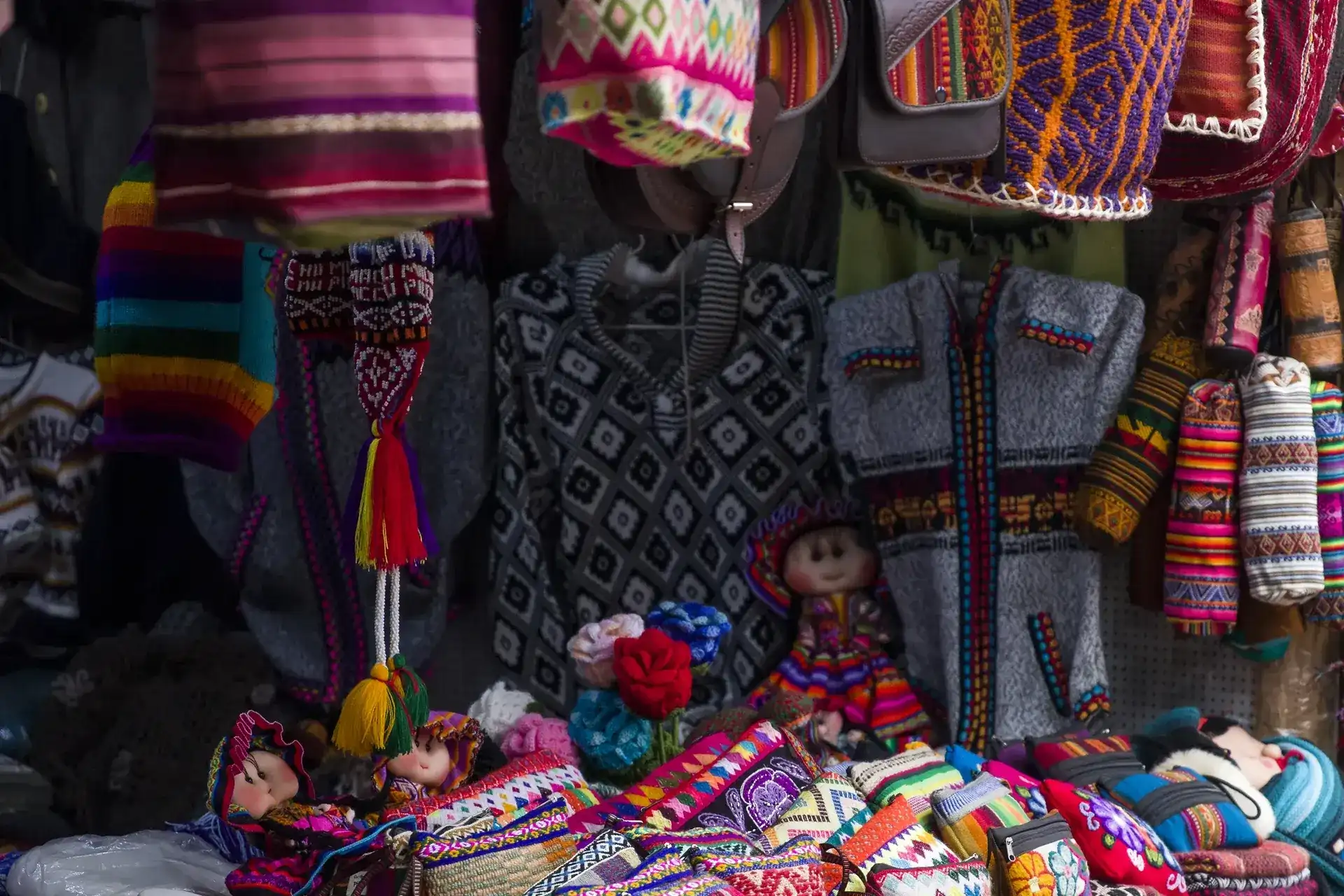
Markets are the heart of everyday life in Cusco. They're where people buy the week's food, eat breakfast, order textiles and catch up on news. For travellers they're a fascinating experience, but also a place with its own unwritten rules. This guide collects practical tips for enjoying Cusco's markets respectfully and without surprises: when to go, how to pay, how to bargain without offending, what the yapa is, how to take photos and how to look after your belongings.
Tours to explore Cusco's markets
Start here: Cusco tips · things to do in Cusco
Which market to choose
- For a first taste: San Pedro market, near the centre, with food, juices, fruit and some crafts.
- For local life without tourists: Wanchaq, Rosaspata or Vinocanchón in San Jerónimo.
- For crafts: the Centro Artesanal Cusco, San Blas and, in the Sacred Valley, Pisac and Chinchero.
- To browse everything: the Saturday fair or El Molino for imported goods and clothes.
- For special occasions: Santurantikuy on Christmas Eve in the Plaza de Armas.
- San Pedro Market in Cusco: what to eat, what to buy, opening hours and tips
- Wanchaq Market: where Cusco locals really shop
- Rosaspata Market: juices, breakfasts and farm produce in Cusco
- Vinocanchón Market: San Jerónimo's big wholesale market
- Cusco's Saturday farmers' market: the producer-to-consumer fair
- El Molino, Cusco: the big local bazaar for cheap shopping
- Santurantikuy: Cusco's Christmas market in the Plaza de Armas
When to go
Food markets open very early, from six in the morning, and the best time is between seven and eleven, when everything is fresh and lively. In the afternoon many stalls start closing. Craft markets open later and close at dusk. On Sundays some village markets, like Pisac or Chinchero, have their big day. Hours change, so check before you go.
How to pay
- Cash, always: most stalls only accept soles in cash. Some take Peruvian mobile payment apps, but don't count on it.
- Small notes and coins: vendors rarely have change for a 100 or 200 soles note.
- Check your change and notes: counterfeit notes circulate; learn the security features.
- Dollars: sometimes accepted for crafts, but the exchange rate is usually poor.
Bargaining respectfully
At craft markets bargaining is normal and expected, within limits. At food markets, however, prices are usually fixed and very low, and bargaining makes no sense.
- Ask the price with a smile and, if it seems high, offer a bit less.
- If you buy several items, ask for a price for the lot.
- Don't haggle over cents: it's little to you but may be the artisan's margin.
- If you're not interested, say "gracias" and move on; nobody is offended.
- Remember that many handwoven textiles take weeks of work.
- Buying alpaca in Cusco: how to spot the real thing, prices and where to look
- Andean textiles in Cusco: weaving workshops, weaving communities and buying well
The yapa
The yapa is a small extra the vendor adds to your purchase: a few more fruits, a bit more juice, a sweet. The word comes from Quechua and it's a very Andean tradition of reciprocity. Asking "¿y mi yapita?" with a smile is perfectly acceptable, especially if you're a regular. Returning to the same stall and becoming a "casero" or "casera" creates lovely relationships.
Bags, measures and customs
- Bring your own bag: more and more locals avoid plastic and many vendors appreciate it.
- Sold by the kilo, by the pile or by the unit: fruit is usually sold by the kilo, but potatoes or chillies are sometimes sold in small ready-made piles.
- "¿A cómo?": how locals ask the price per kilo or per item.
- Taste first: at cheese, fruit or olive stalls it's normal to be offered a sample.
- Respect the queue: even without a visible line, vendors know who arrived first.
- Say hello: a "buenos días, caserita" before asking opens many doors.
Photos
- Ask permission before photographing someone, especially vendors and children.
- Some people in traditional dress on the street ask for a tip for photos; it's how they make a living, so decide before you shoot.
- At food stalls, buying something is a good way to say thanks.
Looking after your things
Busy markets attract pickpockets, as in any city in the world.
- Wear your backpack on your front in crowded areas.
- Don't show your phone or wallet more than necessary.
- Carry only the day's cash.
- Be wary of distractions: pushing, someone spilling something on you or asking for help.
Eating at the market
Market food stalls are a cheap, authentic way to eat. Choose ones with lots of local customers, prefer hot dishes and avoid raw food in your first days.
- Street food in Cusco: anticuchos, emoliente, picarones and more
- Traditional breakfast in Cusco: adobo, chicken soup, juices and pan chuta
Before you go
eSIM for Peru
Land connected: install an Airalo data eSIM before you travel and switch it on when you land. Check first that your phone supports eSIM and is unlocked.
Get online in Peru →Frequently asked questions
- Can you bargain at Cusco's markets?
- At craft markets yes, respectfully and without overdoing it; at food markets prices are usually fixed.
- Do markets accept cards?
- Almost never; carry soles in cash and small notes.
- What is the yapa?
- A small extra the vendor adds to your purchase, an Andean tradition of reciprocity.
- What time should I go to the market?
- Food markets between seven and eleven in the morning; craft markets throughout the day.
Book this plan
- Cusco food tourCompareSee dates →
- Cusco city tourCompareSee dates →
Notice: This guide shares advice and recommendations based on research and local experience. Prices, opening hours and rules may change: always check with official sources and operators. Cusco Tips is not responsible for third-party services, bookings or decisions made using these guides; some links are affiliate links (see our affiliate policy).
Related guides
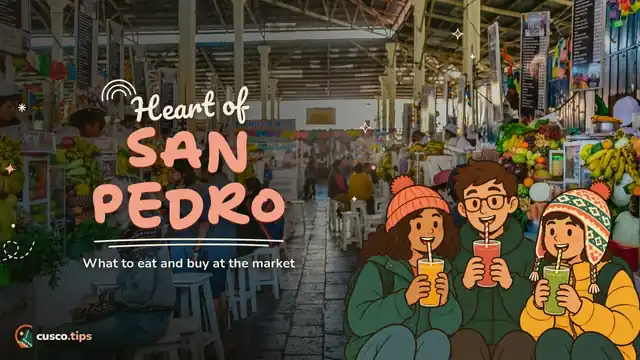
San Pedro Market in Cusco: what to eat, what to buy, opening hours and tips
Guide to San Pedro Central Market: sections, juices, cheap food, breads, cheeses and Andean produce, approximate hours, safety and how to get there from the Plaza de Armas.
Read guide →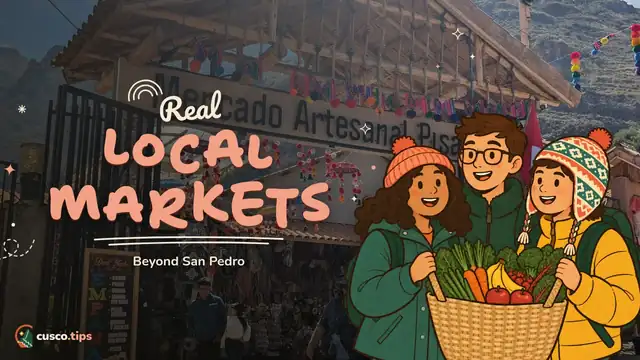
Local markets in Cusco: Wanchaq, Huancaro, Vinocanchón and beyond San Pedro
Cusco's local markets beyond San Pedro: Wanchaq, Huancaro, Vinocanchón, Rosaspata, the Baratillo and Cascaparo. What to find, when to go, what to eat and safety tips.
Read guide →
What to buy in Cusco: authentic souvenirs and what to avoid
The best souvenirs from Cusco: textiles and alpaca, ceramics, retablos, silver, coffee, chocolate, Andean grains and pisco; where to buy, how to bargain and what not to take home.
Read guide →
Buying alpaca in Cusco: how to spot the real thing, prices and where to look
Differences between baby alpaca, alpaca, llama, vicuña and synthetic blends; how to recognise genuine garments by feel and label, price ranges and where to buy.
Read guide →