
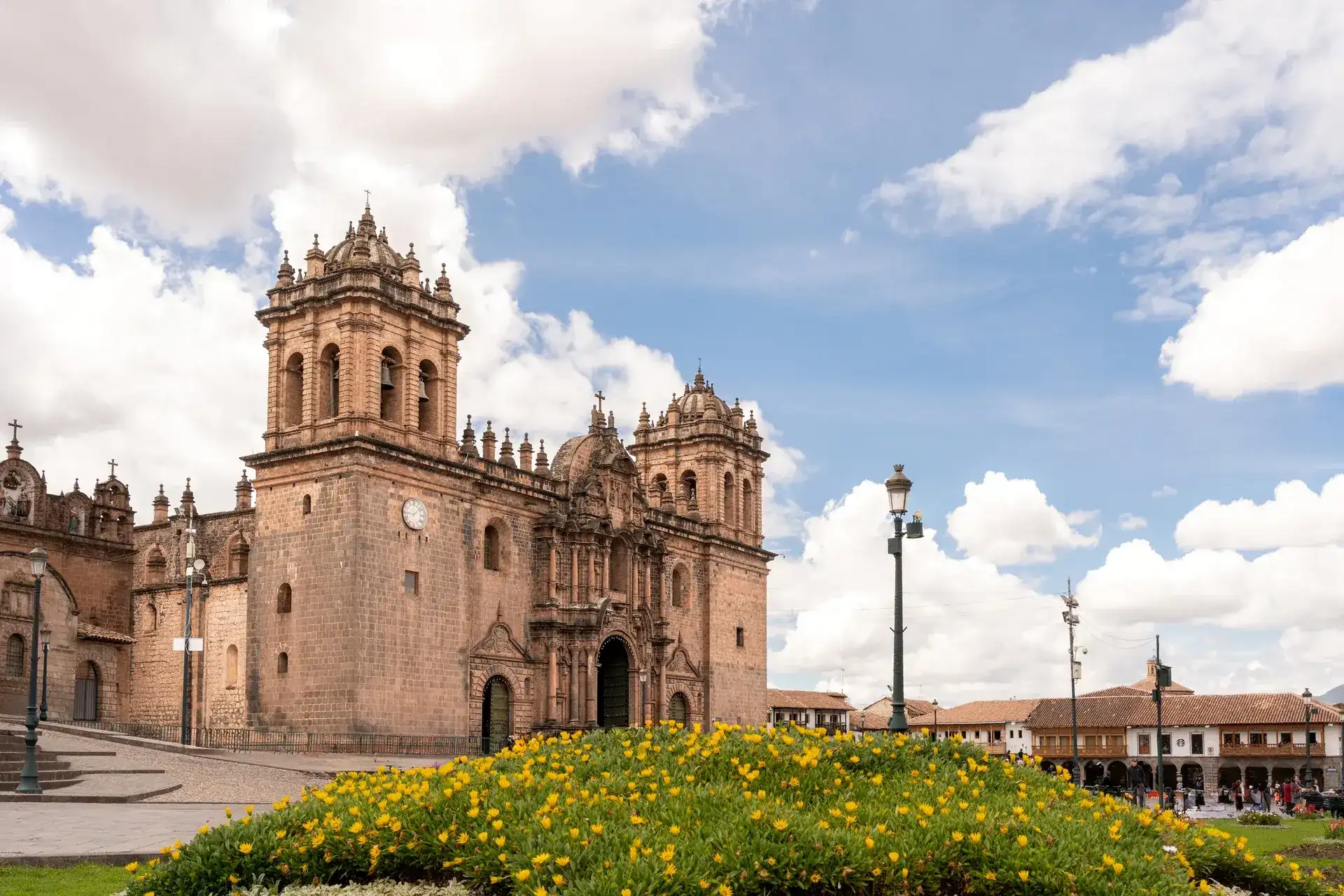
Qorikancha, the Temple of the Sun: tickets, hours, what to see and history
Updated:
Qorikancha was the most important temple of the Inca Empire, dedicated to the Sun (Inti) and other deities. According to the chroniclers, its walls were covered in gold sheets and its garden held gold and silver figures. After the conquest, the Dominicans built the church and convent of Santo Domingo on top of it, creating a unique mix today: astonishingly precise Inca walls inside a colonial cloister. It's a few minutes' walk from the Plaza de Armas and a must-see.
Start here: Cusco tips · things to do in Cusco
History in brief
The name is usually translated from Quechua as "golden enclosure". The temple existed before Pachacútec, but he rebuilt it on a grand scale in the 15th century. It was the religious and astronomical centre of Tawantinsuyu: according to chroniclers, imaginary lines called ceques radiated from here, organising hundreds of sacred places around Cusco. The Spaniards melted down its gold and gave the site to the Dominican order. The 1650 and 1950 earthquakes badly damaged the colonial church while the Inca walls held, which allowed part of the original structure to be recovered.
Popular activities on GetYourGuide
What to see
- The Inca chambers: rooms traditionally linked to the Sun, Moon, stars, lightning and rainbow, with trapezoidal niches and polished stone walls.
- The stonework: andesite blocks fitted with millimetre precision. Notice the joints and the walls leaning slightly inward, an earthquake-resistant technique.
- The curved outer wall: visible from Avenida El Sol, one of the finest examples of Inca architecture.
- The colonial cloister and Santo Domingo church, with Cusco School paintings.
- The outer gardens, where the chronicles place the golden garden.
Tickets: two different places
This often confuses visitors:
- Qorikancha / Santo Domingo convent: paid with its own ticket, run by the Dominican order. Not included in the Boleto Turístico.
- Qorikancha Site Museum: an underground museum beneath the outer gardens, entered from Avenida El Sol, which is part of the Cusco Tourist Ticket.
Prices are moderate and change; confirm at the ticket office. Official guides at the entrance offer tours of about 45–60 minutes.
Hours and duration
It usually opens Monday to Saturday all day and on Sundays with reduced hours, typically in the afternoon. Confirm current hours, as they can change on religious holidays. Allow 1–1.5 hours with a guide.
Go in the morning
Early on there are fewer groups and softer light in the cloister for photos.
Getting there
Qorikancha is on Plaza Santo Domingo, between Avenida El Sol and Calle Loreto, a 5–10-minute walk from the Plaza de Armas along Calle Loreto, lined with Inca walls. The route is flat and fine for your first day in Cusco.
How to combine it
- Independently: Qorikancha in the morning, then walk along Calle Loreto and Hatun Rumiyoc street up to San Blas.
- On a tour: the half-day city tour usually starts at Qorikancha and continues to Sacsayhuamán, Q'enqo, Puka Pukara and Tambomachay.
- Sacsayhuamán: how to visit, tickets, history and tips
- The best museums in Cusco: which to visit, tickets and how to plan
Tips
- Respect the church's areas of worship: it's still a religious site.
- Don't touch or lean on the Inca walls.
- Flash photography may be restricted in some rooms.
- On Inti Raymi (24 June) the first scene is staged in front of Qorikancha; access is restricted that day.
What the chroniclers said
Almost everything we know about Qorikancha before the conquest comes from chronicles written afterwards:
- Pedro Cieza de León, in the mid-16th century, described walls covered with gold plates and a band of gold running around the building.
- Inca Garcilaso de la Vega, born in Cusco, described in his Royal Commentaries (1609) a garden of plants, corn cobs and animals made of gold and silver.
- The Jesuit Bernabé Cobo recorded in 1653 the account of the ceques: some forty lines radiating from the temple that organised more than 300 huacas, sacred places such as springs, stones and hills, whose care was shared among the city's groups.
Read them for what they are: valuable testimony, but written decades later and through their authors' own eyes.
The 1950 earthquake
On 21 May 1950 a strong earthquake shook Cusco. The church and convent of Santo Domingo were badly damaged, but as colonial plaster and additions fell away, Inca walls that had been hidden for centuries came into view. Later restorations chose to leave them exposed, which is why today you can see Inca stonework and colonial architecture layered in one building: Cusco's best history lesson in a single place.
A suggested route
- Start with the Inca chambers around the cloister and look at the niches and trapezoidal doorways.
- Find the spot where several openings line up on a single axis: it is one of the temple's classic photos.
- Walk around the cloister and its colonial paintings.
- Step onto the terrace above the gardens.
- On the way out, walk down Avenida El Sol to see the curved wall from outside.
Frequently asked questions
- Is Qorikancha included in the Boleto Turístico?
- No. The temple and Santo Domingo convent has its own ticket. The Tourist Ticket does include the Qorikancha Site Museum beneath the gardens.
- How long does a Qorikancha visit take?
- About 1–1.5 hours with a guide.
- Is any of Qorikancha's gold left?
- Practically none. The gold plates and objects were stripped by the Spaniards after the conquest and melted down; what you see today is the architecture.
Book this plan
- City tour of the Tourist Ticket sitesCompareSee dates →
- Cusco walking tourCompareSee dates →
Notice: This guide shares advice and recommendations based on research and local experience. Prices, opening hours and rules may change: always check with official sources and operators. Cusco Tips is not responsible for third-party services, bookings or decisions made using these guides; some links are affiliate links (see our affiliate policy).
Related guides
Things to do in Cusco: 30 essentials in the city and beyond
Things to do in Cusco: the city's essentials, Machu Picchu, the Sacred Valley, day trips, treks, food, markets and festivals, with 1- to 3-day plans.
Read guide →
Sacsayhuamán: how to visit, tickets, history and tips
Guide to Sacsayhuamán, the great Inca complex above Cusco: walking up or by taxi, which ticket you need, hours, what to see (walls, Rodadero, tunnels) and its history.
Read guide →
The best museums in Cusco: which to visit, tickets and how to plan
Inka Museum, Pre-Columbian Art Museum, Machu Picchu Museum at Casa Concha, Tourist Ticket museums and religious art: what each offers and how to combine them.
Read guide →
Cusco Cathedral: what to see inside, the Last Supper with guinea pig, tickets and hours
Cusco Cathedral guide: history on an Inca palace, Marcos Zapata's Last Supper, the Lord of Earthquakes, Cusco School art, tickets, opening hours and tips for your visit.
Read guide →
Cusco Tourist Ticket (Boleto Turístico): what's included and is it worth it
Guide to the Cusco Tourist Ticket (COSITUC): full and partial tickets, sites in each circuit, what it does NOT include, where to buy it and how to use it.
Read guide →