
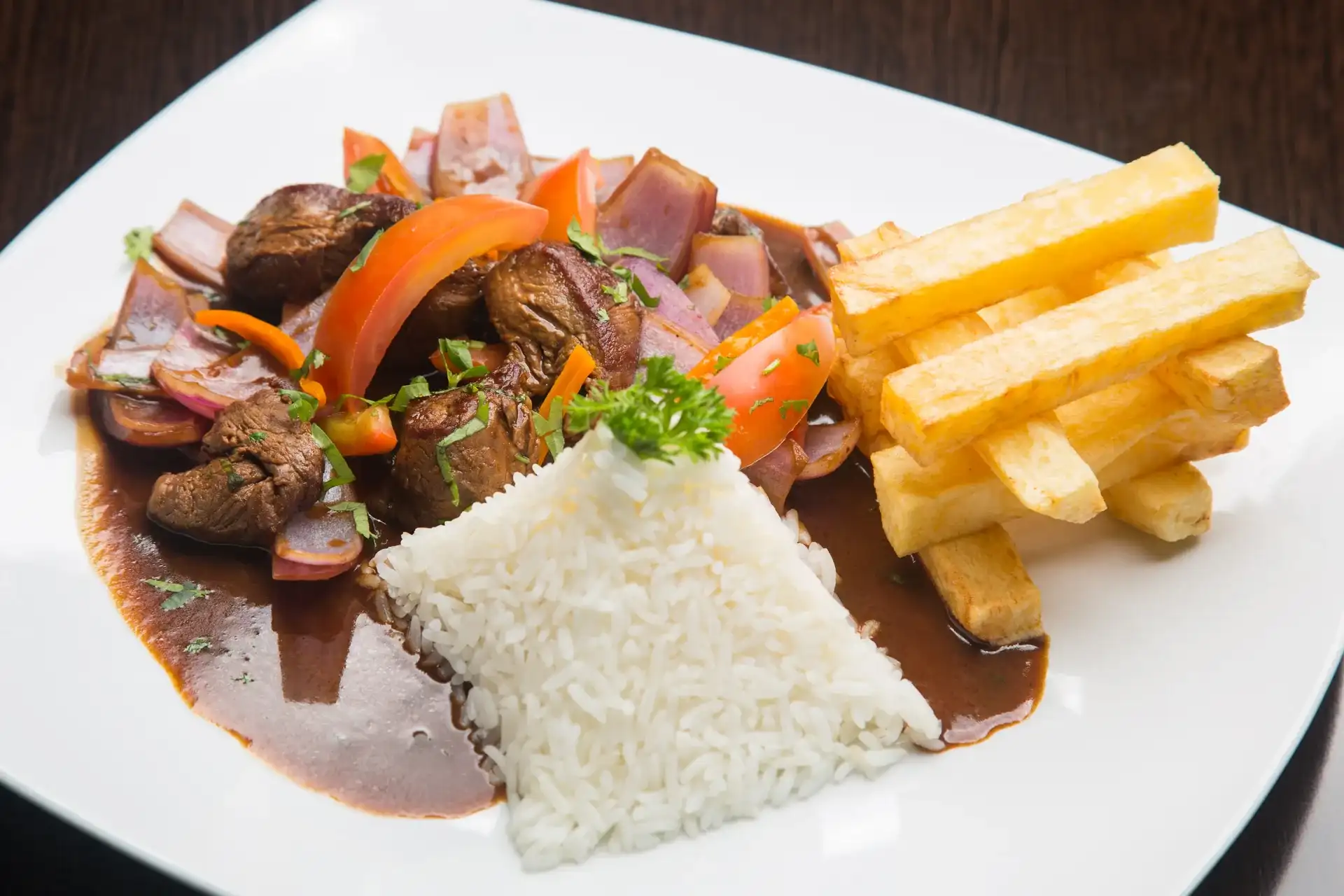
Peruvian cuisine is one of the most celebrated in the world, and Cusco has its own Andean version, with native potatoes, giant-kernel maize, quinoa, grilled meats and festive dishes you won't find in Lima. A food tour is the easiest way to try many of them in a few hours, with someone explaining what you're eating, where it comes from and how it's eaten. This guide explains what these tours usually include, what you'll taste, how they differ from a cooking class and how to choose one that's worth it.
Start here: Cusco tips · things to do in Cusco
What a food tour is
It's a walking tour, usually three to four hours, in a small group with a local guide, combining stops at markets, street stalls, picanterías, bakeries, cafés and bars. At each stop you taste one or more specialities and the guide tells their story. Some tours run in the morning, focusing on the market and breakfast; others, in the afternoon or evening, include drinks such as chicha or pisco.
- San Pedro Market in Cusco: what to eat, what to buy, opening hours and tips
- Street food in Cusco: anticuchos, emoliente, picarones and more
Popular activities on GetYourGuide
San Pedro market
Almost every tour passes through San Pedro market, the big market in the centre. There you'll see dozens of potato varieties, jungle fruits you've never heard of, Andean cheeses and huge breads, and you'll try fruit juices, empanadas or broths at its stalls.
- San Pedro Market in Cusco: what to eat, what to buy, opening hours and tips
- Peruvian fruits in Cusco markets: what to try and how to eat them
- Native potatoes of Cusco: varieties, chuño and dishes to try
What you'll taste
- Chicharrón: fried pork with mote and potato, a weekend favourite.
- Roast cuy: the quintessential Andean festive dish, for the curious.
- Chiriuchu: a cold Corpus Christi dish with many meats and sides.
- Rocoto relleno, adobo and lechón: picantería classics.
- Pan chuta: the region's large round bread.
- Choclo con queso: giant-kernel corn with fresh cheese.
- Andean and Amazonian fruits: granadilla, lúcuma, chirimoya, aguaymanto.
- Cusco picanterías and chicherías: eat like a local
- Eating guinea pig (cuy) in Cusco: what it is, how it's cooked and where to try it
- Saylla chicharrón: Cusco's fried-pork town
- Traditional breakfast in Cusco: adobo, chicken soup, juices and pan chuta
Drinks
- Chicha de jora: a fermented maize drink served in chicherías, traditionally marked by a pole with a red bag at the door.
- Chicha morada: a non-alcoholic purple-corn drink.
- Pisco: Peru's grape spirit, in a sour or a tasting.
- Coca and muña tea: Andean infusions that help with the altitude.
- Peruvian coffee and local craft beer.
- Pisco in Cusco: types, pisco sour, tastings and how to choose a good bar
- Beer in Cusco: craft beer, Cusqueña and chicha de jora
- Coffee in Cusco: where it comes from, specialty cafés and farm visits
- Coca leaf in Cusco: tea, chewing, altitude sickness and whether you can take it home
Morning, afternoon or evening?
- Morning: the market is in full swing, produce is fresh and you breakfast like locals, with broths, juices and breads. Ideal if you struggle with heavy dinners at altitude.
- Afternoon: a good time for picanterías and chicherías, which traditionally open at midday and in the afternoon.
- Evening: more focused on restaurants, bars and drinks such as pisco, with a livelier atmosphere.
Avoid doing the tour on the day you arrive in Cusco: your stomach and body will thank you for a day to adjust.
Food tour or cooking class?
- Food tour: you taste lots of different things and see several parts of the city.
- Cooking class: you learn to make two or three dishes and then eat them; it usually includes a market visit.
If you have time, do both: the tour to discover and the class to take recipes home.
How to choose a good tour
- Small groups: ideally eight people or fewer.
- Stops at local businesses, not just tourist restaurants.
- Variety: market, street food and at least one traditional restaurant.
- Recent reviews that talk about the food and the guide.
- What's included: confirm whether alcoholic drinks are included.
Special diets
Many tours adapt for vegetarians and some allergies if you mention it when booking. Vegans will find it harder in markets and picanterías, but some operators offer specific versions.
Eating sensibly at altitude
- Don't overeat in the first days: digestion is slower at altitude.
- Drink bottled water and avoid ice in doubtful places.
- Good tours choose stalls with good hygiene; on your own, look for stalls busy with locals.
- Altitude sickness in Cusco: how to prevent it and what to do
- Health in Cusco: vaccines, yellow fever, water, sun and first-aid kit
A food route on your own
If you'd rather go without a guide, build your own route: breakfast at San Pedro market, lunch at a picantería, coffee in San Blas and dinner with pisco in the centre. Carry cash and don't be shy about asking vendors what they recommend.
- What and where to eat in Cusco: typical dishes, markets and tips
- Cusco on a budget: saving on accommodation, food, transport and Machu Picchu
Beyond the city
Some tours leave Cusco to visit Saylla, famous for its chicharrón, Tipón, known for roast cuy, or the bread ovens of Oropesa, on the way to the South Valley.
- Saylla chicharrón: Cusco's fried-pork town
- Cusco's South Valley: Tipón, Pikillacta, Andahuaylillas and local flavours
Frequently asked questions
- Is a food tour in Cusco worth it?
- Yes, especially at the start of your trip: you taste lots of dishes and learn what to order on your own later.
- How long does a food tour last?
- Usually three to four hours.
- Are there tours for vegetarians?
- Many adapt if you mention it when booking.
- Which is better, a food tour or a cooking class?
- The tour for variety; the class to learn to cook. If you can, do both.
Book this plan
- Cusco food tourCompareSee dates →
- Peruvian cooking classCompareSee dates →
Notice: This guide shares advice and recommendations based on research and local experience. Prices, opening hours and rules may change: always check with official sources and operators. Cusco Tips is not responsible for third-party services, bookings or decisions made using these guides; some links are affiliate links (see our affiliate policy).
Related guides
Things to do in Cusco: 30 essentials in the city and beyond
Things to do in Cusco: the city's essentials, Machu Picchu, the Sacred Valley, day trips, treks, food, markets and festivals, with 1- to 3-day plans.
Read guide →
Cooking classes in Cusco: what to expect, typical dishes and how to choose
Peruvian cooking classes in Cusco: market visit, ceviche, lomo saltado, pisco sour, vegetarian options, duration, rough price and tips for choosing a good class.
Read guide →
San Pedro Market in Cusco: what to eat, what to buy, opening hours and tips
Guide to San Pedro Central Market: sections, juices, cheap food, breads, cheeses and Andean produce, approximate hours, safety and how to get there from the Plaza de Armas.
Read guide →
Cusco picanterías and chicherías: eat like a local
Cusco picanterías and chicherías: what they are, the red flag, typical dishes (chiriuchu, kapchi, cuy, adobo), chicha de jora and verified places. Check opening times.
Read guide →
Street food in Cusco: anticuchos, emoliente, picarones and more
A guide to Cusco street food: anticuchos, salchipapas, emoliente, picarones, tamales, corn with cheese, where to find them and hygiene tips.
Read guide →