
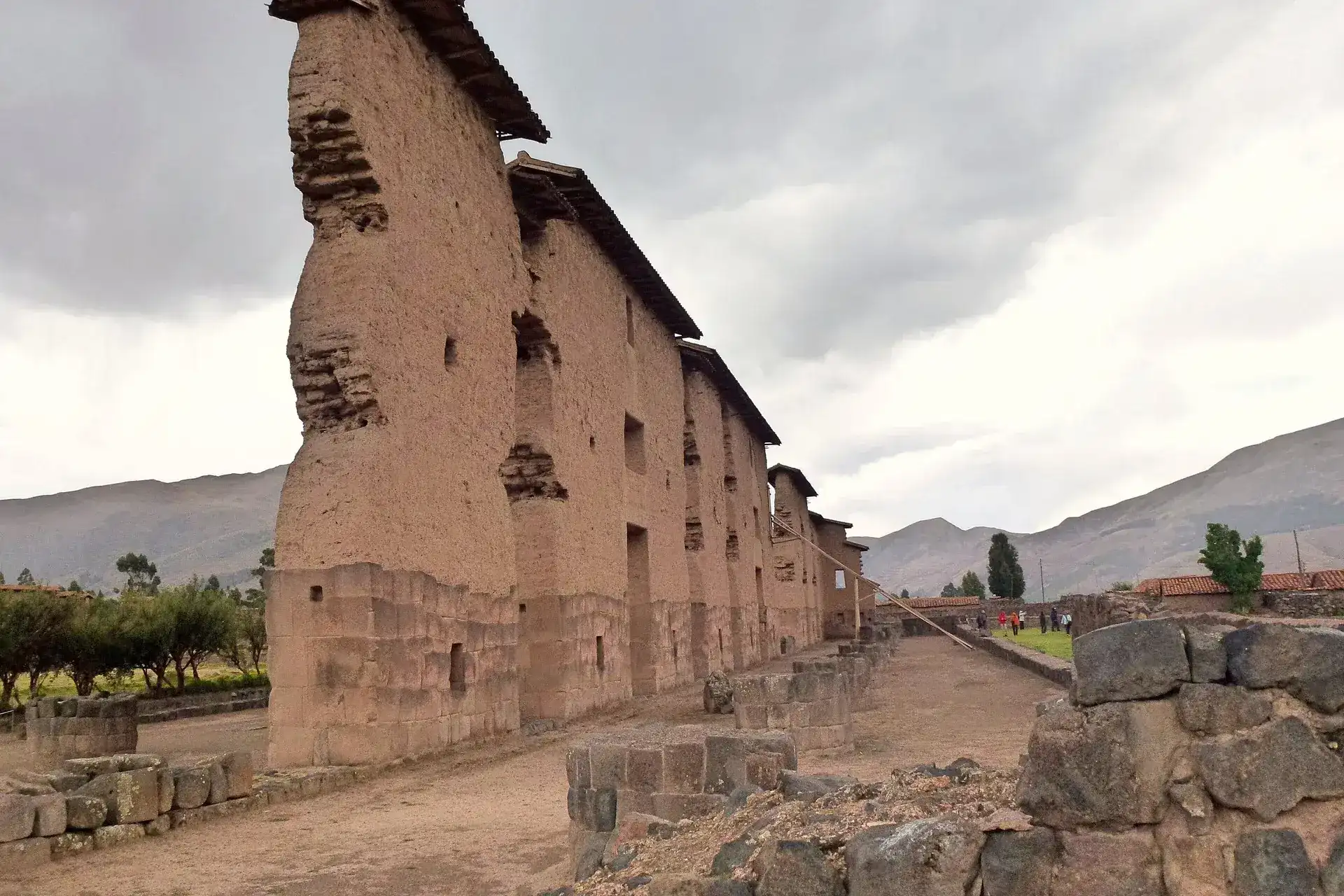
Raqchi surprises even travellers who have already seen Sacsayhuamán and Machu Picchu. About 117 km south of Cusco, beside the Vilcanota River and below the extinct Kinsach'ata volcano, a wall roughly 14 metres high still stands: finely fitted Inca stonework at the base and huge adobe blocks on top, five centuries later. It is what remains of the so-called Temple of Wiracocha, one of the most monumental Inca buildings still standing. This guide pulls together the official information you need: what to see, the entry fee, opening hours and how to get there on your own or on the Route of the Sun bus to Puno.
Start here: Cusco tips · things to do in Cusco
What Raqchi is
The Incas called this place Cacha. According to the Cusco office of the Ministry of Culture (DDC Cusco), the great central wall carried the roof of a rectangular building 92 metres long, which the chronicler Garcilaso de la Vega identified as the temple of Viracocha, the Andean creator god. Around it you will find a small artificial lake, a raised platform, rooms laid out around courtyards and a large walled sector of round structures. The archaeological park covers about 1,097 hectares at around 3,480 m, roughly the same altitude as Cusco city.
- Machu Picchu history: who built it, why, and how the world found out
- Sacsayhuamán: how to visit, tickets, history and tips
- Qorikancha, the Temple of the Sun: tickets, hours, what to see and history
Popular activities on GetYourGuide
What to see
- The Temple of Wiracocha: walk along both sides of the central wall and notice the switch from polished stone to adobe. The bases of the columns that once held up the roof are still visible.
- The qolqas: 152 round storehouses almost 8 metres across, lined up in rows, used for food, pottery, textiles and even weapons. Few places show Inca logistics so clearly.
- The courtyard compounds and the lake area, a reminder that Raqchi was an administrative stop on the road to Collasuyu, not just a temple.
- Raqchi village, right next to the site, with craft stalls and local pottery.
Allow one to two hours
The main circuit is flat and takes about an hour at an easy pace; give it two if you are photographing or have a guide.
- The best photography spots in Cusco and around
- How to choose a tour agency in Cusco: a checklist to get it right
Tickets and opening hours
Raqchi is not covered by the Cusco Tourist Ticket (Boleto Turístico); you pay a separate entry. The Ministry of Culture's published rate for the park is S/ 20 general, S/ 10 for university or technical students with ID and S/ 8 for minors, with a legal 50% discount for people aged 60+, teachers, voluntary military personnel and people with disabilities. DDC Cusco lists visiting hours as 7:00 am to 5:00 pm. Bring cash in soles, and check current fees and hours before you go, as they can change from year to year.
Ask what is included
On a Route of the Sun bus, ask whether the Raqchi ticket is in the fare or paid at the gate.
- Cusco Tourist Ticket (Boleto Turístico): what's included and is it worth it
- Money in Cusco: soles, ATMs, exchange offices and cards
Site rules
DDC Cusco asks visitors to respect opening hours and bans food, animals and alcohol on site, climbing or painting the walls, camping and flying drones without permission. On the plus side, the entrance is level, which makes Raqchi one of the easier Inca sites in the region for visitors with reduced mobility.
- Machu Picchu accessibility: the designed route, transport and practical tips
- Cusco for older travellers: gentle tours, altitude and practical advice
Getting there from Cusco
- Route of the Sun (Cusco–Puno tourist bus): the easiest option if you are heading to Puno anyway. It usually stops at Andahuaylillas, Raqchi and La Raya pass, with a guide on board.
- Day tour: some agencies pair Raqchi with Andahuaylillas and other South Valley stops; compare which tickets are included.
- Public transport: take a bus or colectivo bound for Sicuani from the terminals around Huayruropata and ask to be dropped at the San Pedro/Raqchi turn-off before Sicuani. Confirm the stop with the driver and ask in the village about getting back, as frequency varies.
- Private car: along the paved Cusco–Sicuani road, about 2.5 to 3 hours each way.
- Cusco to Puno and Lake Titicaca: bus, tourist bus, train or plane
- Andahuaylillas: San Pedro church, the "Sistine Chapel of the Andes"
- Private driver in Cusco and the Sacred Valley: when it's worth it and how to hire one
A village of potters
The word raqch'i is linked to vessels made from volcanic material, and the village lives up to its name. In 2018 Peru's Ministry of Culture declared the knowledge and practices behind Raqchi pottery part of the nation's cultural heritage; the craft is still passed down in family workshops. Buying straight from the potters is one of the most direct ways to support the community.
- Ceramics in Cusco and the Sacred Valley: styles, workshops and what to buy
- Ethical shopping in Cusco: fair trade, cooperatives and weavers
The Raqchi festival
For around fifty years the Raqchi Folk Festival has taken place on the third Sunday of June on the esplanade in front of the temple, with music, dance groups from across the region and local food. If your dates match, it is well worth it; confirm the year's date, as it is set by local organisers.
- Cusco festivals: a month-by-month calendar
- Inti Raymi in Cusco: date, schedule, tickets and how to experience the Festival of the Sun
Practical tips
- High-altitude sun burns even when it feels cold: sunscreen, a hat and water.
- In the rainy season (December to March) bring a rain jacket; the site stays open.
- There are no restaurants inside the park: eat in the village or in Sicuani.
- On public transport, leave early so you can get back in daylight.
- What to pack for Cusco and Machu Picchu: a packing list by season
- Rainy season in Cusco and Machu Picchu: what to expect and how to make the most of it
- Cusco weather by month: temperatures, rain and what to expect
Frequently asked questions
- Is Raqchi included in the Cusco Tourist Ticket?
- No. Raqchi has its own Ministry of Culture ticket (published general rate: S/ 20). Check the current price before you go.
- How long do you need at Raqchi?
- One to two hours for the temple, the storehouses and the village.
- Can I reach Raqchi from Cusco by public transport?
- Yes: a bus or colectivo towards Sicuani, getting off at the San Pedro/Raqchi turn-off. Ask about the return when you arrive.
- Is it worth it on the way to Puno?
- Very much. It is the most striking stop on the Route of the Sun between Cusco and Titicaca.
Official sources
Book this plan
- Rainbow Mountain (Vinicunca)CompareSee dates →
- Humantay LakeCompareSee dates →
- Sacred Valley tourCompareSee dates →
Notice: This guide shares advice and recommendations based on research and local experience. Prices, opening hours and rules may change: always check with official sources and operators. Cusco Tips is not responsible for third-party services, bookings or decisions made using these guides; some links are affiliate links (see our affiliate policy).
Related guides

Cusco to Puno and Lake Titicaca: bus, tourist bus, train or plane
How to get from Cusco to Puno: direct bus (about 6–7 h), tourist bus with stops at Raqchi and La Raya, scenic train or flight to Juliaca. Altitude, tips and what to see on Titicaca.
Read guide →
Andahuaylillas: San Pedro church, the "Sistine Chapel of the Andes"
Guide to Andahuaylillas and San Pedro Apóstol church: Andean baroque art, visit tips, South Valley with Tipón and Pikillacta, entry separate from the Tourist Ticket. Verify hours and prices.
Read guide →
Cusco's South Valley: Tipón, Pikillacta, Andahuaylillas and local flavours
Guide to Cusco's South Valley: Tipón's Inca waterworks, the Wari city of Pikillacta, Andahuaylillas church, Huacarpay lagoon, chicharrón, Oropesa bread and how to get there.
Read guide →
Ceramics in Cusco and the Sacred Valley: styles, workshops and what to buy
Cusco ceramics: Inca aryballos, Pucará bulls, Cerámicas Seminario in Urubamba and workshops in San Blas and Pisac. How to choose and carry fragile pieces.
Read guide →
Cusco Tourist Ticket (Boleto Turístico): what's included and is it worth it
Guide to the Cusco Tourist Ticket (COSITUC): full and partial tickets, sites in each circuit, what it does NOT include, where to buy it and how to use it.
Read guide →