
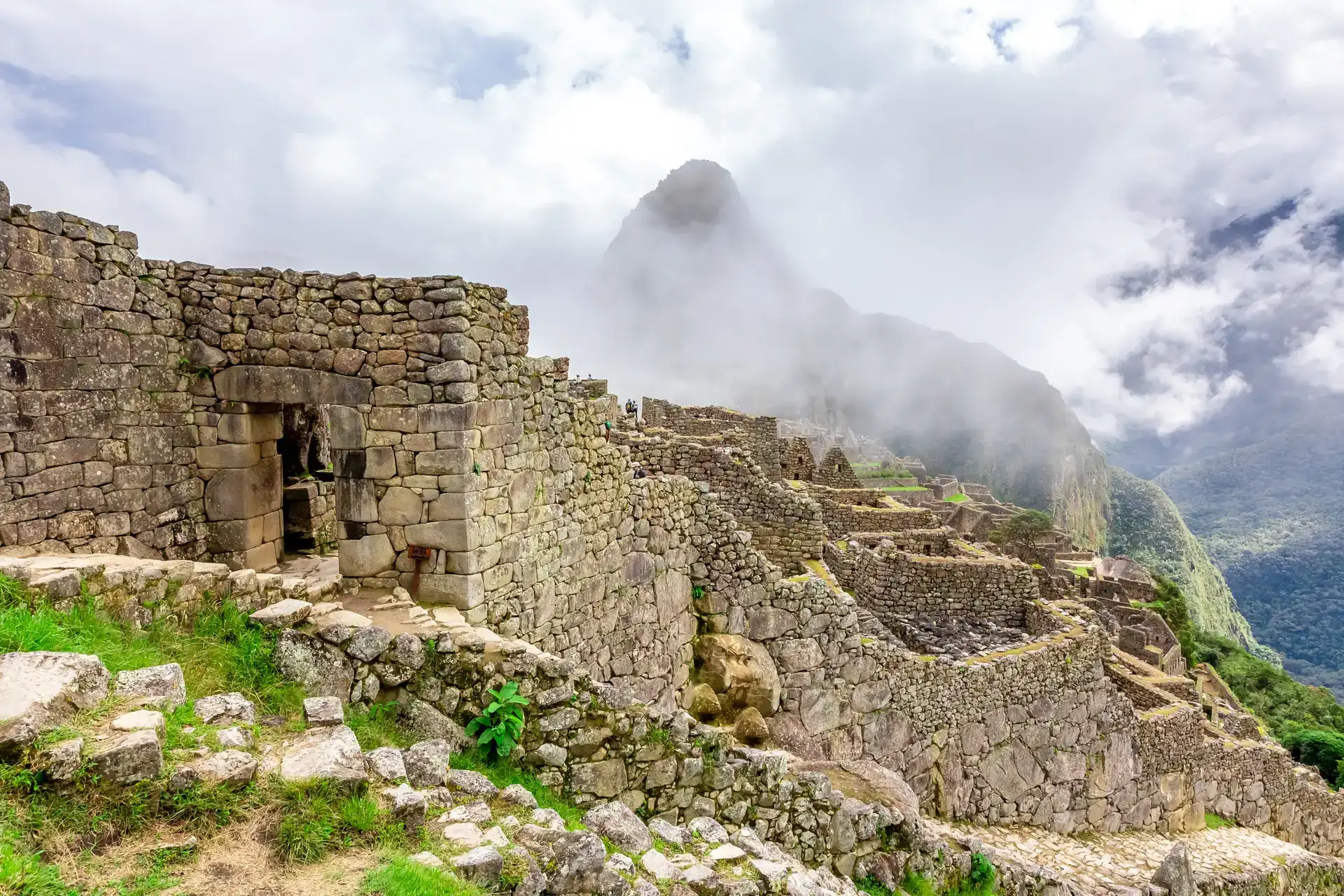
Machu Picchu is an Inca city built on a mountain ridge, with thousands of stone steps and narrow paths. It wasn't designed for modern accessibility and has no ramps or lifts in the citadel. Even so, visiting with reduced mobility or in a wheelchair is possible with good planning and help. This guide sums up what you need to know.
Start here: Cusco tips · things to do in Cusco
What to know from the outset
The terrain combines uneven staircases, changes in level, stone that gets slippery in the rain and altitude, about 2,400 m above sea level. No route is completely flat. The key is choosing the right route, going with companions and pacing yourself.
Popular activities on GetYourGuide
Route 3-B, the recommended option
Within Circuit 3, or the royalty circuit, Route 3-B: Designed Route covers the lower part of the citadel and its official map marks it for people with motor disabilities. It's the one guides and agencies usually recommend for wheelchair users and older people with limited mobility. The maximum time allowed is shown on the route's official map.
What you see on Route 3-B
The official map includes points such as the platforms, the dry moat, the Temple of the Sun viewpoint, the temple plaza, the Sacred Rock, the eastern storehouses, the water mirrors and the Temple of the Condor. It doesn't include the Guardhouse or the classic photo from above, which require climbing dozens of steps.
Companions
Even on the designed route there are some stone steps. Specialist sources recommend going with at least two people who can help lift the wheelchair on those sections. A guide experienced in adapted visits makes a difference.
Tell them in advance
If you book with an agency, explain your specific needs before paying: type of wheelchair, whether you can walk short stretches, pace and rest time.
The train
Trains to Aguas Calientes don't have ramps at every station or adapted spaces in every carriage. Contact PeruRail or Inca Rail before buying to ask about boarding assistance and the accessibility of the service you choose.
The bus up
The bus between Aguas Calientes and the citadel entrance takes about 25 to 30 minutes on a winding road. The vehicles aren't adapted, so you'll need help getting on and off, and a folded wheelchair travels separately. Walking up isn't a realistic option with reduced mobility.
Choosing your time slot and pace
The designed route has a maximum time allowed, so don't rush. Choose a time slot that lets you arrive from the hotel without hurrying, allow for bus queues and plan breaks to rest in the shade. Midday slots tend to be hotter.
Tickets and discounts
The Ministry of Culture's official price list includes a special rate with a 50% discount on the general rate for people with disabilities and for over-60s, as set by law. Bring supporting documents and confirm on the official platform what's required in your case before buying.
Same name, same passport
Tickets are issued in your name and checked at the entrance against your ID.
Altitude and health
Machu Picchu is lower than Cusco, which helps. Even so, if you have heart or breathing problems, see your doctor before the trip and acclimatise for a few days in the Sacred Valley, which is also lower than the city.
- Altitude sickness in Cusco: how to prevent it and what to do
- Health in Cusco: vaccines, yellow fever, water, sun and first-aid kit
Staying in Aguas Calientes
Spending the night in Aguas Calientes avoids doing Cusco–Machu Picchu–Cusco in one day, which is exhausting. The town's streets have slopes and stairs: when booking, ask about a lift, ground-floor rooms and step-free access from the street.
Best time of year
In the dry season, May to September, the stone is less slippery, though it's busier. In the rainy season, wet ground makes wheelchairs and descents harder. Choose less crowded time slots if you can.
- Best time to visit Cusco and what to pack
- Rainy season in Cusco and Machu Picchu: what to expect and how to make the most of it
What to bring
- Gloves for pushing the wheelchair on stone.
- Rain jacket and sun protection.
- Water and personal medication.
- Disability documentation, passport and tickets.
- Cushion and basic spares if you use your own wheelchair.
If the citadel isn't feasible
If getting there becomes too difficult, other places in the region offer gentler terrain, such as parts of Cusco and the Sacred Valley. An adapted tour can combine several.
- Cusco for older travellers: gentle tours, altitude and practical advice
- Sacred Valley of the Incas: what to see and how to visit
Frequently asked questions
- Can you visit Machu Picchu in a wheelchair?
- Yes, with help. Route 3-B, in the lower part, is the one marked for motor disabilities.
- Are there ramps or lifts?
- No. Even the designed route has steps; go with at least two companions.
- Is there a discount for people with disabilities?
- The official price list includes 50% off the general rate; confirm the requirements when buying.
- Is the bus adapted?
- No; you'll need help getting on and off.
Book this plan
- Machu Picchu day trip from CuscoCompareSee dates →
- Sacred Valley and Machu Picchu in 2 daysCompareSee dates →
- Machu Picchu entry with a guided visitCompareSee dates →
Notice: This guide shares advice and recommendations based on research and local experience. Prices, opening hours and rules may change: always check with official sources and operators. Cusco Tips is not responsible for third-party services, bookings or decisions made using these guides; some links are affiliate links (see our affiliate policy).
Related guides
Cusco for older travellers: gentle tours, altitude and practical advice
How to enjoy Cusco, the Sacred Valley and Machu Picchu as an older traveller: acclimatisation, gentle-paced tours, private transport, step-free stays and health.
Read guide →
Machu Picchu circuits explained: which to choose (1, 2 or 3) and what you see
Differences between Machu Picchu circuits 1, 2 and 3 and their routes: classic view, temples, Huayna Picchu, the Mountain and the Sun Gate. How to choose.
Read guide →
Machu Picchu bus from Aguas Calientes: how it works, tickets and queues
Guide to the bus between Aguas Calientes and Machu Picchu: who runs it, where to buy tickets, morning queues, approximate timings and the alternative of walking up.
Read guide →
Machu Picchu tickets: how to buy them on the official site and not miss out
Where to buy official Machu Picchu tickets, how far ahead, approximate prices, entry time slots, in-person tickets in Aguas Calientes and common mistakes.
Read guide →