
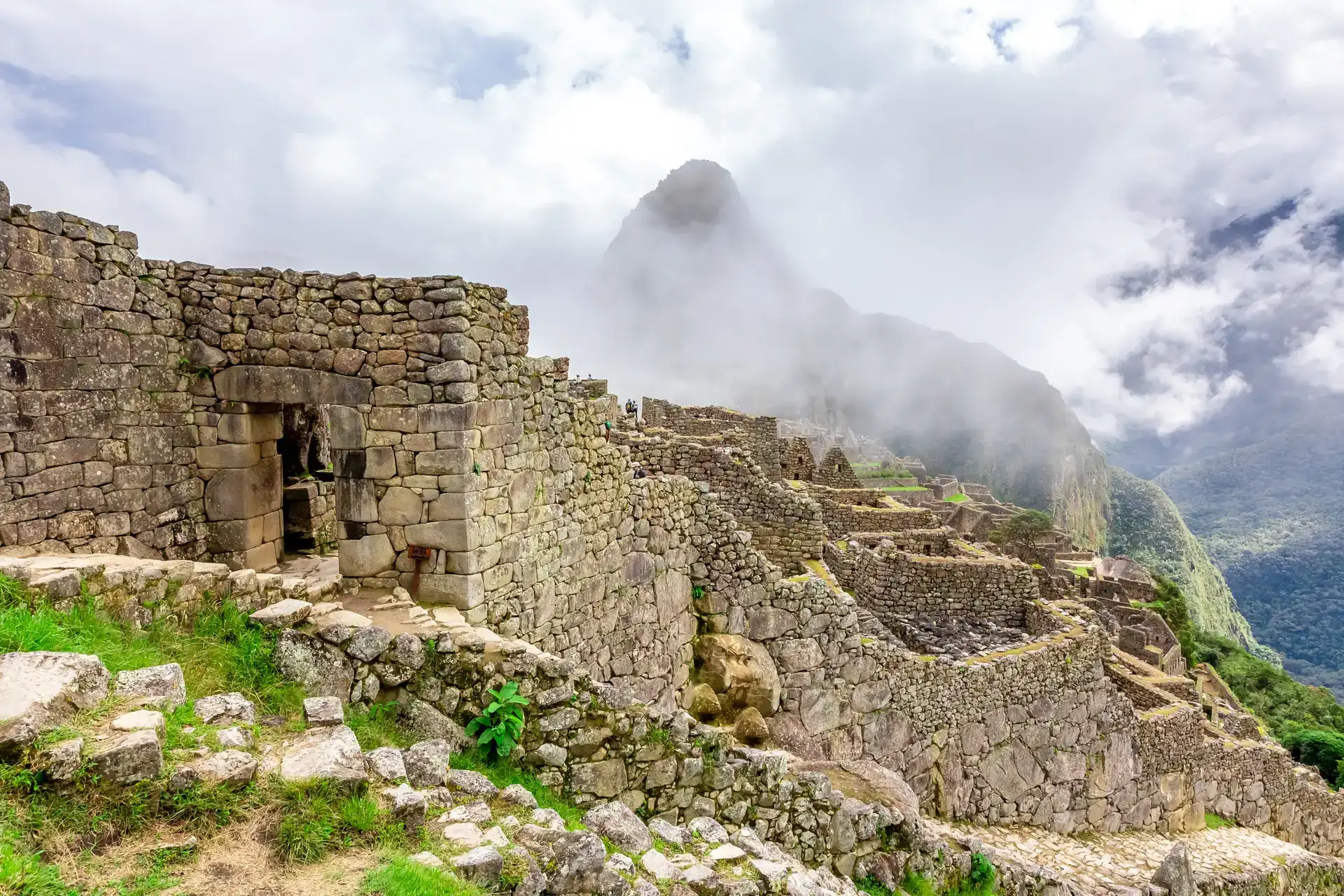
Machu Picchu isn't just a postcard view: it's a whole city, with temples, palaces, homes, workshops, fountains and hundreds of farming terraces. Since visits have been organised by circuits and routes, not every visitor sees the same places, so it helps to know what's there and what your ticket includes. This guide covers the most important spots in the citadel and where they are.
Start here: Cusco tips · things to do in Cusco
How the citadel is organised
The llaqta is divided into two main areas: the agricultural sector, with the southern terraces, and the urban sector, separated by a wall and a dry moat. Within the urban sector there's the upper part, with the main temples, and the lower part, with homes and workshops. Between them lies the great central plaza.
Popular activities on GetYourGuide
The Guardhouse and Funerary Rock
High above the terraces, the Guardhouse is the spot for the classic photo of Machu Picchu with Huayna Picchu behind. Nearby is the Funerary Rock, a carved stone linked to rituals. This upper area belongs to Circuit 1, the panoramic one.
- The best photography spots in Cusco and around
- Sunrise at Machu Picchu: how to catch the first light and what to really expect
Temple of the Sun and Royal Tomb
The Temple of the Sun, also called the Torreón, is a semicircular structure of exceptionally fine stone with windows aligned with solar events. Below it lies the so-called Royal Tomb, a cave with niches and carved stone. They're usually seen from outside, from the permitted paths.
The fountains
A chain of small stone fountains runs through the citadel beside the main staircase. The water comes from a mountain spring through an Inca channel that still works, a sign of their hydraulic engineering.
The Sacred Plaza
This is the most important ceremonial complex, flanked by the Main Temple, with huge stone blocks, and the Temple of the Three Windows, whose trapezoidal windows face east. Next to it is the Priest's House.
Intihuatana
On a small hill stands the Intihuatana, a carved rock associated with observing the sun and the calendar. It's one of the most photographed places, though access depends on the route and is usually restricted to protect it.
The Sacred Rock
At the northern end, by the entrance to Huayna Picchu, a large flat rock seems to echo the outline of the mountains behind. It's a good place to understand the link between Inca architecture and the landscape.
Temple of the Condor
In the lower part, the Temple of the Condor uses natural rocks that recall a condor's outstretched wings, with a head carved into the ground. It's part of the Circuit 3 route.
Terraces and llamas
The terraces weren't just for farming: they stabilised the mountain and drained rainwater. Today they're also where the llamas seen in so many photos graze.
The quarry
Between the upper area and the central plaza is a zone of split rocks that served as a quarry. Here you can see where the stone for many buildings came from and better understand how the Incas worked granite, with stone and bronze tools.
Residential quarters and workshops
In the lower, eastern part there are clusters of homes, storehouses and workshops, with courtyards and narrow passages. One of these groups is known as the Group of the Mortars, for the circular stones carved into the floor. Another sector, near the Temple of the Sun, is usually identified as an elite residence. Walking through them helps you imagine daily life in the city, not just its temples.
What you see on each route
- Circuit 1 (panoramic): the upper area and the classic view, plus some routes with hikes.
- Circuit 2 (classic): the most complete route through the upper and lower areas.
- Circuit 3 (royalty): the lower area, with temples such as the Condor, and routes with a mountain.
Check the official map of your route: some places are only seen from a distance.
- Machu Picchu circuits explained: which to choose (1, 2 or 3) and what you see
- Inti Punku, Machu Picchu's Sun Gate: route 1-C, the hike and tips
Why go with a guide
With an official guide you'll understand much better what you're looking at: building techniques, the purpose of each enclosure and theories about the city. In addition, the regulations as amended in September 2026 (Ministerial Resolution 334-2026-MC) recommend entering with a tour guide; check the current rule when buying your ticket.
- How to choose a tour agency in Cusco: a checklist to get it right
- Machu Picchu rules: what to bring, bag size, banned items and guides
Tips to make the most of your visit
- Read some history before you go.
- Arrive early to enjoy it with fewer people.
- Respect the one-way routes: you can't go back.
- Bring water and sun protection.
- Machu Picchu rules: what to bring, bag size, banned items and guides
- Machu Picchu history: who built it, why, and how the world found out
Frequently asked questions
- What are the most important things to see at Machu Picchu?
- The view from the Guardhouse, the Temple of the Sun, the Sacred Plaza, the Intihuatana and the Temple of the Condor.
- Can you see everything with any ticket?
- No; each circuit and route includes a selection. Check your route's map.
- Where is the classic photo taken?
- From the upper area by the Guardhouse, on Circuit 1 or 2.
- Do I need a guide?
- Under the regulations as amended in September 2026 a guide is recommended rather than required, and adds a lot of context. Check the current rule when buying.
Book this plan
- Machu Picchu day trip from CuscoCompareSee dates →
- Sacred Valley and Machu Picchu in 2 daysCompareSee dates →
- Machu Picchu entry with a guided visitCompareSee dates →
Notice: This guide shares advice and recommendations based on research and local experience. Prices, opening hours and rules may change: always check with official sources and operators. Cusco Tips is not responsible for third-party services, bookings or decisions made using these guides; some links are affiliate links (see our affiliate policy).
Related guides
Machu Picchu circuits explained: which to choose (1, 2 or 3) and what you see
Differences between Machu Picchu circuits 1, 2 and 3 and their routes: classic view, temples, Huayna Picchu, the Mountain and the Sun Gate. How to choose.
Read guide →
Machu Picchu history: who built it, why, and how the world found out
Machu Picchu history made clear: the era of Pachacuti, what it was for, its abandonment, the 1911 expedition, the artefacts returned by Yale and what the name means.
Read guide →
Machu Picchu tickets: how to buy them on the official site and not miss out
Where to buy official Machu Picchu tickets, how far ahead, approximate prices, entry time slots, in-person tickets in Aguas Calientes and common mistakes.
Read guide →
Huayna Picchu vs Machu Picchu Mountain: which to climb and what each hike is like
We compare Huayna Picchu and Machu Picchu Mountain: height, elevation gain, time, vertigo, views, quotas and which ticket you need for each.
Read guide →