
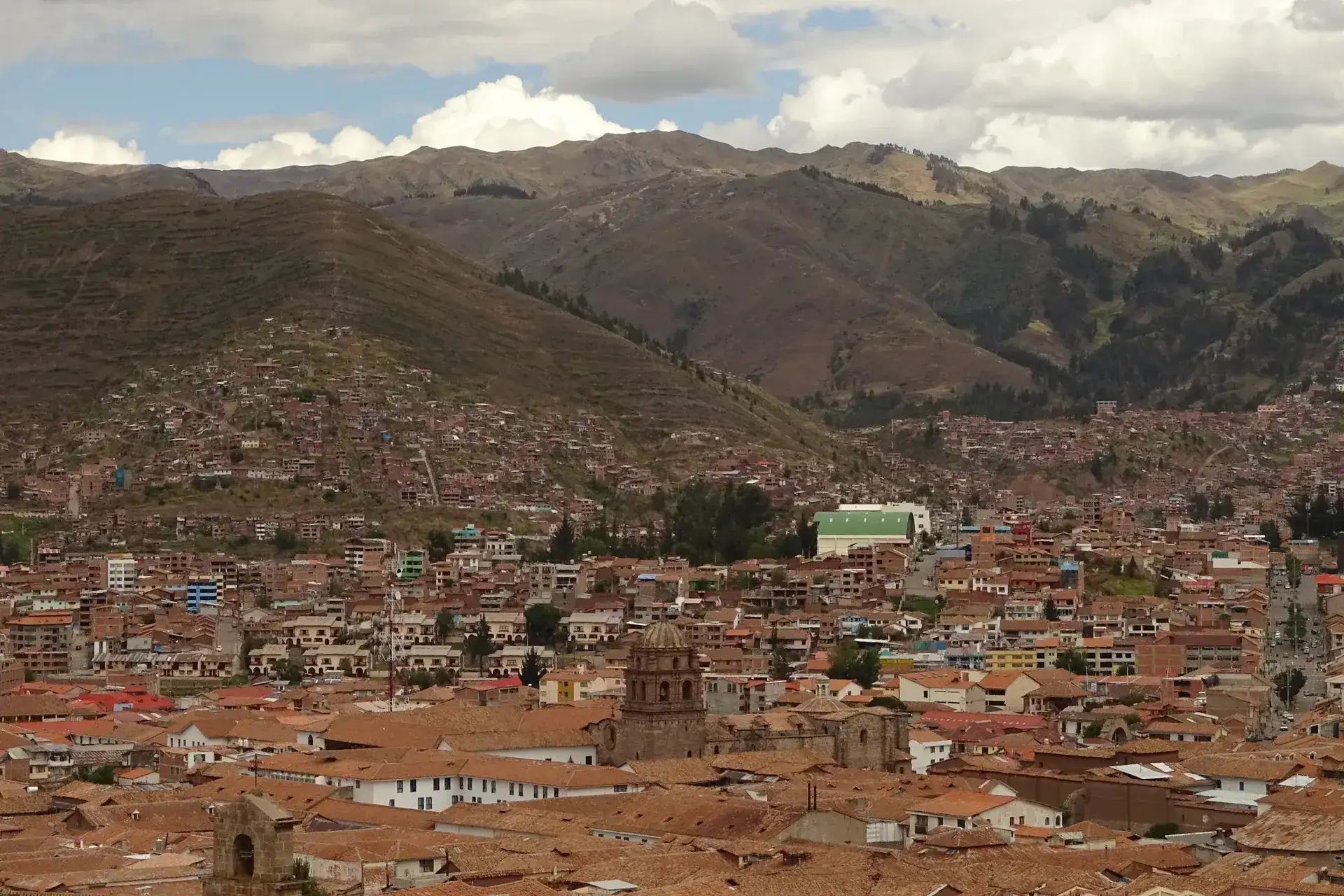
Puno, on the shore of Lake Titicaca, is the natural next stop after Cusco for many travellers touring southern Peru or heading to Bolivia. It's about 390 km across the altiplano, and there are four main ways to make the trip. The choice depends on whether you want to get there fast, see sights along the way or travel in comfort.
Start here: Cusco tips · things to do in Cusco
Options at a glance
- Direct bus: the cheapest and most frequent option, day or night, about 6–7 hours.
- Tourist bus: leaves in the morning and stops at sights with a guide; a full day (about 10 hours).
- Scenic train: a luxury tourist service crossing the altiplano by day in about 10 hours; runs on certain days of the week.
- Plane: Puno has no airport; you fly to Juliaca (usually via Lima from Cusco), then it's about 45–60 minutes by road to Puno. Rarely worth it time-wise.
Direct bus
Buses leave from Cusco's Terminal Terrestre. Companies range in quality: the better ones offer semi-cama or cama seats, toilets and passenger checks. For overnight travel, choose a formal company and keep valuables with you.
Day or night
By day you'll see the altiplano and gain acclimatisation time; overnight saves a hotel night but you'll arrive tired and cold.
Tourist bus with stops
A way to turn the transfer into an excursion. Typical stops:
- Andahuaylillas, with its church known as the "Sistine Chapel of the Americas".
- Raqchi, with the great Temple of Wiracocha.
- Sicuani or nearby for lunch.
- La Raya pass, at about 4,300 m, the divide between Cusco and Puno, with views of snow peaks.
- Pucará, with its stone museum and famous ceramic bulls.
Scenic train
An experience in itself: carriages with meals on board, an observation car and short stops, at a high price. Check the departure calendar and book ahead.
Altitude and arriving in Puno
Puno sits at about 3,800 m, higher than Cusco. If you're acclimatised from Cusco you'll notice it less, but take it easy on day one. Nights are very cold: bring warm layers.
What to do on Lake Titicaca
- The Uros floating islands, made of totora reeds, a short boat ride from Puno.
- Taquile Island, known for its textiles, recognised by UNESCO as intangible heritage.
- Amantaní Island, with homestays with local families.
- From Puno you can continue to Copacabana and Isla del Sol in Bolivia.
Which option to choose?
- Short on time or money: a daytime direct bus; you'll arrive mid-afternoon and can rest.
- Want to make the most of the journey: the tourist bus combines transport and a South Valley and altiplano excursion, with guide and lunch, at a moderate price.
- Looking for something special: the scenic train, with on-board service and open views of the altiplano.
- Continuing to Bolivia: reach Puno, spend at least a day on the lake and go on to Copacabana or La Paz.
A sample 2–3 day itinerary
- Day 1: Cusco–Puno by tourist bus with stops; night in Puno.
- Day 2: trip to the Uros and Taquile islands; or a two-day tour with a homestay on Amantaní.
- Day 3: visit Sillustani, the pre-Inca and Inca funerary towers (chullpas) on Lake Umayo, then continue your trip.
Altiplano cold
Puno can drop below freezing at night, especially from June to August. Make sure your accommodation has heating or enough blankets.
Before you go

eSIM for Peru
Land connected: install an Airalo data eSIM before you travel and switch it on when you land. Check first that your phone supports eSIM and is unlocked.
Get online in Peru →Frequently asked questions
- How long is Cusco to Puno?
- About 6–7 hours by direct bus; a full day (about 10 hours) by tourist bus or train.
- Are there flights from Cusco to Puno?
- Puno has no airport; the nearest is Juliaca, usually via Lima.
Book this plan
- Cusco to Puno sightseeing routeCompareSee dates →
Notice: This guide shares advice and recommendations based on research and local experience. Prices, opening hours and rules may change: always check with official sources and operators. Cusco Tips is not responsible for third-party services, bookings or decisions made using these guides; some links are affiliate links (see our affiliate policy).
Related guides

Cusco to La Paz (Bolivia): routes, border crossing and tips
How to travel from Cusco to La Paz: bus via Puno through Desaguadero or Copacabana, travel time, border crossing, Bolivia entry requirements, flights and practical tips.
Read guide →
Cusco to Arequipa: overnight bus, flights, via Puno or by luxury train
How to get from Cusco to Arequipa: overnight bus (duration, classes, safety), direct or connecting flights, the route via Puno and Titicaca, the luxury train and altitude tips.
Read guide →
Cusco to Lima (and Lima to Cusco): flight or bus, travel times and tips
How to travel between Cusco and Lima: 1–1.5-hour direct flights or a roughly 20–22-hour bus, routes, approximate prices, stops in Nazca and Ica, altitude tips.
Read guide →
Cusco's South Valley: Tipón, Pikillacta, Andahuaylillas and local flavours
Guide to Cusco's South Valley: Tipón's Inca waterworks, the Wari city of Pikillacta, Andahuaylillas church, Huacarpay lagoon, chicharrón, Oropesa bread and how to get there.
Read guide →