
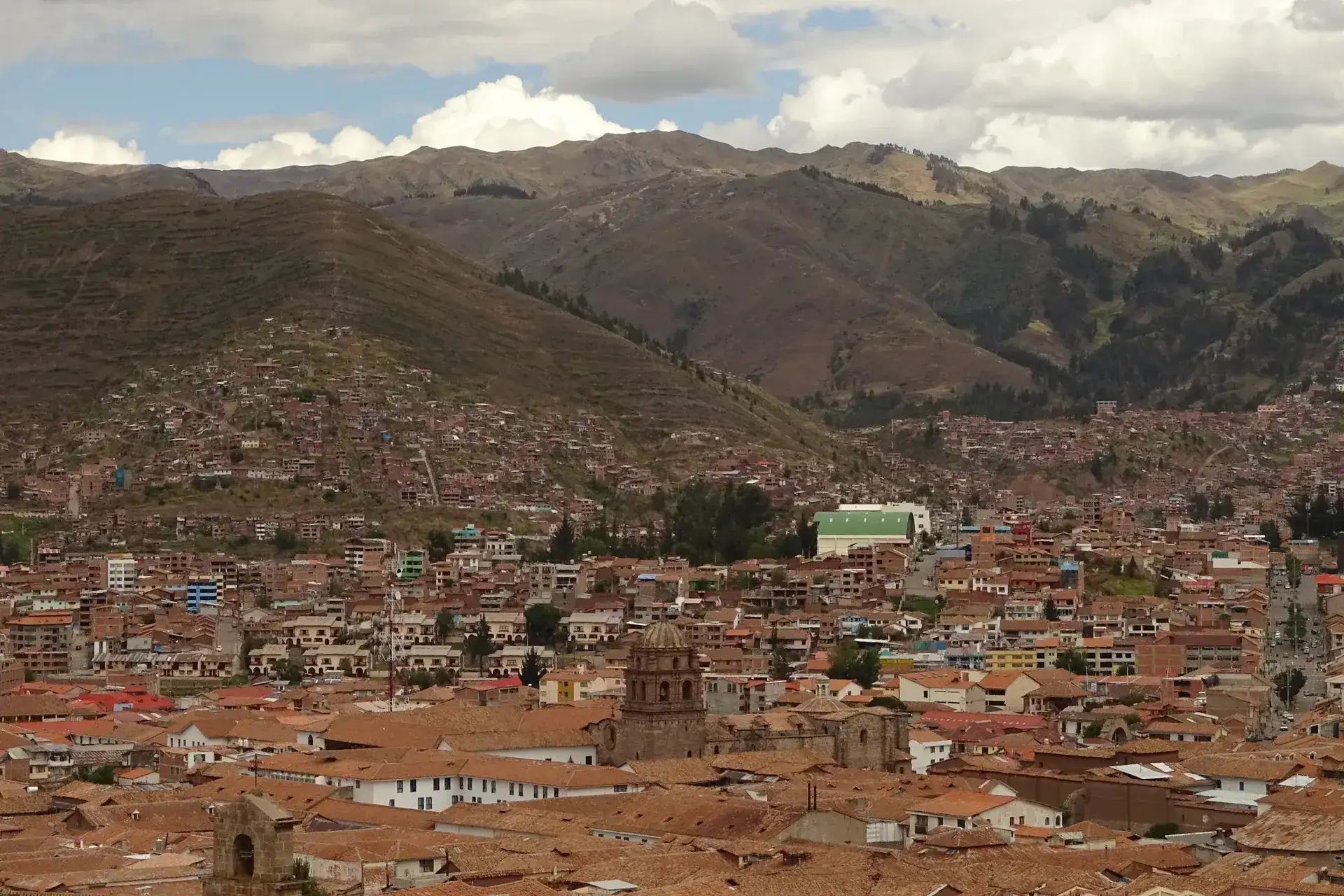
The Cusco–La Paz route is a South America classic: it crosses the altiplano, skirts Lake Titicaca and crosses the Peru–Bolivia border. You can do it in one go by bus (a long day or a night) or, much better, with stops in Puno and Copacabana.
Start here: Cusco tips · things to do in Cusco
The two main routes
- Via Desaguadero: the most direct route. Cusco → Puno → Desaguadero border → La Paz. About 12–15 hours in total depending on connections and formalities.
- Via Copacabana: Cusco → Puno → Kasani border (near Yunguyo) → Copacabana on Lake Titicaca → ferry across the Strait of Tiquina → La Paz. Slower but prettier, and lets you visit Isla del Sol.
Buses and stops
There are direct buses from Cusco to La Paz and combinations changing in Puno. Tourist services that stop in Puno and Copacabana let you split the journey. Book with formal companies and check whether the ticket includes assisted border formalities.
Split the trip
A night in Puno and another in Copacabana turns an exhausting journey into one of the region's most beautiful legs.
Crossing the border
- You'll exit Peru (immigration) and enter Bolivia on foot with your passport, then get back on the bus.
- Bolivia's entry requirements depend on your nationality: some need a visa or advance paperwork. Check official information from Bolivia's foreign ministry or consulate before travelling.
- Carry some cash in US dollars or bolivianos for first expenses; only change small amounts at the border.
- Keep any entry documents you're given.
Requirements change
Visa and health rules change. Check official sources well ahead.
Flights
Flights between Cusco and La Paz usually connect (typically in Lima). Faster than the bus but pricier, and you miss Titicaca.
Altitude
La Paz is at about 3,600 m and El Alto, where the airport is, above 4,000 m. Coming from Cusco and Puno you'll be acclimatised, but take it easy.
Safety tips
- Travel by day if you can and with reputable companies.
- Keep passport and money secure, especially at terminals and the border.
- Use official money changers or exchange offices.
A recommended staged itinerary
- Day 1: Cusco–Puno (direct or tourist bus). Night in Puno.
- Day 2: Uros islands in the morning; in the afternoon, bus to Copacabana via Kasani. Night in Copacabana.
- Day 3: boat trip to Isla del Sol, with ruins and trails above the lake. Night on the island or in Copacabana.
- Day 4: Copacabana–La Paz (about 3–4 hours), including the Strait of Tiquina crossing: passengers cross by launch and the bus on a raft.
This way the journey stops being a transfer and becomes one of the highlights of the trip.
Money, phone and time zone
- Currency: Bolivia uses the boliviano. There are ATMs in La Paz and Copacabana, but they don't always accept every card; carry some cash.
- Phone: your Peruvian SIM may not work or may be expensive on roaming; consider a local SIM or eSIM.
- Time: Bolivia is one hour ahead of Peru. Factor it into bus and flight connections.
- Border hours: border posts have opening hours; buses are scheduled to cross within them.
First steps in La Paz
La Paz fills a canyon at about 3,600 m, and El Alto, on the altiplano above, is over 4,000 m. A few ideas for your first days:
- Mi Teleférico: the urban cable-car network linking La Paz and El Alto works as public transport and is one of the largest in the world. As well as practical, it gives spectacular views of the city and of Illimani.
- Plaza Murillo: the political centre, with the cathedral, the Government Palace and the Legislative Assembly.
- Witches' Market: in the streets around Sagárnaga and Linares, stalls of herbs, amulets and traditional Andean offerings.
- Valle de la Luna: eroded clay formations south of the city, easy to visit in half a day.
- Feria 16 de Julio in El Alto: a huge street market on Thursdays and Sundays; go without valuables and stay alert.
Copacabana in brief
If you choose the lake route, Copacabana deserves at least one night. Its basilica houses the Virgin of Copacabana, Bolivia's patron saint, and in front of it cars and trucks decorated with flowers are blessed, a memorable scene. Climb Cerro Calvario at sunset for views over the lake; boats to Isla del Sol leave from the harbour. Remember that in Copacabana you will already be paying in bolivianos.
Before you go
eSIM for Peru
Land connected: install an Airalo data eSIM before you travel and switch it on when you land. Check first that your phone supports eSIM and is unlocked.
Get online in Peru →Frequently asked questions
- How long does Cusco to La Paz take?
- By bus, about 12–15 hours in total, more if you stop in Puno or Copacabana.
- Do I need a visa for Bolivia?
- It depends on your nationality; check official information before travelling.
Book this plan
- Cusco city tourCompareSee dates →
- Sacred Valley tourCompareSee dates →
- Machu Picchu day trip from CuscoCompareSee dates →
Notice: This guide shares advice and recommendations based on research and local experience. Prices, opening hours and rules may change: always check with official sources and operators. Cusco Tips is not responsible for third-party services, bookings or decisions made using these guides; some links are affiliate links (see our affiliate policy).
Related guides
Cusco to Puno and Lake Titicaca: bus, tourist bus, train or plane
How to get from Cusco to Puno: direct bus (about 6–7 h), tourist bus with stops at Raqchi and La Raya, scenic train or flight to Juliaca. Altitude, tips and what to see on Titicaca.
Read guide →
Cusco to Lima (and Lima to Cusco): flight or bus, travel times and tips
How to travel between Cusco and Lima: 1–1.5-hour direct flights or a roughly 20–22-hour bus, routes, approximate prices, stops in Nazca and Ica, altitude tips.
Read guide →
Money in Cusco: soles, ATMs, exchange offices and cards
How to handle money in Cusco: the Peruvian sol, ATMs and fees, exchange offices, US dollars, card payments, tipping, fake notes and safety tips.
Read guide →
Is Cusco safe? Real risks and practical tips for a worry-free trip
How safe Cusco is for tourists: theft, taxis, nightlife, protests, altitude and adventure tours. Areas, times of day and what to do in an emergency.
Read guide →