
If you travel to Cusco between January and March, there is a good chance you will get wet. Not just from the rain: this is Cusco Carnival, when neighbourhoods, markets and families play with water, talc, streamers and mistura confetti, dance in troupes and eat the heartiest dish of the year, t'impu or puchero. It is a joyful, very local celebration that few travellers know about. This guide explains how it works, which days matter, what to eat and how to enjoy it without trouble.
Start here: Cusco tips · things to do in Cusco
How Carnival is organised
According to Cusco's municipal festivals company (EMUFEC) and the Andina news agency, Cusco Carnival runs between January and March in a fixed order:
- Compadres Thursday: two Thursdays before the main Sunday.
- Comadres Thursday: the following Thursday, one week before the main Sunday.
- Main Sunday: the big day of water fights and confetti.
- Octava or kacharpari: one week later, the farewell Sunday, with a parade on the Plaza de Armas.
Because Carnival depends on the date of Easter, it moves every year.
Popular activities on GetYourGuide
Approximate dates for 2027
In 2027 Ash Wednesday falls on 10 February, so following EMUFEC's pattern the dates would be roughly:
- Compadres Thursday: 28 January.
- Comadres Thursday: 4 February.
- Main Sunday: 7 February.
- Kacharpari (octava): 14 February.
We calculated these from the calendar; always confirm the official programme EMUFEC publishes each year.
Timing your trip
To see the kacharpari parade, plan to be in Cusco on the octava Sunday, one week after the main Sunday.
Compadres and comadres: the satirical dolls
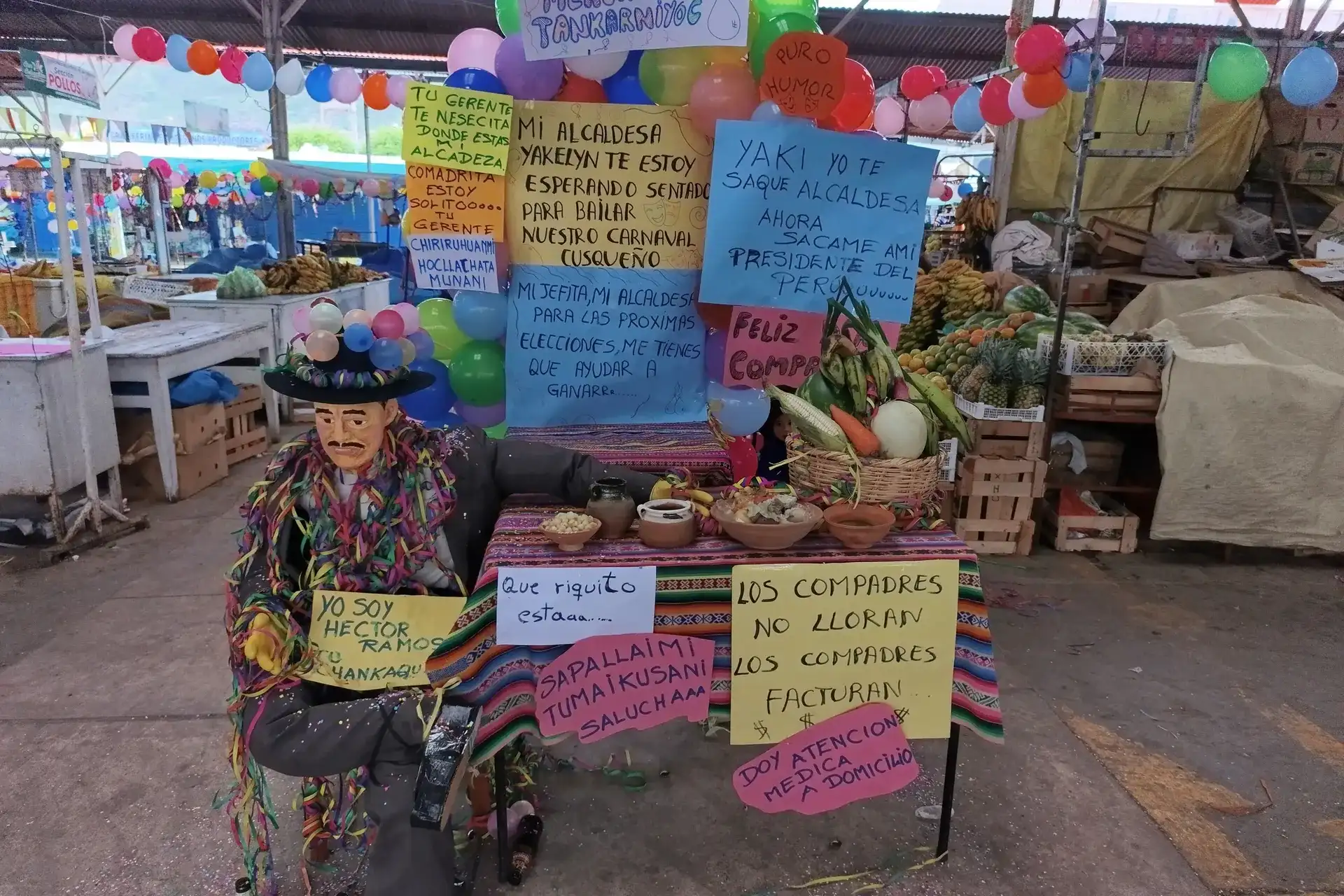
The quirkiest part of Cusco Carnival is the compadre and comadre dolls. Neighbours, offices and markets build them from recycled materials (boxes, bottles, old clothes and shoes) to poke fun at a local character, a colleague or even an official. According to EMUFEC, they are hung at midnight on Wednesday from poles or high places for everyone to see, and the municipality runs a contest for the best ones. The idea is good-humoured satire, not insult.
- San Blas, Cusco's artisan quarter: what to see, viewpoints and tips
- Cusco neighbourhoods: the character of each area and which suits you
The main Sunday: water, talc and mistura
On the main Sunday the games start early. Men and women of all ages throw water, balloons, talc and mistura (coloured paper confetti) at each other, and locals, Peruvian visitors and foreigners often end up playing together. If you go out that day, assume you will get soaked.
- Wear clothes you do not mind ruining and a rain poncho.
- Keep your phone and camera in a waterproof bag.
- If you do not want to play, say so with a smile; most people respect it, but there are no guarantees.
Protect the Inca walls
In 2026 Cusco's regional culture office warned that paints, dyes and foam used at Carnival cause irreversible damage to the natural patina of the Inca walls in the historic centre. Play away from stone walls and never use foam or paint.
- Inca streets of Cusco: Hatun Rumiyoc, Loreto and the walls still standing
- Cusco historic centre: areas, what to see and where to stay
Kacharpari: the farewell
A week later comes the octava or kacharpari, meaning farewell. There are dances, troupes, games and lots of food. EMUFEC organises a parade on the Plaza de Armas with groups from institutions, markets and neighbourhoods, plus a food festival alongside. In some areas people hold a yunza or cortamonte: a tree decorated with gifts is planted, everyone dances around it and people take turns striking it with a machete until it falls, when the crowd rushes for the gifts.
What to eat: t'impu, kapchi and frutillada
Carnival is also celebrated at the table. According to EMUFEC and Andina, the seasonal dishes are:
- T'impu or puchero: boiled meats with cabbage, potatoes, moraya (white freeze-dried potato), chickpeas and rice, served with a second plate of sweet potato, peach, pear and cassava, all covered with cabbage leaves.
- Kapchi: a fresh stew of broad beans, potatoes and cheese with milk, sometimes with mushrooms, served with stuffed rocoto pepper and rice.
- Frutillada: a drink of chicha de jora with strawberries, cinnamon and lemon verbena.
T'impu is huge: ideally share it.
- Traditional food in Cusco: 15 dishes and drinks you have to try
- Cusco picanterías and chicherías: eat like a local
Carnival in the rainy season
Carnival falls in the heart of the rainy season. Expect afternoon downpours, wet streets and some excursions affected by weather. Do high-altitude trips in the morning and keep afternoons for the city and the party. The classic Inca Trail closes every February for maintenance, so if your trip coincides with Carnival, plan Machu Picchu by train.
- Rainy season in Cusco and Machu Picchu: what to expect and how to make the most of it
- Cusco weather by month: temperatures, rain and what to expect
Tips to enjoy it
- Keep your passport and money in an inside pocket or at the hotel.
- If you take photos, ask first and be ready for a water balloon in return.
- Go easy on alcohol: beer and frutillada flow freely, and altitude amplifies it.
- Book a central place if you want to walk to the Plaza de Armas.
Frequently asked questions
- When is Carnival in Cusco?
- Between January and March, depending on Easter. In 2027 the main Sunday would be 7 February and the kacharpari 14 February; confirm with EMUFEC.
- What are compadres and comadres?
- The two Thursdays before the main Sunday, when satirical dolls made from recycled materials are hung up.
- What do people eat at Carnival?
- T'impu or puchero, kapchi and the frutillada drink.
- Will I get wet?
- Very likely, especially on the main Sunday. Wear clothes you do not mind and protect your devices.
Official sources
Book this plan
- City tour of the Tourist Ticket sitesCompareSee dates →
- Cusco walking tourCompareSee dates →
Notice: This guide shares advice and recommendations based on research and local experience. Prices, opening hours and rules may change: always check with official sources and operators. Cusco Tips is not responsible for third-party services, bookings or decisions made using these guides; some links are affiliate links (see our affiliate policy).
Related guides
Cusco festivals: a month-by-month calendar
Calendar of the main festivals in and around Cusco: Carnival, Holy Week, Qoyllur Rit'i, Corpus Christi, Inti Raymi, Virgen del Carmen, Pachamama, Santurantikuy and more.
Read guide →
Holy Week in Cusco: Lord of the Earthquakes, procession route and 12 dishes
Holy Week in Cusco: Holy Monday and the Lord of the Earthquakes procession, the 2026 route, 2027 dates, the 12 Good Friday dishes and tips for watching it.
Read guide →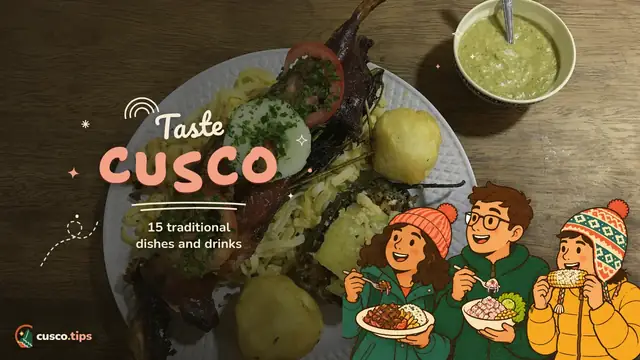
Traditional food in Cusco: 15 dishes and drinks you have to try
Cusco's traditional dishes explained: chiriuchu, adobo, chicharrón, roast cuy, kapchi, corn with cheese, lechón, trout, chuta bread and chicha, plus where and when to try them.
Read guide →
Plaza de Armas in Cusco: history, what to see around it and practical tips
Guide to Cusco's Plaza de Armas: from the Inca Huacaypata to the colonial square, the Cathedral and La Compañía, festivals, best times, viewpoints, safety and touts.
Read guide →
Rainy season in Cusco and Machu Picchu: what to expect and how to make the most of it
Visiting Cusco and Machu Picchu in the rainy season (November to March): weather, the February Inca Trail closure, treks, what to pack, upsides and planning tips.
Read guide →