
Inca streets of Cusco: Hatun Rumiyoc, Loreto and the walls still standing
Updated:
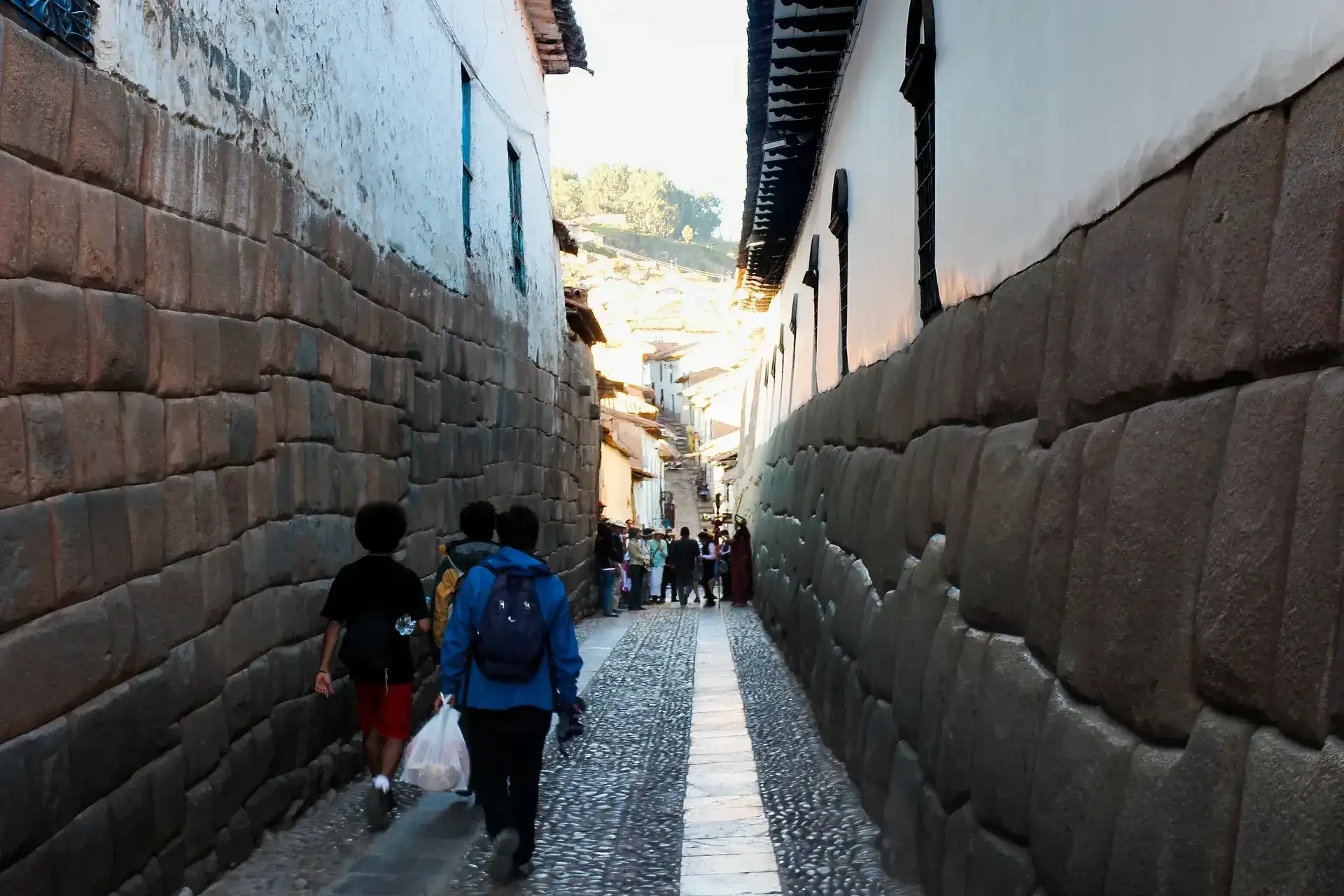
One of the things that makes Cusco unique is that the colonial city was literally built on top of the Inca city. On many streets in the centre, the perfectly fitted stone walls the Incas built are still standing, supporting Spanish houses, churches and convents. Walking these streets is like reading a history book written in stone. This guide covers the most impressive Inca streets, explains how to recognise Inca architecture and suggests a free, one-hour walk suitable for everyone.
Start here: Cusco tips · things to do in Cusco
How to read an Inca wall
- Polygonal masonry: many-sided stones fitted like a jigsaw without mortar. Used in retaining walls and important buildings. The most spectacular.
- Rectangular or cushioned masonry: regular blocks in courses with slightly rounded edges. Typical of temples and palaces, such as Qorikancha.
- Sloping walls: Inca walls lean slightly inwards, and doors and windows are trapezoidal, narrower at the top. This helped them withstand earthquakes.
- Above: adobe and tiles: what you see on top of Inca stone is usually colonial or later.
Look for the line on walls where Inca stone ends and Spanish construction begins: it's a visual summary of Cusco's history.
Popular activities on GetYourGuide
Calle Hatun Rumiyoc
Its name means "the one with the big stone". A few steps from the Plaza de Armas, heading up to San Blas, this pedestrian street is lined by the wall of the former palace attributed to the Inca Roca, now home to the Museum of Religious Art in the Archbishop's Palace. Here is the famous twelve-angled stone, a diorite block fitted with astonishing precision to the stones around it. There are usually people photographing it and, often, people dressed as Incas posing for tips. Some guides also point out the silhouette of a puma formed by stones in the same wall: look for it.
- The Cusco School of painting: where to see it and how to buy a reproduction
- San Blas, Cusco's artisan quarter: what to see, viewpoints and tips
Loreto alley (Intikijllu)
This narrow alley runs off the Plaza de Armas beside La Compañía church, lined by two of the city's longest and best-preserved Inca walls. On one side stood the Amarucancha, a palace attributed to the Inca Huayna Cápac, on which La Compañía was built; on the other, the Acllawasi, the house of the chosen women dedicated to the sun cult, now the Santa Catalina convent. Walking between those walls, without traffic, is one of the most evocative experiences in Cusco.
Santa Catalina Angosta
Parallel to Loreto, this street shows another side of the Acllawasi wall. Above it stands the Santa Catalina convent, which houses a museum of religious art. It leads straight to Avenida El Sol and Qorikancha.
Other streets with Inca walls
- Calle Triunfo: links the Plaza de Armas with Hatun Rumiyoc, beside the Cathedral.
- Calle Siete Culebras: narrow and steep, connecting Plaza de las Nazarenas with Choquechaca.
- Choquechaca: with stretches of Inca wall and a neighbourhood feel.
- Calle Romeritos and around Qorikancha: with fine masonry walls.
- Calle Tullumayo: with remains of the wall marking one edge of the Inca city.
A one-hour walk
- Start at the Plaza de Armas and enter Loreto alley.
- Come out onto Avenida El Sol via Santa Catalina Angosta and reach Qorikancha.
- Head back to the centre and climb Calle Triunfo.
- Continue along Hatun Rumiyoc to the twelve-angled stone.
- Finish at the Plazoleta de San Blas.
It's free, unless you go into Qorikancha or the museums.
- Free things to do in Cusco: 15 plans that cost nothing (or almost)
- Free walking tour in Cusco: how it works, tipping and what to expect
Why they're still standing
Cusco has suffered major earthquakes, especially in 1650 and 1950. Both times many colonial buildings collapsed, while the Inca walls survived almost intact. The reason is their design: sloping walls, fitted stones that shift slightly and settle back, and trapezoidal openings. This surprised the Spanish themselves and still impresses engineers worldwide.
Tips for photographing the Inca streets
- Early in the morning the streets are almost empty and the low light brings out the relief of the stones.
- On Hatun Rumiyoc, groups gather around the twelve-angled stone by mid-morning: be patient or come back later.
- Loreto is very narrow; a wide-angle lens helps capture the height of the walls.
- At night, the street lighting creates a different, very photogenic atmosphere.
Respect the stones
- Don't climb the walls or stick anything on them.
- Don't touch or scratch the stones: thousands of hands wear them down.
- If you photograph people dressed as Incas, leave a tip.
Frequently asked questions
- Where is the twelve-angled stone?
- On Calle Hatun Rumiyoc, a few steps from the Plaza de Armas, in the wall of the Archbishop's Palace.
- Which Cusco streets have Inca walls?
- Hatun Rumiyoc, Loreto, Santa Catalina Angosta, Triunfo, Siete Culebras and around Qorikancha, among others.
- Why do Inca walls withstand earthquakes?
- Thanks to their slope, the precise fit of the stones and the trapezoidal openings.
- Do I have to pay to see the Inca streets?
- No, walking them is free; you only pay to enter museums or temples.
Book this plan
- Cusco walking tourCompareSee dates →
- Cusco city tourCompareSee dates →
Notice: This guide shares advice and recommendations based on research and local experience. Prices, opening hours and rules may change: always check with official sources and operators. Cusco Tips is not responsible for third-party services, bookings or decisions made using these guides; some links are affiliate links (see our affiliate policy).
Related guides
Things to do in Cusco: 30 essentials in the city and beyond
Things to do in Cusco: the city's essentials, Machu Picchu, the Sacred Valley, day trips, treks, food, markets and festivals, with 1- to 3-day plans.
Read guide →
Cusco's squares beyond the Plaza de Armas: Regocijo, San Francisco, Nazarenas and more
A walk through the squares of central Cusco: Regocijo (Kusipata), San Francisco, Nazarenas, San Blas, Limacpampa and Túpac Amaru. History, what to see and a walking route.
Read guide →
Qorikancha, the Temple of the Sun: tickets, hours, what to see and history
Visiting Qorikancha and Santo Domingo convent in Cusco: the finest Inca stonework, which ticket you pay, approximate hours, the site museum and tips.
Read guide →
San Blas, Cusco's artisan quarter: what to see, viewpoints and tips
Guide to Cusco's San Blas neighbourhood: the church and its carved pulpit, the little plaza, artisan workshops, Hatun Rumiyoc street, viewpoints, nightlife and whether to stay there.
Read guide →
Free walking tour in Cusco: how it works, tipping and what to expect
All about Cusco free walking tours: how tipping works, typical route, length, commercial stops, how to recognise official guides, and alternatives like the city tour.
Read guide →