
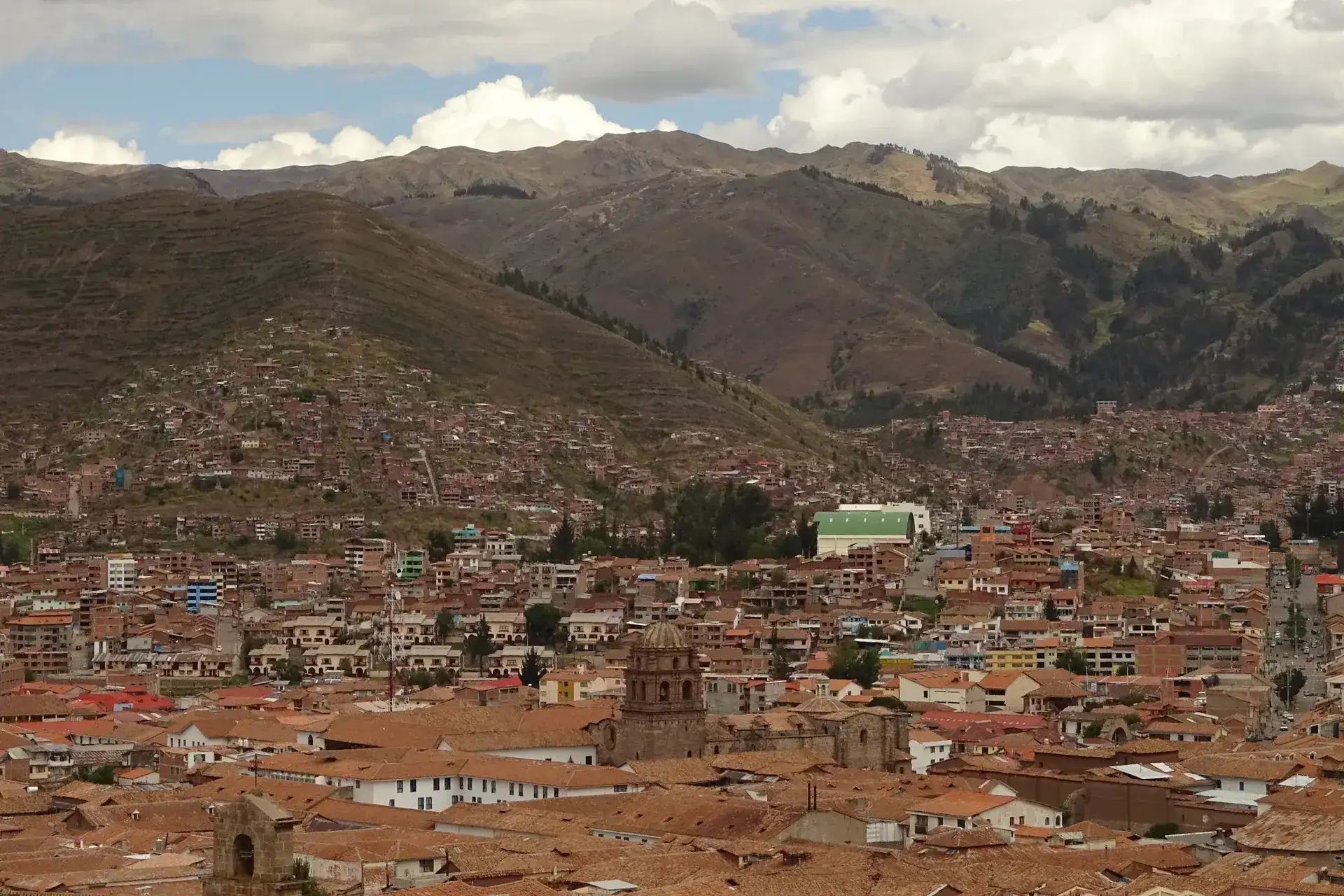
Cusco's historic centre was declared a UNESCO World Heritage Site in 1983. It's a living city built in layers: Inca walls supporting colonial mansions, churches raised on temples and narrow streets that follow the plan of the old capital of Tawantinsuyu. Almost everything you'll want to see is within easy walking distance, but each area has its own character.
Start here: Cusco tips · things to do in Cusco
A city in layers
Cusco was the capital of the Inca empire. After the conquest, the Spanish built their houses and churches on Inca foundations. Earthquakes, especially those of 1650 and 1950, destroyed many colonial buildings, while the Inca walls survived. That's why on many streets you'll see an Inca stone base with a colonial or republican upper part.
- Inca streets of Cusco: Hatun Rumiyoc, Loreto and the walls still standing
- Qorikancha, the Temple of the Sun: tickets, hours, what to see and history
Popular activities on GetYourGuide
Finding your way
The Plaza de Armas is the reference point. From it, streets climb north towards San Cristóbal and Sacsayhuamán, and northeast towards San Blas. To the south and southeast the ground is flatter and leads to the Qorikancha and Avenida El Sol. To the southwest are San Pedro and its market. If you get lost, ask for the plaza: everyone knows the way.
The areas of the centre
- Plaza de Armas and around: the cathedral, the Compañía, restaurants, agencies and nightlife.
- San Blas: the artisans' quarter, with steep streets, workshops and cafés.
- San Cristóbal: an upper neighbourhood with a viewpoint, quiet and with views.
- Qorikancha and Avenida El Sol: flatter, with banks, large hotels and the sun temple.
- San Pedro and Santa Ana: more local, with San Pedro market and budget lodging.
- Regocijo and San Francisco: quiet squares with churches and museums.
- San Blas, Cusco's artisan quarter: what to see, viewpoints and tips
- San Cristóbal, Cusco: the viewpoint neighbourhood above the Plaza de Armas
- Avenida El Sol: what to see and whether to stay on Cusco's main avenue
- San Pedro neighbourhood in Cusco: market, Santa Clara arch and churches
- Santa Ana neighbourhood in Cusco: viewpoints, history and a quieter Cusco
- Cusco neighbourhoods: the character of each area and which suits you
What to see
You can see the essentials of the centre in two or three days: the cathedral, the Qorikancha, the twelve-angled stone, San Blas, the museums and San Pedro market. Many monuments are included in the Tourist Ticket or the religious ticket, so plan which tickets suit you.
- Cusco Cathedral: what to see inside, the Last Supper with guinea pig, tickets and hours
- Cusco Tourist Ticket (Boleto Turístico): what's included and is it worth it
- The best museums in Cusco: which to visit, tickets and how to plan
- How many days in Cusco + 3, 5 and 7-day itineraries
Where to stay for your style
- First visit, short on time: near the Plaza de Armas, to have everything close.
- Bohemian vibe and views: San Blas, if you accept the hills.
- Peace and views: San Cristóbal.
- Comfort and flat streets: the Avenida El Sol area.
- Tight budget: San Pedro and around.
- Where to stay in Cusco: best areas for your trip and budget
- Boutique hotels in Cusco: sleeping in historic colonial mansions
- Hostels in Cusco: areas, what to check before booking and backpacker tips
Hills and altitude
Cusco is at about 3,400 metres. The streets up to San Blas and San Cristóbal are steep and stepped, which you'll feel in your first days. If you have reduced mobility or heavy luggage, choose lodging in a flat area with taxi access.
- Altitude sickness in Cusco: how to prevent it and what to do
- Cusco for older travellers: gentle tours, altitude and practical advice
Traffic and pedestrian streets
The centre's streets are narrow and many are pedestrian or restricted. Some lodgings have no direct car access: ask in advance whether the taxi can drop you at the door. Pavements are narrow, so walk carefully.
Noise
The centre is lively at all hours. Near the Plaza de Armas, Procuradores and Plateros there's bar noise at night, and during fiestas there can be music, parades and fireworks. If you sleep badly, ask for an inside room.
- The streets around Cusco's Plaza de Armas: Procuradores, Plateros and more
- Cusco festivals: a month-by-month calendar
Safety
The centre is generally safe by day and in the evening. As in any tourist area, watch your belongings in crowded places. At night, avoid dark, empty streets, especially in the upper areas, and use identified or app taxis.
Respect for the heritage
Don't climb on Inca walls or touch the stones with objects. Follow the rules in churches and museums, where photos are often not allowed. Many buildings in the centre are homes: don't walk into private courtyards without permission.
Colonial architecture
Besides the Inca walls, look out for carved wooden balconies, doorways with coats of arms, arched courtyards and stone baroque churches. Many colonial mansions now house hotels, museums or shops, and some let you see their courtyards.
- Churches of Cusco: La Compañía, San Blas, La Merced, San Francisco and more
- Boutique hotels in Cusco: sleeping in historic colonial mansions
A first walk
Start at the Plaza de Armas, climb Hatun Rumiyoc to San Blas, come down towards the Qorikancha along streets such as Tullumayo or Loreto and finish on Avenida El Sol. Another day, walk through the Regocijo and San Francisco squares to San Pedro market.
- Free walking tour in Cusco: how it works, tipping and what to expect
- Cusco's squares beyond the Plaza de Armas: Regocijo, San Francisco, Nazarenas and more
Frequently asked questions
- Since when is it a World Heritage Site?
- Cusco's historic centre was declared a UNESCO World Heritage Site in 1983.
- What's the best area to stay?
- It depends on your style: the Plaza de Armas for convenience, San Blas for atmosphere, Avenida El Sol for flat streets.
- Can you explore it on foot?
- Yes, almost everything is close, though there are steep climbs to San Blas and San Cristóbal.
- Is it safe?
- Generally yes by day and in the evening; at night avoid dark streets and use identified taxis.
Book this plan
- Cusco walking tourCompareSee dates →
- Cusco city tourCompareSee dates →
Notice: This guide shares advice and recommendations based on research and local experience. Prices, opening hours and rules may change: always check with official sources and operators. Cusco Tips is not responsible for third-party services, bookings or decisions made using these guides; some links are affiliate links (see our affiliate policy).
Related guides
Things to do in Cusco: 30 essentials in the city and beyond
Things to do in Cusco: the city's essentials, Machu Picchu, the Sacred Valley, day trips, treks, food, markets and festivals, with 1- to 3-day plans.
Read guide →
Cusco neighbourhoods: the character of each area and which suits you
Guide to Cusco's neighbourhoods: historic centre, San Blas, San Cristóbal, San Pedro, Santa Ana, Avenida El Sol, Wanchaq and the south-eastern districts. What each offers.
Read guide →
Where to stay in Cusco: best areas for your trip and budget
Historic centre, San Blas, Sacred Valley or Aguas Calientes: pros and cons of each area, accommodation types and practical tips.
Read guide →
The streets around Cusco's Plaza de Armas: Procuradores, Plateros and more
A guide to the streets leading off Cusco's Plaza de Armas: Procuradores, Plateros, Tecsecocha, Triunfo, Mantas and Marqués. What's on each, the vibe and safety.
Read guide →
Cusco's squares beyond the Plaza de Armas: Regocijo, San Francisco, Nazarenas and more
A walk through the squares of central Cusco: Regocijo (Kusipata), San Francisco, Nazarenas, San Blas, Limacpampa and Túpac Amaru. History, what to see and a walking route.
Read guide →