
Chullos and monteras: a guide to Cusco's Andean hats and where to buy them
Updated:
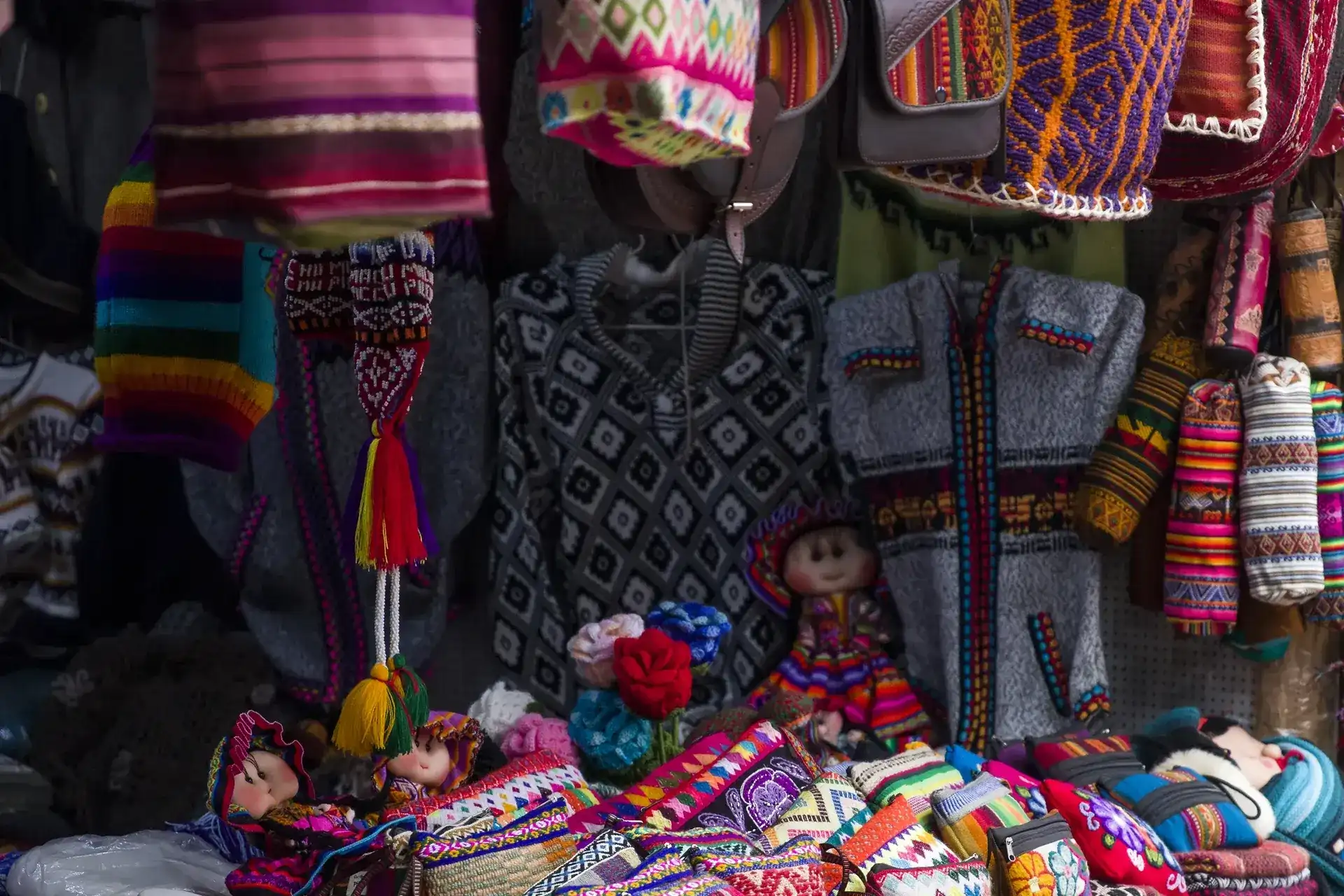
In the Andes, a hat is not just protection against cold or sun. In many Cusco communities, the shape, colours and decorations of a chullo or montera show which village a person comes from, and sometimes their age or marital status. Knowing a little of this language makes markets, fiestas and fairs much more interesting, and helps you shop thoughtfully.
Tours to explore Cusco's markets
Start here: Cusco tips · things to do in Cusco
The chullo
The chullo is the knitted hat with ear flaps and often tassels or a tail. It's knitted in the round with several fine needles. In communities such as Accha Alta, Chahuaytire or Sallac, men traditionally knit the chullos, for themselves and for their sons or godsons. Boys learn from a young age. Knitting reached the Andes with the Spanish in the 16th century, but the motifs and colours reflect each community's worldview and sacred geography.
Each community's style
Each community has its own style. In Chinchero, men wear a red chullo with a long tail and animal designs. In Accha Alta a technique creates small raised bobbles, called qhurpu, forming diamond patterns. Finished chullos are sometimes decorated with beads, sequins or ribbons. The chullos of the Q'ero nation, in the Paucartambo area, are also very recognisable.
- Chinchero: weaving, Inca ruins and market between Cusco and the Sacred Valley
- Paucartambo and Tres Cruces: the Virgen del Carmen festival and sunrise over the Amazon
The montera
The montera is the traditional women's hat in many high Andean communities. It's usually flat and round, with a rigid frame covered in cloth and decorated with embroidery, ribbons or sequins. In Chinchero, women wear red monteras as part of their traditional dress. In Chahuaytire, near Pisac, the montera has a woven straw base covered with cloth and embroidery. Often a glance at the montera is enough to know which village a woman comes from.
Felt and straw hats
In the city and many villages, felt hats with tall or medium crowns in brown, black or white are also common, along with straw sun hats. These are everyday items and aren't as directly tied to a specific community as monteras.
At fiestas
During festivals such as Corpus Christi, the Virgen del Carmen in Paucartambo or Qoyllur Rit'i, hats and caps are part of very elaborate costumes and masks. It's a good time to see the variety of styles, always respecting the participants.
- Corpus Christi in Cusco: dates, the saints' procession, chiriuchu and tips
- Qoyllur Rit'i: the Andean pilgrimage below Ausangate (dates and how to attend)
- Cusco festivals: a month-by-month calendar
Handmade or factory-made
Tourist markets are full of mass-produced acrylic chullos. To spot a handmade one:
- The knit is finer and denser, with detailed motifs.
- The colours usually come from alpaca or sheep's wool, sometimes naturally dyed.
- The inside shows the floats of yarn from colour changes.
- The price is much higher, because a fine chullo can take days of work.
Acrylic chullos aren't "fake", but pay what they're worth.
Where to buy
- Centro de Textiles Tradicionales del Cusco (CTTC): a non-profit association that works with weaving communities, including Accha Alta, Chahuaytire and Chinchero. It has a shop and museum in Cusco.
- Textile centres in Chinchero, which also demonstrate spinning and dyeing.
- Markets such as Pisac's or Cusco's craft markets, for simpler, cheaper hats.
Check opening hours before you go.
- Andean textiles in Cusco: weaving workshops, weaving communities and buying well
- Centro Artesanal Cusco: the big craft market on Avenida El Sol
- Pisac market: shopping guide, best days and how to bargain respectfully
How to care for it
Hand-wash alpaca chullos in cold water with a mild soap, without wringing, and dry them flat in the shade. Store them with a natural moth repellent. Decorated monteras shouldn't get wet.
Respect when taking photos
People in traditional dress aren't part of the scenery. Ask before photographing and accept a no. At some tourist spots, people posing in costume with animals ask for a tip: decide beforehand whether you want to pay it.
- Ethical shopping in Cusco: fair trade, cooperatives and weavers
- The best photography spots in Cusco and around
A good souvenir
A handmade chullo is a light, useful souvenir with a lot of history. Buying directly from a weavers' association means a larger share of the money reaches the maker. Ask which community it comes from and what the motifs mean: many weavers are happy to explain.
- Cheap souvenirs from Cusco: 20 authentic ideas that fit in your suitcase
- What to buy in Cusco: authentic souvenirs and what to avoid
Frequently asked questions
- What is a chullo?
- An Andean knitted hat with ear flaps, often with tassels, whose colours and motifs identify the community.
- Who knits chullos?
- In communities such as Accha Alta, Chahuaytire or Sallac, traditionally the men.
- What is a montera?
- The traditional women's hat in many communities; its style shows the village of origin.
- Where can I buy a handmade chullo?
- From associations such as the Centro de Textiles Tradicionales del Cusco or the textile centres in Chinchero.
Book this plan
- Cusco city tourCompareSee dates →
- Sacred Valley tourCompareSee dates →
Notice: This guide shares advice and recommendations based on research and local experience. Prices, opening hours and rules may change: always check with official sources and operators. Cusco Tips is not responsible for third-party services, bookings or decisions made using these guides; some links are affiliate links (see our affiliate policy).
Related guides
Andean textiles in Cusco: weaving workshops, weaving communities and buying well
Guide to Andean textiles in Cusco: techniques and natural dyes, the meaning of designs, workshops and classes, visits to weaving communities, yarn for knitters and spotting handmade pieces.
Read guide →
Buying alpaca in Cusco: how to spot the real thing, prices and where to look
Differences between baby alpaca, alpaca, llama, vicuña and synthetic blends; how to recognise genuine garments by feel and label, price ranges and where to buy.
Read guide →
Chinchero: weaving, Inca ruins and market between Cusco and the Sacred Valley
Chinchero guide: weaving centres and natural dyes, the Inca site and colonial church, the Sunday market, the Tourist Ticket, getting there from Cusco and how to combine it.
Read guide →
Pisac market: shopping guide, best days and how to bargain respectfully
Pisac market shopping guide: which days to go, what to buy (textiles, silver, ceramics, carved gourds), how to judge quality and tips for bargaining.
Read guide →