
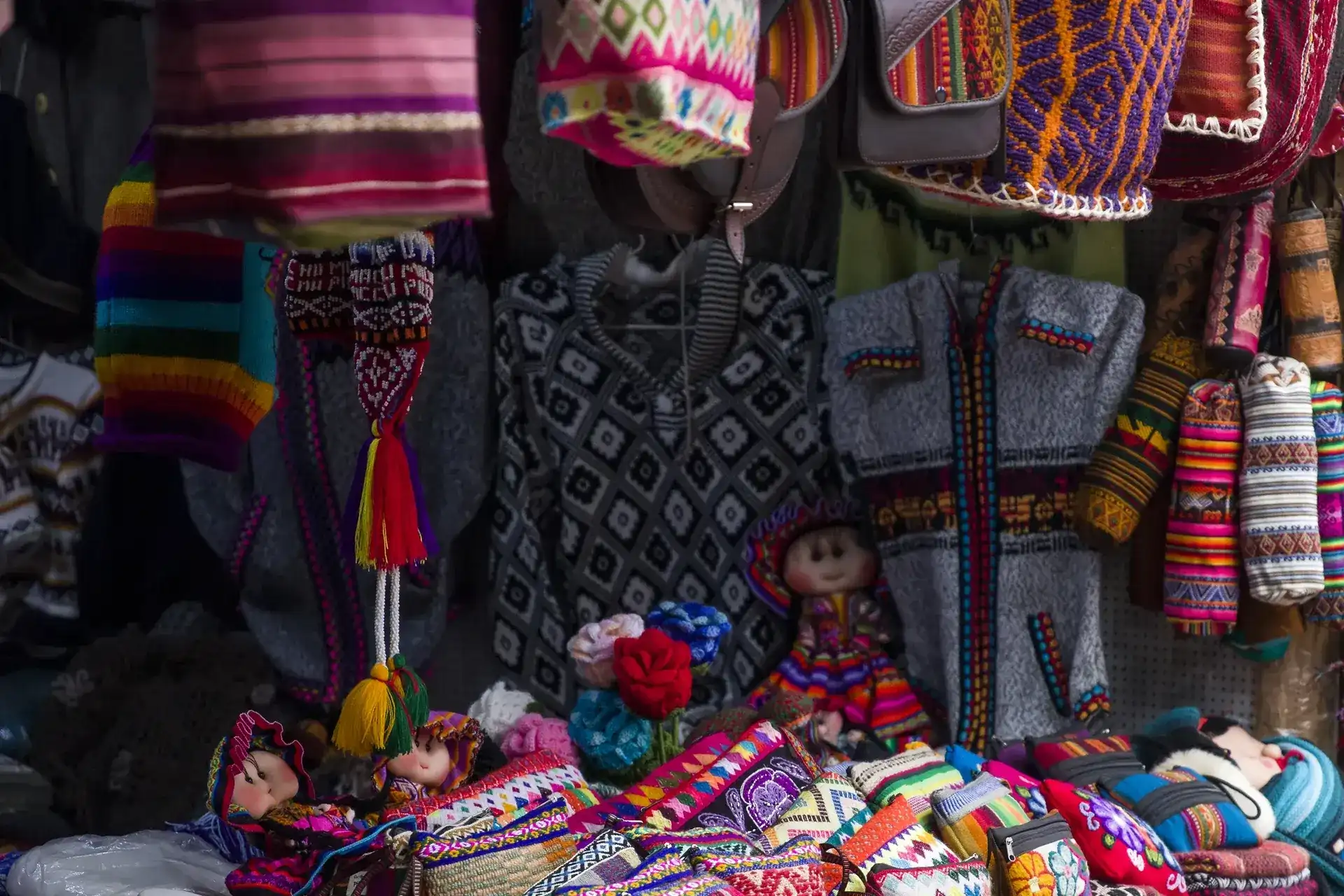
Pisac market is one of the best-known craft markets in the Sacred Valley. It fills the town's main square and the surrounding streets with stalls selling textiles, jewellery, ceramics, instruments and souvenirs. This guide focuses on shopping: which days to go, what to look for, how to judge quality and how to bargain without losing respect.
Tours to explore Cusco's markets
Start here: Cusco tips · things to do in Cusco
Which days to go
There are stalls every day, but the fullest market days are Sunday, Tuesday and Thursday. Sunday is the biggest and busiest: vendors come in from the surrounding communities and there's more farm produce. Tuesday and Thursday have most of the same craft stalls with fewer people. On other days the market is smaller and aimed mostly at tourists.
What time to arrive
Arrive early. On Sundays the first hours are more local and relaxed; by mid-morning tour groups start arriving from Cusco and the square fills up. On Tuesdays and Thursdays there's less pressure.
What to buy
- Textiles: sweaters, scarves, shawls, ponchos, blankets and wall hangings.
- Silver jewellery with Andean motifs.
- Painted ceramics and decorative pieces.
- Mates burilados: carved gourds showing scenes of Andean life.
- Musical instruments such as quenas, panpipes and charangos.
- Bags, chullo hats, gloves and beanies.
- Andean textiles in Cusco: weaving workshops, weaving communities and buying well
- Silver jewellery in Cusco: how to buy genuine Peruvian silver
- Andean instruments in Cusco: charango, quena, panpipes and how to buy them
How to judge quality
Many garments are sold as "alpaca" or "baby alpaca", but they're often blends with synthetic fibres. Genuine alpaca is soft, slightly cool to the touch and doesn't shine like acrylic. In handwoven textiles, the back shows small irregularities and the motifs are more complex. For silver, look for the "925" stamp. If you're after high-quality pieces, also consider the community textile centres.
- Buying alpaca in Cusco: how to spot the real thing, prices and where to look
- Ethical shopping in Cusco: fair trade, cooperatives and weavers
Prices and bargaining
Bargaining is normal in the market, but in moderation. Ask the price, compare several stalls and make a reasonable counter-offer. Buying several pieces from the same vendor makes a discount easier. Remember that a handwoven textile represents many hours of work: a small discount is reasonable; squeezing to the limit is not.
Cash and payments
Most stalls prefer cash in soles, and small notes and coins are useful. Some vendors accept local mobile payment apps or cards, but don't count on it. There are ATMs in town, though they can run out of cash on busy days.
Local produce and food
The food side of the market is most interesting on Sundays. You'll find maize, native potatoes, fruit and herbs from the valley. Around the square there are bakeries with wood-fired ovens baking bread and empanadas.
- Native potatoes of Cusco: varieties, chuño and dishes to try
- Peruvian fruits in Cusco markets: what to try and how to eat them
Combine it with the ruins
The Pisac ruins, on the mountain above the town, are included in the Cusco Tourist Ticket. Many travellers go up to the ruins first and come down to the market afterwards. If you want to shop calmly, do the market early and the ruins mid-morning, or the other way round on non-market days.
- Pisac: Inca ruins, craft market and how to visit from Cusco
- Cusco Tourist Ticket (Boleto Turístico): what's included and is it worth it
Getting there
Pisac is less than an hour from Cusco by road. There are frequent colectivos from Cusco, as well as taxis and Sacred Valley tours that stop at the market. Many tours give little free time: if shopping is your priority, go independently.
- Cusco to the Sacred Valley and Ollantaytambo: colectivo, taxi, tour and train
- Sacred Valley of the Incas: what to see and how to visit
Photos and respect
Ask before photographing vendors and people in traditional dress. Some people pose for photos in exchange for a tip; if you don't want to pay, don't take the photo. Buying something at the stall is often the best way to say thank you.
Common mistakes
- Buying at the first stall without comparing: many stalls sell similar pieces.
- Arriving at Sunday midday and finding the market full of groups.
- Paying an "alpaca" price for an acrylic garment.
- Bargaining aggressively over differences of a few soles.
- Running out of cash because the town ATM is empty.
Getting your purchases home
Textiles fold well into a suitcase, but ceramics and instruments need protection. If you buy a lot, consider posting it or using a courier from Cusco. Check your country's customs rules for plant or animal products.
Frequently asked questions
- What day is Pisac market?
- There are stalls every day; the fullest days are Sunday, Tuesday and Thursday, with Sunday the biggest.
- Can you bargain?
- Yes, in moderation and with respect; a small discount is reasonable, especially when buying several pieces.
- How can I tell if it's real alpaca?
- Alpaca is soft, slightly cool to the touch and doesn't shine like acrylic; many garments are blends.
- Do they take cards?
- Some stalls do, but most prefer cash in soles.
Book this plan
- Cusco city tourCompareSee dates →
- Sacred Valley tourCompareSee dates →
Notice: This guide shares advice and recommendations based on research and local experience. Prices, opening hours and rules may change: always check with official sources and operators. Cusco Tips is not responsible for third-party services, bookings or decisions made using these guides; some links are affiliate links (see our affiliate policy).
Related guides

Things to do in Cusco: 30 essentials in the city and beyond
Things to do in Cusco: the city's essentials, Machu Picchu, the Sacred Valley, day trips, treks, food, markets and festivals, with 1- to 3-day plans.
Read guide →
Pisac: Inca ruins, craft market and how to visit from Cusco
Pisac guide in the Sacred Valley: what to see in the archaeological park, the market, getting there from Cusco, entry with the Tourist Ticket, the walk down and tips.
Read guide →
How to shop at Cusco's markets: bargaining, yapa and safety
A practical guide to shopping at Cusco's markets: typical hours, cash, respectful bargaining, the yapa, photos, pickpockets and which market to choose.
Read guide →
Buying alpaca in Cusco: how to spot the real thing, prices and where to look
Differences between baby alpaca, alpaca, llama, vicuña and synthetic blends; how to recognise genuine garments by feel and label, price ranges and where to buy.
Read guide →
Where to stay in Pisac: areas, atmosphere and who it suits
Guide to sleeping in Pisac, at the entrance to the Sacred Valley: areas of town, type of accommodation, acclimatisation benefits, the market and how to fit it into your trip.
Read guide →