
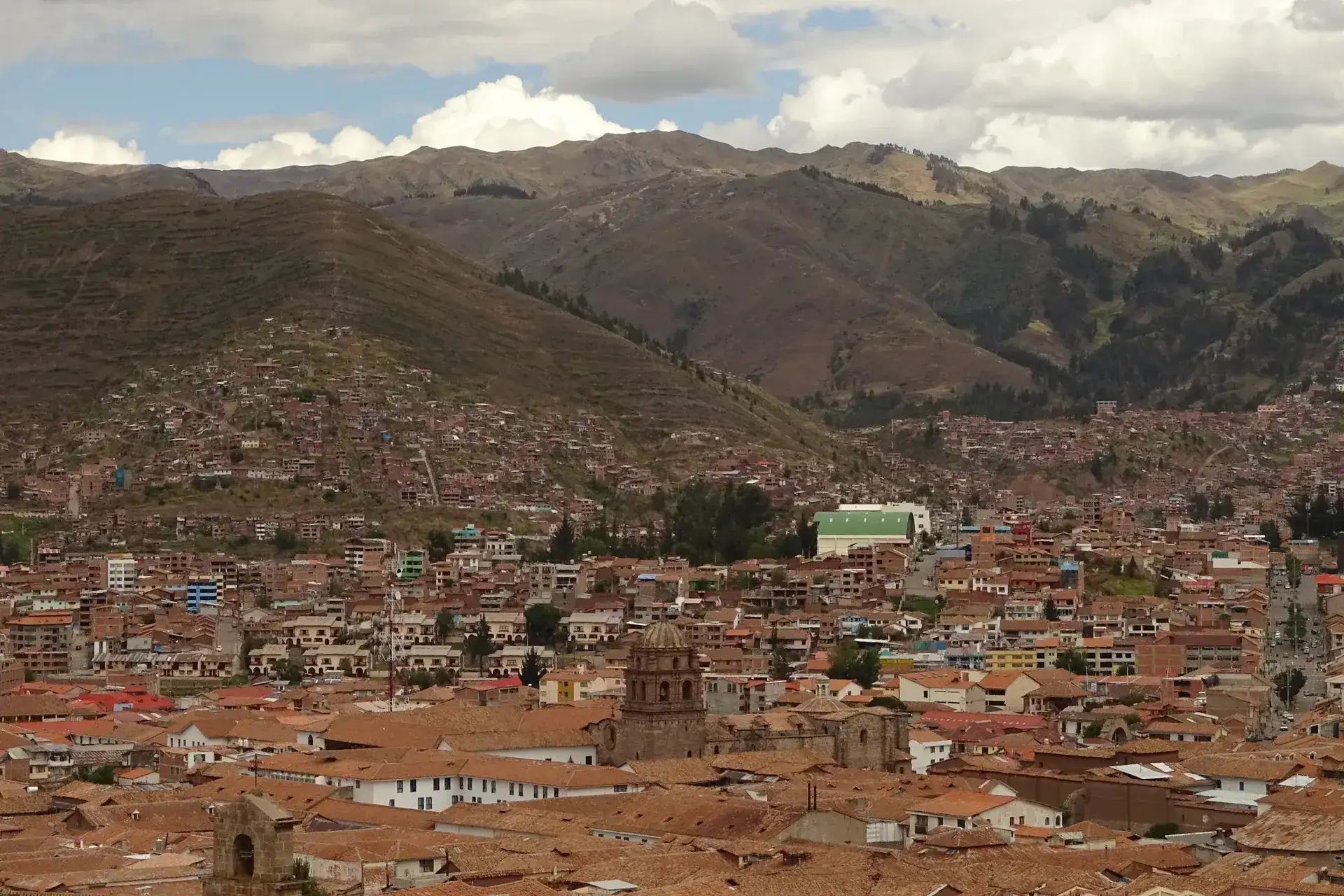
If you follow Avenida de la Cultura beyond Wanchaq and the airport, the city carries on through the valley to the south-east for several kilometres. That's where you'll find San Sebastián and San Jerónimo, two districts that a few decades ago were separate villages and are now part of Cusco's urban area. Many Cusqueños live and work here, with traditional squares, colonial churches, markets and their own festivals. They're rarely on tourist itineraries, but they're worth a visit if you're interested in real Cusco or heading to the South Valley.
Start here: Cusco tips · things to do in Cusco
Where they are and how to get there
The two districts follow one another along the road leaving Cusco to the south-east, towards Puno and the South Valley. San Sebastián begins shortly after the airport; San Jerónimo lies a little further on.
- Taxi or app: the easiest option. Travel time from the centre varies a lot with traffic on Avenida de la Cultura.
- City bus: many routes run along Avenida de la Cultura; ask the driver whether it stops at the San Sebastián or San Jerónimo square.
- Getting around Cusco: taxis, ride apps, city buses and colectivos
- Wanchaq: modern, local Cusco between the centre and the airport
Popular activities on GetYourGuide
San Sebastián and its baroque church
San Sebastián's square is presided over by a colonial church that was one of the jewels of Cusco baroque, begun in the 16th century and completed at the end of the 18th, with a richly carved stone façade reminiscent of the Cathedral's. In 2016 a fire destroyed much of its interior and its main altarpiece, and it has since undergone restoration work. The façade is still impressive from the square.
Before you go
Because of restoration work, access to the interior may be restricted. Check opening hours before you go.
- Churches of Cusco: La Compañía, San Blas, La Merced, San Francisco and more
- The Cusco School of painting: where to see it and how to buy a reproduction
San Jerónimo
San Jerónimo keeps a square with its colonial church and a village feel mixed with urban growth. It's best known for hosting Vinocanchón, the big wholesale market of the Cusco area, where traders, restaurants and families buy potatoes, maize, fruit, cheese and meat at local prices. Seeing its mountains of Andean produce is one of the most authentic market experiences in the region.
- Vinocanchón Market: San Jerónimo's big wholesale market
- Native potatoes of Cusco: varieties, chuño and dishes to try
- Peruvian fruits in Cusco markets: what to try and how to eat them
Their role in Corpus Christi
During Cusco's great Corpus Christi festival, the images of saints and virgins from the city's parishes and nearby districts arrive in procession at the Plaza de Armas. Those of San Sebastián and San Jerónimo are among the ones that travel the furthest, accompanied by their faithful, brass bands and dancers. It's one of the moments when each district's pride is most visible.
- Corpus Christi in Cusco: dates, the saints' procession, chiriuchu and tips
- Cusco festivals: a month-by-month calendar
Eating in south-east Cusco
These districts are the land of popular food: picanterías, quintas, market stalls and weekend restaurants where Cusco families eat traditional dishes. On the way to the South Valley you also pass Saylla, famous for its chicharrón, and further on Tipón, known for roast cuy.
- Cusco picanterías and chicherías: eat like a local
- Saylla chicharrón: Cusco's fried-pork town
- Eating guinea pig (cuy) in Cusco: what it is, how it's cooked and where to try it
Gateway to the South Valley
San Sebastián and San Jerónimo are the way to the South Valley, home to Tipón, Pikillacta, Andahuaylillas with its "Sistine Chapel of the Americas", and Huaro. If you take that trip, you can stop at Vinocanchón in the morning or at one of the district squares on the way back.
- Cusco's South Valley: Tipón, Pikillacta, Andahuaylillas and local flavours
- Waqrapukara: how to visit the "horned fortress" from Cusco
A morning in south-east Cusco
- Leave the centre early by taxi for Vinocanchón in San Jerónimo and walk the market while it's in full swing.
- Have breakfast in the market's food area: a broth, a juice or bread with cheese.
- Head to San Jerónimo's square to see its church and village atmosphere.
- On the way back towards the city, stop at San Sebastián's square and admire the church façade.
- Return to the centre by mid-morning or carry on to the South Valley.
Staying here?
For most visitors it isn't the most practical choice: you're far from the historic centre and will depend on taxis. It can make sense for long stays, volunteering, studies or family visits, or if you want very cheap accommodation and local life. For a first visit, it's better to stay in the centre.
- Where to stay in Cusco: best areas for your trip and budget
- Wanchaq: modern, local Cusco between the centre and the airport
Practical tips
- Go in the morning: markets are livelier and the light is better.
- Carry cash in coins and small notes.
- Watch your belongings in markets, as anywhere crowded.
- If you don't speak Spanish, carry the names of the places you want to visit written down.
- Combine the visit with the South Valley to make the most of the journey.
- How to shop at Cusco's markets: bargaining, yapa and safety
- Money in Cusco: soles, ATMs, exchange offices and cards
Frequently asked questions
- Are San Sebastián and San Jerónimo worth visiting?
- Yes, if you're interested in local life, markets or are heading to the South Valley. They're not must-sees on a short trip.
- Can you go inside San Sebastián church?
- After the 2016 fire it has been under restoration, so access may be limited. Check before you go.
- What is Vinocanchón?
- It's the big wholesale market of the Cusco area, located in San Jerónimo.
- How do I get there from central Cusco?
- By taxi or city bus along Avenida de la Cultura.
Book this plan
- Cusco walking tourCompareSee dates →
- Cusco city tourCompareSee dates →
Notice: This guide shares advice and recommendations based on research and local experience. Prices, opening hours and rules may change: always check with official sources and operators. Cusco Tips is not responsible for third-party services, bookings or decisions made using these guides; some links are affiliate links (see our affiliate policy).
Related guides
Vinocanchón Market: San Jerónimo's big wholesale market
Vinocanchón Market in San Jerónimo, Cusco's big wholesale market: fruit, potatoes, cheese and food at local prices. Best day, getting there and tips.
Read guide →
Wanchaq: modern, local Cusco between the centre and the airport
Guide to Wanchaq, Cusco's modern district: market, Avenida de la Cultura, the train station for Puno, closeness to the airport and whether it's worth staying there.
Read guide →
Cusco's South Valley: Tipón, Pikillacta, Andahuaylillas and local flavours
Guide to Cusco's South Valley: Tipón's Inca waterworks, the Wari city of Pikillacta, Andahuaylillas church, Huacarpay lagoon, chicharrón, Oropesa bread and how to get there.
Read guide →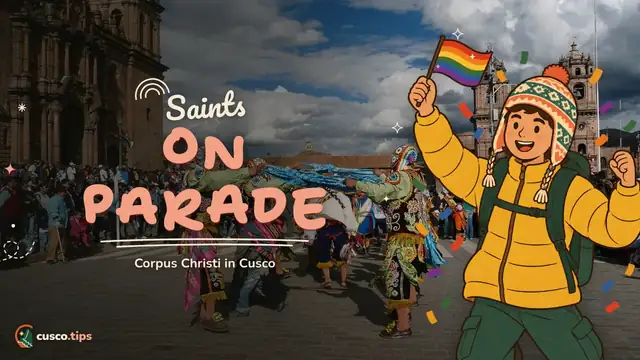
Corpus Christi in Cusco: dates, the saints' procession, chiriuchu and tips
Corpus Christi in Cusco guide: when it is, the saints arriving at the Cathedral, the procession on the Plaza de Armas, chiriuchu, the octave and tips for enjoying the festival.
Read guide →