
Spending Christmas in Cusco means a very different celebration from the shopping-mall kind: here the star is the Niño Manuelito, artisans fill the Plaza de Armas, families build enormous nativity scenes and the night of the 24th ends with hot chocolate, panetón and ringing bells at the stroke of midnight. This guide explains what happens each day, what to eat, where to soak up the atmosphere and how to plan in the middle of the rainy season.
Start here: Cusco tips · things to do in Cusco
Niño Manuelito, the heart of a Cusco Christmas
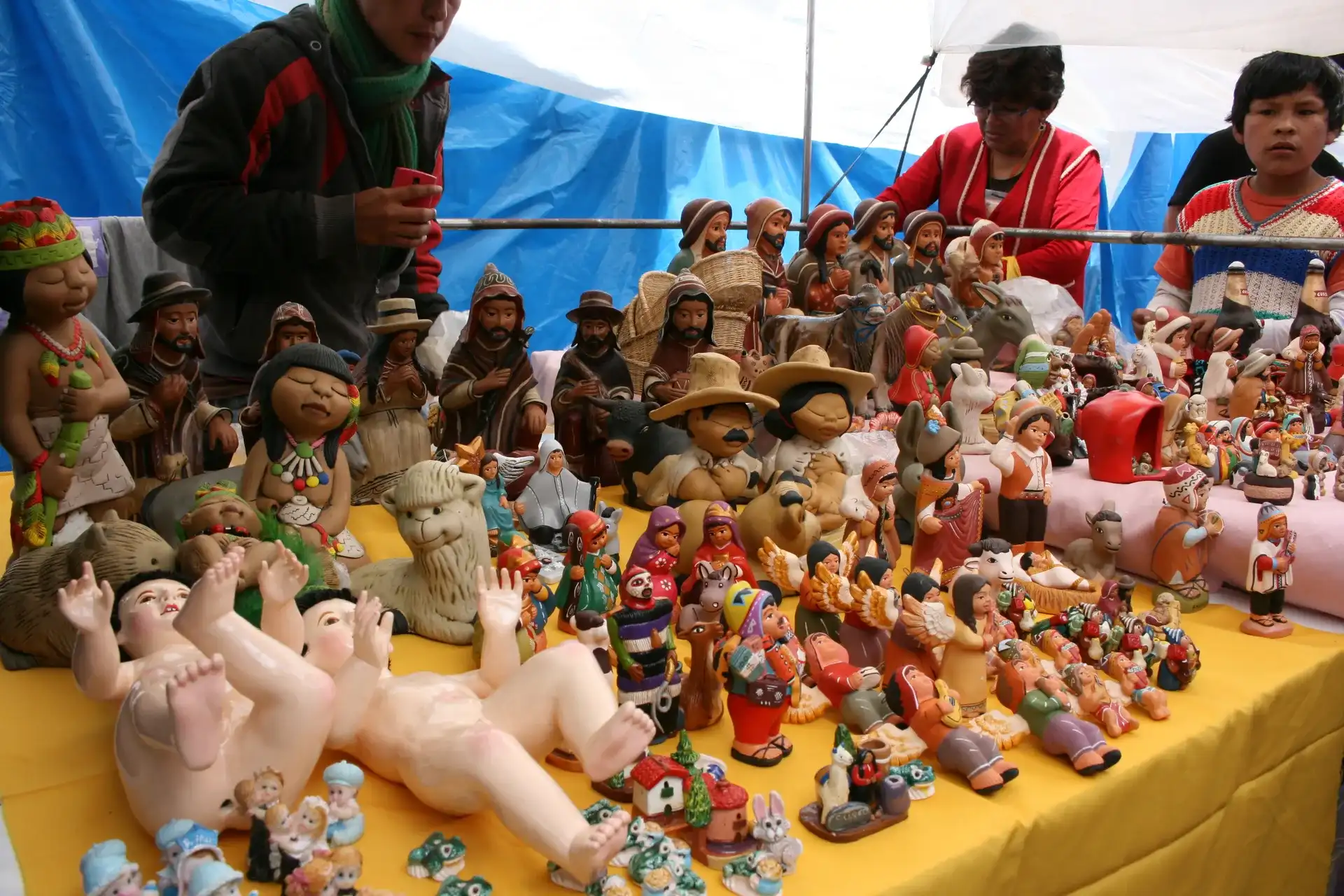
In Cusco the Christ Child has his own name: Niño Manuelito, an affectionate diminutive of Manuel, which comes from Emmanuel. He is shown with Andean features and clothing, and many families keep their figure for generations. Every December they dress him in new clothes, buy him a little chair or accessory and place him at the centre of the nativity scene. One of the best-known images is the so-called Niño de la Espina, attributed to Cusco image-maker Antonio Olave, which shows the child pulling a thorn from his foot.
Look closely at the nativity scenes in churches, homes and shops: alongside Mary, Joseph and the Magi you will see llamas, shepherds, market women, musicians and mountains of moss. It is a very Cusco way of moving the manger to the Andes.
Popular activities on GetYourGuide
24 December: the Santurantikuy
The big event before Christmas Eve is the Santurantikuy, the Christmas fair that fills the Plaza de Armas. According to the Andina news agency, more than 1,200 artisans, master craftspeople and traders took part in 2024, with religious images, ceramics, silverwork, tinwork, textiles and paintings. The fair has been part of Peru's national cultural heritage since 2009 and is organised every year by the City of Cusco through its festivities company (EMUFEC), which publishes the official dates.
It is the best place to buy nativity figures, a small Niño Manuelito or a retablo, and to feel the city's mood. By the afternoon of the 24th the square is packed; if you want to shop calmly, go in the morning or on the days before.
A souvenir with a story
Ask artisans about the technique and origin of each piece: many are the makers themselves and will tell you what each figure represents.
- What to buy in Cusco: authentic souvenirs and what to avoid
- Plaza de Armas in Cusco: history, what to see around it and practical tips
How Christmas Eve unfolds
For many Cusco families the night of the 24th follows a fairly clear order:
- In the afternoon, last-minute shopping at the Santurantikuy and a look at the church nativity scenes.
- Around midnight, the Misa de Gallo (midnight Mass) at the Cathedral and the churches in the centre. Many families bring their own Niño Manuelito to be blessed.
- At twelve, bells, rockets and fireworks go off, and carols are sung in Spanish and Quechua.
- Then comes the family dinner, which can stretch into the small hours.
If you attend Mass, arrive early: churches fill up and it is a religious service, so dress respectfully and avoid flash.
Watch from a balcony
If you would rather stay out of the crowd, a café or restaurant with a balcony over the Plaza de Armas is a good way to see the midnight fireworks. Book ahead.
- Cusco Cathedral: what to see inside, the Last Supper with guinea pig, tickets and hours
- Churches of Cusco: La Compañía, San Blas, La Merced, San Francisco and more
What people eat on Christmas Eve
A Cusco Christmas dinner blends Andean tradition and Creole customs. Typical dishes and drinks:
- Roast suckling pig (lechón) or turkey, often with mash, salads and rice.
- Corn tamales and humitas.
- Salads with Andean produce, sometimes including moraya (freeze-dried potato).
- Thick hot chocolate, often made with cacao from the Quillabamba area, served with panetón.
- Ponche (a warm spiced drink) or a glass of wine for the toast.
If you have no local family, many restaurants and hotels hold special dinners on the 24th. Book early and confirm the menu and timing, as they change every year.
- Traditional food in Cusco: 15 dishes and drinks you have to try
- Chocolate and cacao in Cusco: workshops, chuncho cacao and what to buy
Chocolatadas: Christmas giving
Throughout December, chocolatadas are very common: hot chocolate, panetón and toys handed out to children in neighbourhoods and rural communities, organised by parishes, associations, businesses or residents. If you want to take part, do it through a reputable local organisation and ask what is actually needed; handing out sweets or money in the street on your own does not always help.
From 25 December to the Bajada de Reyes
The 25th is quiet: families rest and some businesses open shorter hours or close. It is a good day to wander a calmer centre or do an excursion you have already booked. Nativity scenes stay up into January and, around 6 January, the Bajada de Reyes (Epiphany) is another occasion to take the Niños Manuelitos to be blessed. If you stay for New Year, within a few days the city switches from family gatherings to the big party in the Plaza de Armas.
- New Year's Eve in Cusco: the Plaza de Armas party, traditions and tips
- Cusco festivals: a month-by-month calendar
Tips for a Christmas trip to Cusco
- It is the rainy season: pack a waterproof jacket and plan excursions for the morning.
- December is high season for Peruvian and foreign travellers; book your hotel, train and Machu Picchu tickets early.
- Nights are cold: wear layers for Mass and evenings out.
- The square gets very crowded: watch your belongings and agree on a meeting point.
- If you arrive on the 24th itself, take it easy because of the altitude and go light on alcohol.
- Rainy season in Cusco and Machu Picchu: what to expect and how to make the most of it
- Machu Picchu tickets: how to buy them on the official site and not miss out
- Altitude sickness in Cusco: how to prevent it and what to do
Frequently asked questions
- What happens in Cusco on 24 December?
- During the day people visit the Santurantikuy fair in the Plaza de Armas; around midnight there is the Misa de Gallo with bells and fireworks, followed by the family dinner.
- Who is Niño Manuelito?
- He is Cusco's depiction of the Christ Child, with Andean features and clothing, whom families dress and place at the centre of their nativity scene.
- What do people eat at Christmas in Cusco?
- Roast suckling pig or turkey, tamales, salads and, above all, hot chocolate with panetón.
- Does it rain in Cusco at Christmas?
- Yes, December is the heart of the rainy season; showers are usually in the afternoon, so plan excursions early.
Official sources
Book this plan
- City tour of the Tourist Ticket sitesCompareSee dates →
- Cusco walking tourCompareSee dates →
Notice: This guide shares advice and recommendations based on research and local experience. Prices, opening hours and rules may change: always check with official sources and operators. Cusco Tips is not responsible for third-party services, bookings or decisions made using these guides; some links are affiliate links (see our affiliate policy).
Related guides
Santurantikuy: Cusco's Christmas market in the Plaza de Armas
Santurantikuy, Cusco's Christmas crafts fair: usual dates, what to buy (Niño Manuelito, retablos, ceramics), tips and how to avoid the crowds.
Read guide →
New Year's Eve in Cusco: the Plaza de Armas party, traditions and tips
What New Year's Eve in Cusco is like: the Plaza de Armas party, yellow clothes, laps of the square and grapes, rules, rain, safety, where to stay and what to do on 1 January.
Read guide →
Cusco festivals: a month-by-month calendar
Calendar of the main festivals in and around Cusco: Carnival, Holy Week, Qoyllur Rit'i, Corpus Christi, Inti Raymi, Virgen del Carmen, Pachamama, Santurantikuy and more.
Read guide →
Rainy season in Cusco and Machu Picchu: what to expect and how to make the most of it
Visiting Cusco and Machu Picchu in the rainy season (November to March): weather, the February Inca Trail closure, treks, what to pack, upsides and planning tips.
Read guide →
Traditional food in Cusco: 15 dishes and drinks you have to try
Cusco's traditional dishes explained: chiriuchu, adobo, chicharrón, roast cuy, kapchi, corn with cheese, lechón, trout, chuta bread and chicha, plus where and when to try them.
Read guide →