
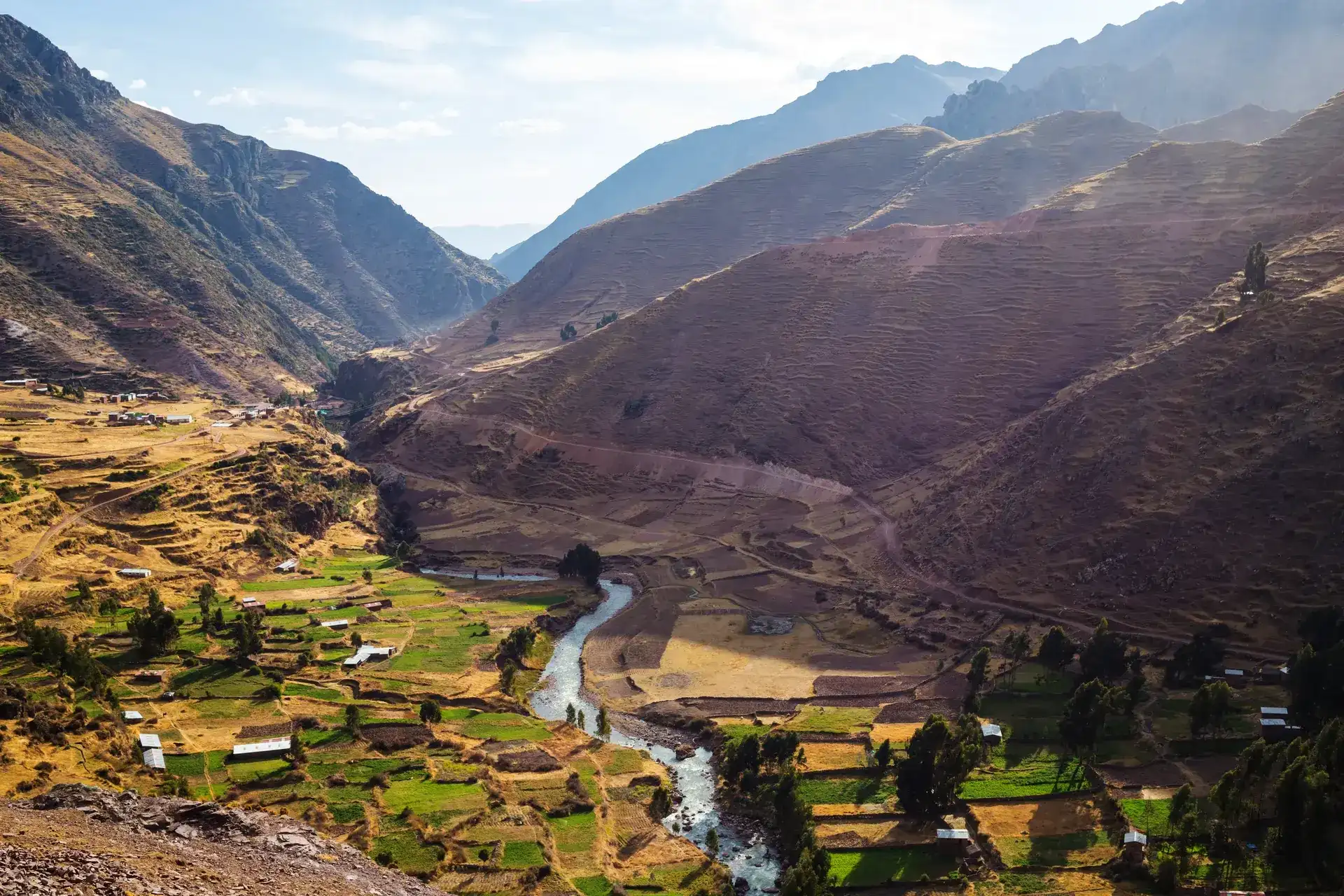
Qeswachaka is the last Inca rope suspension bridge still in use. It hangs over the canyon of the Apurímac River at more than 3,700 metres, and local Quechua communities weave it by hand every year from ichu, the tough grass of the high plains. It is one of the most authentic day trips from Cusco: a long drive through high Andean landscapes, lakes and villages that see very few tourists. This guide explains where it is, how to get there on a tour or on your own, what it costs and when to see the bridge being rebuilt.
Start here: Cusco tips · things to do in Cusco
What the Qeswachaka bridge is
The Incas linked their road network, the Qhapaq Ñan, with woven rope bridges that were renewed regularly. Qeswachaka (Quechua for "rope bridge") is the only one that has been kept up without a break: it is about 28 metres long and is completely remade each year using techniques passed down through generations. In 2013 UNESCO added the knowledge, skills and rituals linked to its renewal to the Representative List of the Intangible Cultural Heritage of Humanity.
- Location: Quehue district, Canas province, Cusco region.
- Altitude: over 3,700 m above sea level.
- Distance: about 160 km from Cusco, roughly 4 hours by road each way.
- Material: q'oya ichu, an Andean grass braided into thin cords and then into thick cables.
Popular activities on GetYourGuide
The yearly renewal
Every year, usually in the second week of June, four farming communities (Huinchiri, Chaupibanda, Choccayhua and Ccollana Quehue) come together to weave a new bridge. The work takes about four days: on the first, offerings are made to Pachamama and the mountain spirits and the cords are braided; then the main cables are stretched across, the floor and handrails are woven, and the last day is a celebration with music, dancing and food. The old bridge is cut loose and falls into the river.
Dates can change
The communities and the municipality set the date each year. In 2026, for example, the renewal was postponed over local disagreements and took place on 2–4 July, with the festival on the 5th. Confirm the date before planning your trip.
Going on a tour from Cusco
The easiest way is a full-day tour. They usually leave Cusco between 4:00 and 5:00 am and return around 6–7 pm. Most include the Four Lakes Route (Pomacanchi, Acopía, Asnaqocha and Pampamarca), breakfast and lunch on the way, and some stop in Checacupe, known for its colonial church and bridges from different eras. Because this is an off-the-beaten-track route, groups tend to be small.
Going on your own by public transport
You can get there without a tour, but it takes time and patience:
- At the Cusco bus terminal, take a bus towards Sicuani and get off at Combapata (2–2.5 hours).
- In Combapata, find a shared minivan (colectivo) to Quehue (about 1 hour 20 minutes).
- From Quehue, local transport takes you to the bridge in about 15 minutes.
Getting back can be tricky in the afternoon, as colectivos are scarce. Leave very early, carry cash in soles and ask about return times as soon as you arrive. Another option is hiring a private driver and combining the bridge with the lakes at your own pace.
- Private driver in Cusco and the Sacred Valley: when it's worth it and how to hire one
- Getting around Cusco: taxis, ride apps, city buses and colectivos
Entry fee and opening times
Entry to the bridge costs 20 soles for foreigners and 10 soles for Peruvians (reference prices; they may change). You pay at the booth next to the access path. Visit in daylight: there is no lighting and the drive back is long. If the bridge is in good condition you may cross it, but only a few people at a time and following the caretakers' instructions.
Before the renewal
In the weeks before the yearly renewal the bridge is more worn and crossing is sometimes restricted. In 2021, lack of maintenance during the pandemic caused it to collapse; it was rebuilt that June.
What crossing feels like
The bridge sways with every step and the floor, made of rope and branches, is uneven. Hold the rope handrails, move slowly and don't stop in the middle for photos if people are waiting. If you are afraid of heights, the views from the lookouts on both sides of the canyon are just as impressive. From below, near the river, you can best appreciate the weaving technique.
Altitude and weather
The area is above 3,700 m and the lakes route climbs even higher, so do this trip after two or three days of acclimatisation in Cusco. Mornings are bitterly cold, especially from June to August, and the midday sun is strong. The best time is the dry season, May to October; in the rainy season the road can have muddy stretches or landslides.
- Altitude sickness in Cusco: how to prevent it and what to do
- Rainy season in Cusco and Machu Picchu: what to expect and how to make the most of it
What to bring
- Warm layers, a hat and gloves for the pre-dawn start.
- Sunscreen, sunglasses and a sun hat.
- Cash in soles for the entry, toilets and purchases: there are no ATMs nearby.
- Water and snacks, although tours include meals.
- Shoes with good grip for the walk down to the bridge.
- What to pack for Cusco and Machu Picchu: a packing list by season
- Money in Cusco: soles, ATMs, exchange offices and cards
What to combine on the way
The road to Qeswachaka runs through the South Valley, so you can combine the trip with other little-visited places. Waqrapukara, the Inca "horn castle", is in neighbouring Acomayo province, and Palccoyo rainbow mountain is in the same region. If you like adventure, the Apurímac River is also rafted further downstream.
- Cusco's South Valley: Tipón, Pikillacta, Andahuaylillas and local flavours
- Waqrapukara: how to visit the "horned fortress" from Cusco
- Palccoyo: the alternative rainbow mountain, easier and quieter than Vinicunca
- Apurímac river rafting: multi-day whitewater expeditions from Cusco
Travelling respectfully
The bridge is a sacred, living place for the communities who maintain it. Ask before photographing people, buy local crafts or food when you can and never pull fibres from the bridge as a souvenir. A few words of Quechua are always appreciated.
- Basic Quechua phrases for your trip to Cusco (with pronunciation)
- Andean textiles in Cusco: weaving workshops, weaving communities and buying well
Frequently asked questions
- Where is the Qeswachaka bridge?
- In Quehue district, Canas province, about 4 hours by road south of Cusco, over the Apurímac River.
- How much is the entry fee?
- About 20 soles for foreigners and 10 soles for Peruvians.
- When is the bridge renewed?
- Usually in the second week of June, over about four days; the exact date is confirmed each year.
- Can you cross the bridge?
- Yes, if it is in good condition, a few people at a time and following the caretakers' instructions.
Book this plan
- Qeswachaka Inca bridgeCompareSee dates →
Notice: This guide shares advice and recommendations based on research and local experience. Prices, opening hours and rules may change: always check with official sources and operators. Cusco Tips is not responsible for third-party services, bookings or decisions made using these guides; some links are affiliate links (see our affiliate policy).
Related guides
Cusco's South Valley: Tipón, Pikillacta, Andahuaylillas and local flavours
Guide to Cusco's South Valley: Tipón's Inca waterworks, the Wari city of Pikillacta, Andahuaylillas church, Huacarpay lagoon, chicharrón, Oropesa bread and how to get there.
Read guide →
Waqrapukara: how to visit the "horned fortress" from Cusco
Waqrapukara guide: what it is, where it is, how to get there from Cusco on a tour or independently, the hike, altitude, what to pack and when to go to this little-visited site.
Read guide →
Apurímac river rafting: multi-day whitewater expeditions from Cusco
What Apurímac rafting expeditions from Cusco are like: sections, difficulty, the May to November season, riverside camps, requirements, safety and what to pack.
Read guide →
Cusco festivals: a month-by-month calendar
Calendar of the main festivals in and around Cusco: Carnival, Holy Week, Qoyllur Rit'i, Corpus Christi, Inti Raymi, Virgen del Carmen, Pachamama, Santurantikuy and more.
Read guide →
Andean textiles in Cusco: weaving workshops, weaving communities and buying well
Guide to Andean textiles in Cusco: techniques and natural dyes, the meaning of designs, workshops and classes, visits to weaving communities, yarn for knitters and spotting handmade pieces.
Read guide →