
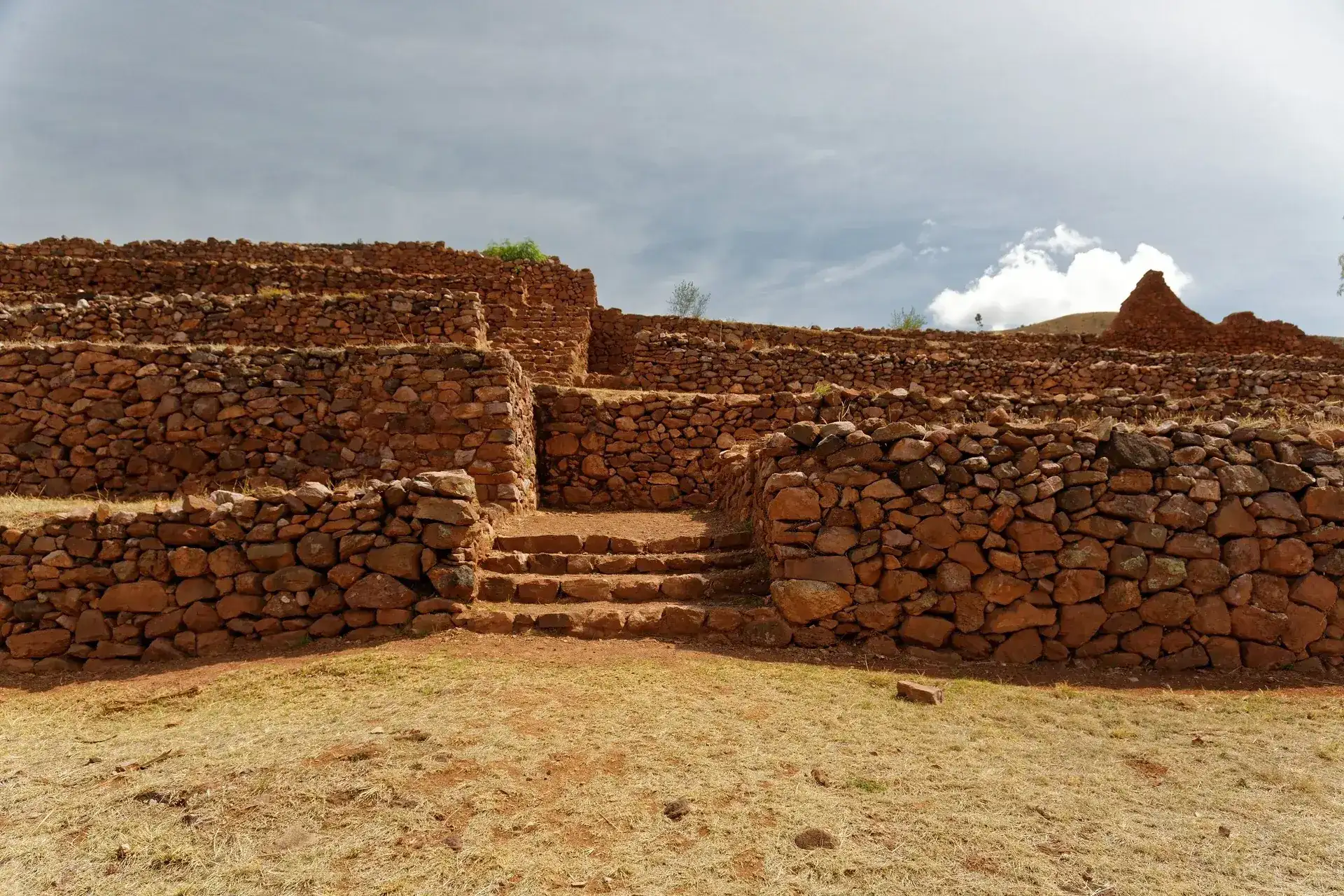
Almost everything you see around Cusco is Inca or colonial. Pikillacta breaks the pattern: it is a city built centuries earlier by the Wari, the first great Andean state, and its grid layout looks nothing like the Sacred Valley sites. It sits about 32 km south of Cusco in the South Valley and is covered by the Tourist Ticket. Many travellers give it ten minutes on a tour; this guide helps you understand it and give it the time it deserves.
Start here: Cusco tips · things to do in Cusco
What Pikillacta is
According to the Cusco office of the Ministry of Culture (DDC Cusco), Pikillacta was a planned Wari city of rectangular buildings, compounds and plazas built from rough stone and mud mortar, arranged in blocks separated by straight streets and enclosed by walls up to 12 metres high that give it the look of a fortress. It is estimated to have had about 700 buildings, 200 compounds and 508 storehouses, and around ten thousand inhabitants. Peru's tourism inventory (Mincetur) describes it as a Wari administrative centre of the 6th to 9th centuries AD, several hundred years before the Inca empire.
- Machu Picchu history: who built it, why, and how the world found out
- The best museums in Cusco: which to visit, tickets and how to plan
- Inka Museum Cusco: what to see, mummies, ceramics and how to visit
Popular activities on GetYourGuide
What to see
- The straight streets between tall walls, the best way to feel the scale of the city.
- Blocks of near-identical rooms showing a kind of planning very different from Inca architecture.
- Traces of plaster: DDC Cusco notes that many walls were coated and some decorated, and that there were two- and even three-storey buildings.
- Views over the Lucre basin and Huacarpay lagoon from the higher sections.
- The Ministry of Culture's small exhibition room inside the park, which puts the ruins in context.
Rough stone, not Inca masonry
Do not expect polished walls like Qorikancha: Pikillacta is about urban planning, not fine stonework.
- Qorikancha, the Temple of the Sun: tickets, hours, what to see and history
- The best photography spots in Cusco and around
Tourist Ticket and hours
Pikillacta is part of circuit II (City and South Valley) of the Cusco Tourist Ticket, together with Tipón and several city museums. According to the official COSITUC price list, for foreign visitors the circuit II partial ticket costs S/ 70 and is valid for two days, while the full ticket costs S/ 130 and is valid for ten days. DDC Cusco lists opening hours as 7:00 am to 4:30 pm. Check prices and hours before going, and do not pay for improvised tickets if you already hold a valid ticket for that circuit.
Andahuaylillas is separate
Andahuaylillas church is not on the Tourist Ticket; bring soles if you add it the same day.
- Cusco Tourist Ticket (Boleto Turístico): what's included and is it worth it
- Andahuaylillas: San Pedro church, the "Sistine Chapel of the Andes"
- Tipón Cusco: Inca hydraulic terraces and how to combine them with the South Valley
Access and rules
The approach to the car park is level, but you enter the site up stone steps cut into the bedrock, so DDC Cusco says step-free access is not possible. Food, animals and alcohol are banned, as are climbing the walls, camping and flying drones without permission. The altitude is around 3,200 m, a little lower than central Cusco.
- Machu Picchu accessibility: the designed route, transport and practical tips
- Altitude sickness in Cusco: how to prevent it and what to do
Rumiqolqa and Huacarpay
Close by, right beside the highway, stands Rumiqolqa, a massive Inca stone gateway that, according to Mincetur, served as a checkpoint on the way into Cusco from Collasuyu; a water channel is said to have run over it. The area also keeps a local legend about Princess Sumaq T'ika, who promised to marry whoever brought water to her palace. Across the road is the Lucre-Huacarpay wetland, a Ramsar site since 2006, whose lagoons attract plenty of water and high-Andean birds.
- Birdwatching in Cusco: Huacarpay, Abra Málaga and Machu Picchu
- Cusco's South Valley: Tipón, Pikillacta, Andahuaylillas and local flavours
Getting there from Cusco
- South Valley tour: the simplest option, usually combining Tipón, Pikillacta and Andahuaylillas in a half or full day. Ask how long you get at each stop.
- Public transport: buses and colectivos towards Urcos run along the South Valley road; ask to get off at the Pikillacta entrance, which is next to the Cusco–Urcos highway. Confirm the stop with the driver.
- Taxi or private driver: handy for an early start and chaining Tipón, Pikillacta, Rumiqolqa and Andahuaylillas at your own pace.
- Cusco's South Valley: Tipón, Pikillacta, Andahuaylillas and local flavours
- Private driver in Cusco and the Sacred Valley: when it's worth it and how to hire one
- Getting around Cusco: taxis, ride apps, city buses and colectivos
Suggested half-day route
- Tipón early, when its water channels look their best and crowds are thin.
- Pikillacta, with at least an hour to walk the streets.
- A quick stop at Rumiqolqa and a look at Huacarpay.
- Andahuaylillas for baroque art, or Saylla on the way back for chicharrón.
- Tipón Cusco: Inca hydraulic terraces and how to combine them with the South Valley
- Andahuaylillas: San Pedro church, the "Sistine Chapel of the Andes"
- Saylla chicharrón: Cusco's fried-pork town
- Half-day tours in Cusco: the best options if you're short on time
Practical tips
- Bring water, sunscreen and a hat: there is little shade between the walls.
- Wear shoes with good grip; the ground is uneven.
- The site stays open in the rainy season, but some stretches get slippery.
- Respect closed areas and never move stones from the walls.
- What to pack for Cusco and Machu Picchu: a packing list by season
- Rainy season in Cusco and Machu Picchu: what to expect and how to make the most of it
Frequently asked questions
- Is Pikillacta Inca?
- No. It is a Wari city, several centuries older than the Incas (Mincetur dates it to the 6th–9th centuries).
- Is it included in the Cusco Tourist Ticket?
- Yes, in circuit II (City and South Valley) together with Tipón, and in the full ticket.
- How long do I need?
- At least an hour; an hour and a half to climb to the higher parts and see the exhibition room.
- Can I combine it with Tipón?
- Yes, it is the classic South Valley pairing and fits in a half day.
Official sources
Book this plan
- Rainbow Mountain (Vinicunca)CompareSee dates →
- Humantay LakeCompareSee dates →
- Sacred Valley tourCompareSee dates →
Notice: This guide shares advice and recommendations based on research and local experience. Prices, opening hours and rules may change: always check with official sources and operators. Cusco Tips is not responsible for third-party services, bookings or decisions made using these guides; some links are affiliate links (see our affiliate policy).
Related guides
Cusco's South Valley: Tipón, Pikillacta, Andahuaylillas and local flavours
Guide to Cusco's South Valley: Tipón's Inca waterworks, the Wari city of Pikillacta, Andahuaylillas church, Huacarpay lagoon, chicharrón, Oropesa bread and how to get there.
Read guide →
Tipón Cusco: Inca hydraulic terraces and how to combine them with the South Valley
Tipón guide: Inca terraces and water channels, tourist ticket, how to get there from Cusco and combining with Pikillacta and Andahuaylillas. Verify current hours and fees.
Read guide →
Andahuaylillas: San Pedro church, the "Sistine Chapel of the Andes"
Guide to Andahuaylillas and San Pedro Apóstol church: Andean baroque art, visit tips, South Valley with Tipón and Pikillacta, entry separate from the Tourist Ticket. Verify hours and prices.
Read guide →
Cusco Tourist Ticket (Boleto Turístico): what's included and is it worth it
Guide to the Cusco Tourist Ticket (COSITUC): full and partial tickets, sites in each circuit, what it does NOT include, where to buy it and how to use it.
Read guide →
Birdwatching in Cusco: Huacarpay, Abra Málaga and Machu Picchu
A guide to birdwatching around Cusco: the Huacarpay wetland, polylepis woods at Abra Málaga, hummingbirds and cock-of-the-rock near Machu Picchu, season, gear and guides.
Read guide →