
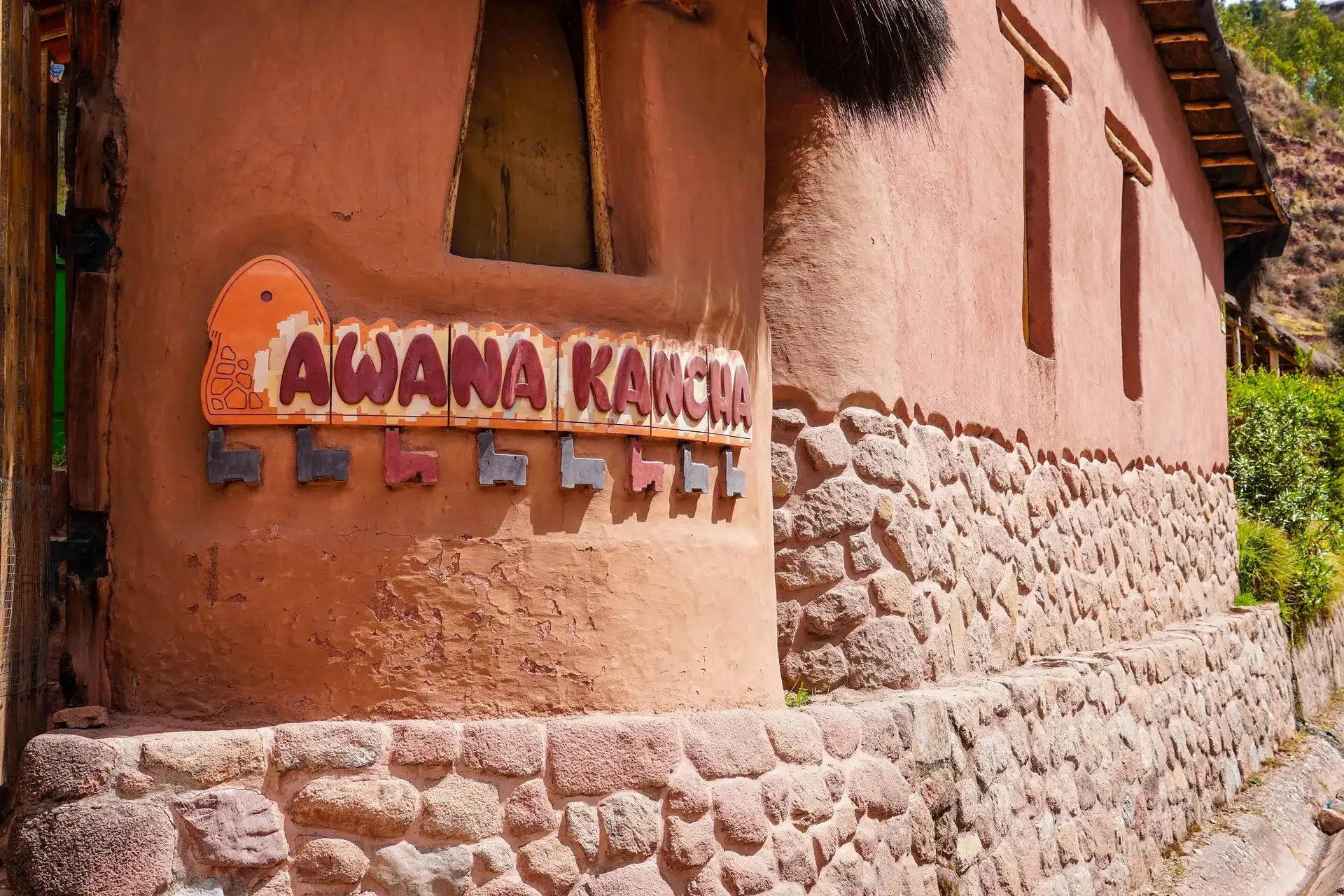
At kilometre 23 of the road from Cusco to Pisac, among bends and farm fields, there is a place where you can feed a llama, see a vicuña up close and watch a weaver turn a handful of fibre into cloth full of symbols. This is Awana Kancha, a centre that calls itself a "living museum of the Andes" and that many Sacred Valley tours include as their first stop. It is a short visit, great with kids and perfect for understanding where the garments you will see later in the markets come from.
Tours to explore Cusco's markets
Start here: Cusco tips · things to do in Cusco
What Awana Kancha is
Awana Kancha is a private initiative that, according to PromPerú, began in 2004 as a family project to revive Andean textile knowledge. Peru's official tourism inventory lists it as the "Centro de Exposición de Tejidos y Camélidos Awanacancha" and describes it as a project linked to weaving communities across the region, including Amaru, Totora, Pitumarca and Q'eros. The name is usually translated as "palace of textiles". Its own website calls it a cultural project to care for South American camelids and keep Andean tradition alive.
The four camelid species
The first part of the visit is the pens, home to all four South American camelid species:
- Llama: the largest, traditionally used as a pack animal. You will see woolly and short-haired llamas.
- Alpaca: smaller, with very fine fibre. There are two breeds, huacaya (fluffy fleece) and suri (long, silky locks).
- Vicuña: wild, delicate and with the finest, most valuable fibre in the Andes.
- Guanaco: the llama's wild relative, rarely seen around Cusco.
You can usually feed them grass and herbs handed out by staff. Always follow their instructions: these are animals, not plush toys, and llamas may spit if they feel harassed.
With kids
One of the most rewarding stops for families: children can see and feed the animals on a short, mostly level walk.
From fleece to fabric: natural dyes
The second part is all about textiles. According to PromPerú, in the dye room weavers show 22 natural pigments made from plants, minerals, fruits and insects. Examples they often demonstrate:
- Reds and pinks: from cochineal, an insect that lives on cactus.
- Yellow: from retama (broom) flowers.
- Green: from leaves such as chilca or eucalyptus.
- Purple: from purple corn.
- Orange: from rock moss.
You will also see the whole process: shearing, washing, spinning with a pushka (drop spindle), dyeing in pots and weaving on a backstrap loom. Look closely at the patterns: each community has its own symbols and colour combinations.
- Andean textiles in Cusco: weaving workshops, weaving communities and buying well
- Cusco's artisan markets: San Blas, Centro Artesanal, Pisac and Chinchero
The shop: buying wisely
The visit ends in a shop selling sweaters, scarves, ponchos, chullo hats, blankets and textiles. Quality is generally good, but prices are not market prices. A few tips:
- Compare with what you saw on the tour: a handwoven piece with natural dyes takes weeks of work and is priced accordingly.
- Ask about composition: "alpaca" can mean 100% alpaca, baby alpaca or a blend with synthetic fibre.
- Vicuña fibre is very scarce and expensive; be wary of cheap "vicuña" items.
- If you want to compare prices, Pisac market is just down the road.
Paying
Bring cash in soles and a card; ask first whether cards are accepted and if there is a surcharge.
- Buying alpaca in Cusco: how to spot the real thing, prices and where to look
- Pisac market: shopping guide, best days and how to bargain respectfully
- Ethical shopping in Cusco: fair trade, cooperatives and weavers
How to get there from Cusco
Awana Kancha sits at kilometre 23 of the Cusco–Pisac road, about 30 minutes from the city according to PromPerú.
- On a tour: many Sacred Valley tours stop here for 30–45 minutes.
- By colectivo: shared vans and minibuses to Pisac leave from the Calle Puputi area. Ask the driver to drop you at Awana Kancha (km 23).
- By taxi: you can agree on a taxi that waits during your visit.
To return, flag down a colectivo heading to Cusco or continue to Pisac, a few minutes further on.
- Cusco to the Sacred Valley and Ollantaytambo: colectivo, taxi, tour and train
- Getting around Cusco: taxis, ride apps, city buses and colectivos
Hours, entry and time needed
It is a private centre open during the day. We do not publish hours or fees because they change: confirm them on the official website or social media before you go. Allow about an hour to see the animals, the dye room and the shop without rushing, as PromPerú suggests.
Sun and altitude
The walk is short, but you are above 3,000 m and the midday sun is strong. Bring a cap, sunscreen and water.
How to combine it
The Cusco–Pisac road passes several Boleto Turístico sites such as Tambomachay, Puka Pukara and Q'enqo, so it is easy to plan a full morning:
- Leave Cusco early and stop at Tambomachay or Puka Pukara.
- Awana Kancha mid-morning, when the animals are active.
- Pisac: the craft market and, if you have time, the archaeological park above town.
- Lunch in Pisac or head back to Cusco in the afternoon.
- Qenqo, Puka Pukara and Tambomachay: the Inca sites above Cusco and how to visit them
- Pisac: Inca ruins, craft market and how to visit from Cusco
- Cusco Tourist Ticket (Boleto Turístico): what's included and is it worth it
Photos and respect
The weavers giving demonstrations are at work. Ask before taking close-up photos, and if someone spends time explaining a technique to you, a small purchase or a tip is appreciated. With the animals, skip the flash and do not chase them for a picture.
Frequently asked questions
- Where is Awana Kancha?
- At kilometre 23 of the Cusco–Pisac road, about 30 minutes from Cusco.
- Which animals live at Awana Kancha?
- All four South American camelids: llama, alpaca, vicuña and guanaco.
- How long do I need?
- About an hour for the pens, the dye demonstration and the shop.
- How do I get there independently?
- Take a colectivo towards Pisac and ask to be dropped at km 23, or go by taxi.
Official sources
Book this plan
- Cusco city tourCompareSee dates →
- Sacred Valley tourCompareSee dates →
Notice: This guide shares advice and recommendations based on research and local experience. Prices, opening hours and rules may change: always check with official sources and operators. Cusco Tips is not responsible for third-party services, bookings or decisions made using these guides; some links are affiliate links (see our affiliate policy).
Related guides
Andean textiles in Cusco: weaving workshops, weaving communities and buying well
Guide to Andean textiles in Cusco: techniques and natural dyes, the meaning of designs, workshops and classes, visits to weaving communities, yarn for knitters and spotting handmade pieces.
Read guide →
Buying alpaca in Cusco: how to spot the real thing, prices and where to look
Differences between baby alpaca, alpaca, llama, vicuña and synthetic blends; how to recognise genuine garments by feel and label, price ranges and where to buy.
Read guide →
Pisac: Inca ruins, craft market and how to visit from Cusco
Pisac guide in the Sacred Valley: what to see in the archaeological park, the market, getting there from Cusco, entry with the Tourist Ticket, the walk down and tips.
Read guide →
Pisac market: shopping guide, best days and how to bargain respectfully
Pisac market shopping guide: which days to go, what to buy (textiles, silver, ceramics, carved gourds), how to judge quality and tips for bargaining.
Read guide →
Qenqo, Puka Pukara and Tambomachay: the Inca sites above Cusco and how to visit them
How to visit Qenqo, Puka Pukara and Tambomachay: what to see at each site, the Tourist Ticket, the walking route back to Cusco, city tours, approximate hours and tips.
Read guide →