
Qenqo, Puka Pukara and Tambomachay: the Inca sites above Cusco and how to visit them
Updated:
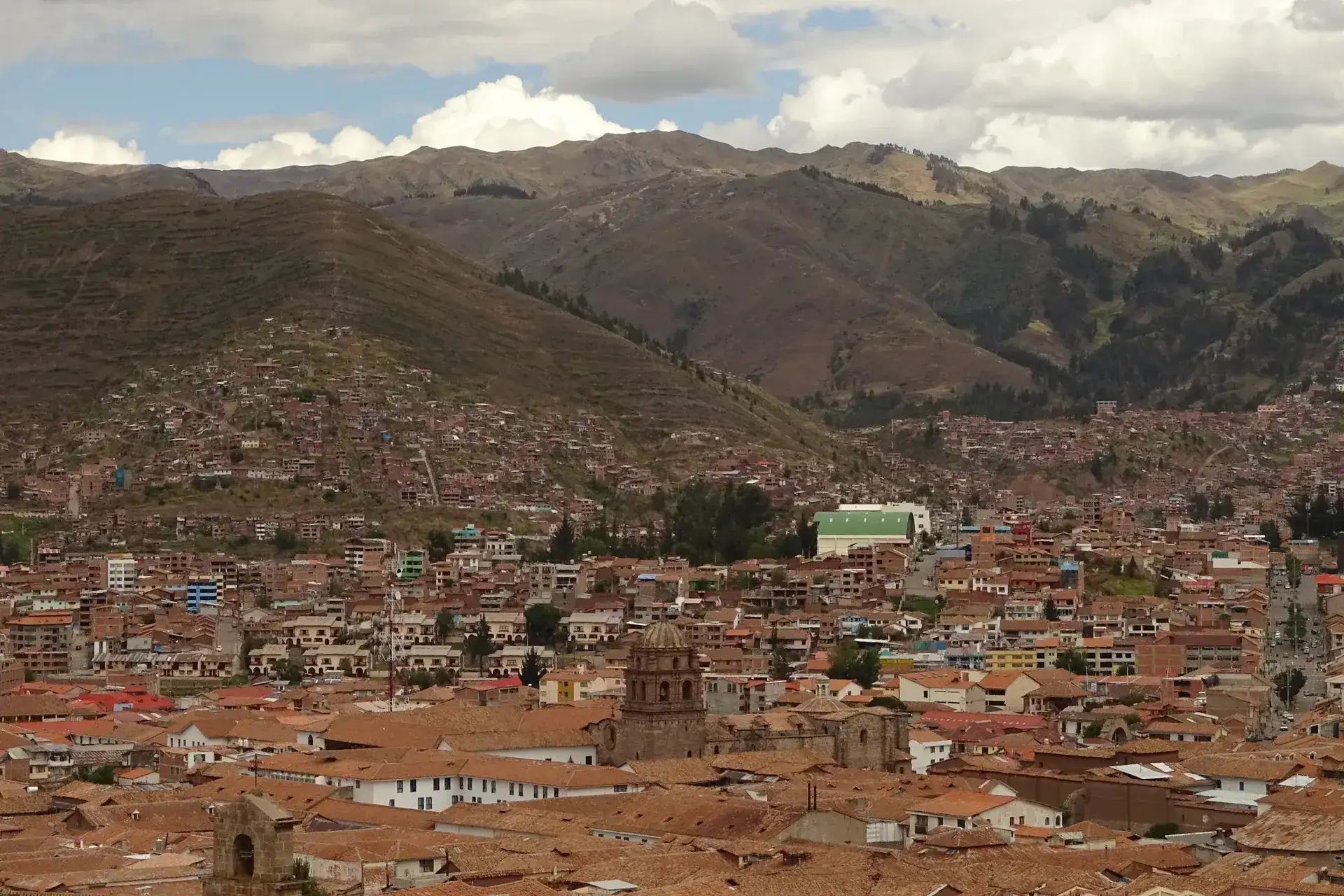
In the hills just north of Cusco, a few kilometres from the Plaza de Armas, sits a chain of archaeological sites that almost every traveller visits along with Sacsayhuamán: Qenqo, Puka Pukara and Tambomachay. They're smaller than the big Sacred Valley complexes, but they show very clearly how the Incas wove rock, water and landscape into religious and political life. You can see them in half a day and combine them with a pleasant downhill walk back to town.
Start here: Cusco tips · things to do in Cusco
The three sites, from bottom to top
Qenqo (Q'enqo)
A large limestone outcrop carved inside and out. Its name is usually translated as "labyrinth" or "zigzag", after the zigzag channels cut into the top, through which liquids such as chicha or blood are thought to have flowed during rituals. Inside there's an underground chamber with an altar carved into the rock, probably linked to ancestor worship and Pachamama. It sits at about 3,580 m, very close to Sacsayhuamán.
Puka Pukara
Its name means "red fortress", after the reddish tone the stones take on at sunset. Rather than a fortress, it's thought to have been a tambo — a checkpoint and resting place on the road to the Antisuyo (the Amazon region) — with rooms, plazas, stairways and storehouses. It has good views over the Cusco valley.
Tambomachay
Known as the "Inca Baths", it's a set of finely worked stone walls and fountains where spring water still flows through channels. It's interpreted as a place devoted to water worship and perhaps a resting place for the Inca elite. It's the highest of the three, at around 3,700 m.
Watch the water
At Tambomachay water still runs through the Inca channels — a good taste of the hydraulic engineering you'll later see at Tipón or Ollantaytambo.
- Sacsayhuamán: how to visit, tickets, history and tips
- Ollantaytambo: ruins, a living Inca town, the Machu Picchu train and tips
Popular activities on GetYourGuide
Entrance: the Tourist Ticket
All three sites, plus Sacsayhuamán, are included in the Cusco Tourist Ticket (Boleto Turístico, BTC). You can use the general ticket, which covers many more sites over several days, or the partial circuit ticket that covers these four sites for one day. Individual tickets for each site aren't sold, and prices differ for foreigners and Peruvians. Fees change, so check official information before you go.
Hours and time needed
- The sites usually open roughly 7:00 am to 5:30 or 6:00 pm; confirm current hours.
- Allow about 2–3 hours to see all three calmly, more if you add Sacsayhuamán.
- Early morning means fewer groups and better light.
The best route: ride up, walk down
Many travellers' favourite plan is to start at the top and walk back downhill:
- Take a taxi or local bus towards Pisac or Calca and ask to get off at Tambomachay (about 8 km from the centre).
- Visit Tambomachay and cross the road to Puka Pukara, right opposite.
- Walk along the road or trails to Qenqo, roughly an hour of gentle descent.
- Continue to Sacsayhuamán and Cristo Blanco, then take the stairs down to San Blas or the centre.
In total it's about 8 km, mostly downhill, in 2–3 hours at an easy pace plus time at the sites.
Safety on the way
Take care walking along the roadside, which has traffic. Do the walk in daylight, ideally with company, and keep valuables out of sight.
- Cristo Blanco in Cusco: how to walk up, best time for views and safety
- Is Cusco safe? Real risks and practical tips for a worry-free trip
- Getting around Cusco: taxis, ride apps, city buses and colectivos
On a city tour
The classic Cusco city tour, usually in the afternoon, visits Qorikancha and the Cathedral or centre, then drives up to Sacsayhuamán, Qenqo, Puka Pukara and Tambomachay. It's convenient and guided, but time at each site is short and the light fades early. Check whether the price includes the Tourist Ticket or whether you buy it separately.
- Qorikancha, the Temple of the Sun: tickets, hours, what to see and history
- Free walking tour in Cusco: how it works, tipping and what to expect
Other ways to visit
- On horseback: there are horse rides around Sacsayhuamán and the "Temple of the Moon". Choose operators who look after their animals.
- By bike: some operators offer downhill rides from the Tambomachay area.
- With a private guide: ideal if you love history and want your own pace.
Altitude and acclimatisation
These sites are a bit higher than central Cusco. They make a good second-day activity if you go slowly and drink water; if you arrived today, leave them for later.
Frequently asked questions
- How much does it cost to enter Tambomachay, Qenqo and Puka Pukara?
- There's no individual ticket: they're included in the Cusco Tourist Ticket, both the general one and the partial Sacsayhuamán circuit ticket. Check current prices in official information.
- Can I walk there from Cusco?
- Yes. The easiest plan is to ride up to Tambomachay by taxi or bus and walk back downhill, about 8 km.
- How much time do I need?
- About 2–3 hours for the three sites, or half a day if you add Sacsayhuamán and the walk down.
- Is the city tour worth it?
- It's practical if you're short on time, though stops are brief. If you like walking, going independently lets you set your own pace.
Book this plan
- City tour of the Tourist Ticket sitesCompareSee dates →
- Horseback ride around CuscoCompareSee dates →
Notice: This guide shares advice and recommendations based on research and local experience. Prices, opening hours and rules may change: always check with official sources and operators. Cusco Tips is not responsible for third-party services, bookings or decisions made using these guides; some links are affiliate links (see our affiliate policy).
Related guides
Things to do in Cusco: 30 essentials in the city and beyond
Things to do in Cusco: the city's essentials, Machu Picchu, the Sacred Valley, day trips, treks, food, markets and festivals, with 1- to 3-day plans.
Read guide →
Sacsayhuamán: how to visit, tickets, history and tips
Guide to Sacsayhuamán, the great Inca complex above Cusco: walking up or by taxi, which ticket you need, hours, what to see (walls, Rodadero, tunnels) and its history.
Read guide →
Cusco Tourist Ticket (Boleto Turístico): what's included and is it worth it
Guide to the Cusco Tourist Ticket (COSITUC): full and partial tickets, sites in each circuit, what it does NOT include, where to buy it and how to use it.
Read guide →
Cristo Blanco in Cusco: how to walk up, best time for views and safety
Guide to Cusco's Cristo Blanco: the statue's history, how to walk up from San Blas or take a taxi, altitude, best time for sunset, safety and what to see nearby.
Read guide →
Qorikancha, the Temple of the Sun: tickets, hours, what to see and history
Visiting Qorikancha and Santo Domingo convent in Cusco: the finest Inca stonework, which ticket you pay, approximate hours, the site museum and tips.
Read guide →