
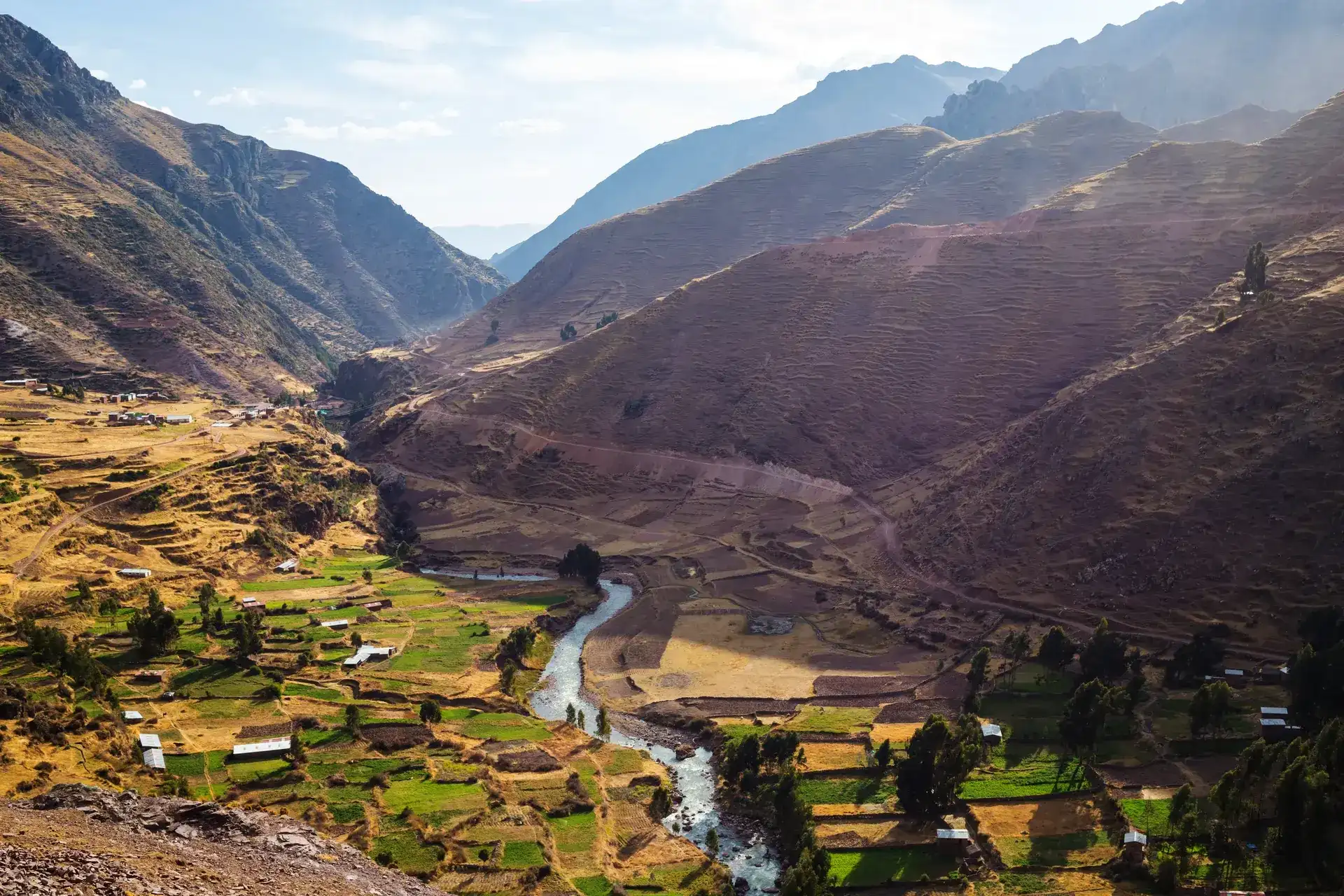
If Cusco's cold starts to wear you down, Quillabamba is the perfect escape. Known as the "city of eternal summer", it's the capital of La Convención province, in the high jungle at around 1,000 metres. The change is dramatic: from dry, cold Andean air to a warm, humid climate, coffee, cacao and tropical-fruit plantations and rivers to cool off in. It's very popular with people from Cusco and still little known to foreign travellers.
Start here: Cusco tips · things to do in Cusco
Getting there from Cusco
The road crosses the Sacred Valley to Ollantaytambo and climbs to Abra Málaga pass, above 4,000 m, before winding down into the jungle. The trip takes roughly five to seven hours depending on transport, traffic and road conditions.
- By bus or van: companies and colectivos leave Cusco daily. Ask your lodging for current departure points.
- By private car: more flexible, but the mountain road needs an experienced driver.
Mountain road
The Abra Málaga stretch is very winding, with possible fog, rain and landslides in the wet season. If you get carsick, take medication and sit in front. Avoid night travel.
Popular activities on GetYourGuide
Climate
It's warm almost all year, with hot days and mild nights. The rainy season, roughly November to March, brings heavy downpours and can affect the road. The dry season is most comfortable for travel.
Coffee, cacao and fruit
La Convención is one of Peru's main coffee and cacao regions. Around Quillabamba there are farms and cooperatives, and some let you see the process from plant to cup or bar; ask locally about visits. Markets overflow with tropical fruit: mangoes, avocados, pineapples, bananas, papayas and citrus, far cheaper than in Cusco.
- Coffee in Cusco: where it comes from, specialty cafés and farm visits
- Chocolate and cacao in Cusco: workshops, chuncho cacao and what to buy
Things to do
- Swim at nearby river beaches, busy with families at weekends.
- Visit local waterfalls and natural pools, usually with local transport or a guide.
- Tour coffee and cacao farms.
- Stroll the plaza and market and try tropical-fruit juices and ice creams.
- Watch birds and butterflies in forested areas.
Always ask about river conditions before swimming: currents are dangerous in the rainy season.
What to eat
The food blends Andean and Amazonian flavours. Try river-fish dishes, fried plantain, yuca, fresh fruit juices and, of course, local coffee. Markets and popular restaurants offer very cheap set meals.
Health
This is high jungle, so there are mosquitoes. Use repellent, light long sleeves at dusk and ask a travel clinic whether you should get the yellow fever vaccine. Drink only bottled or treated water and protect yourself from the sun.
How to combine it
Quillabamba pairs with Santa Teresa, the Cocalmayo hot springs and the Hidroeléctrica route to Machu Picchu, as they share the road from Abra Málaga. It's also a great place to thaw out after several days of high-altitude trekking.
- Machu Picchu via Hidroeléctrica and Santa Teresa: the budget route step by step
- Hot springs near Cusco: Cocalmayo, Lares, Aguas Calientes and Pacchanta
- Inca Jungle Trek: biking, rafting, ziplining and hiking to Machu Picchu
Practical tips
- Carry cash: there are ATMs in town, but not in the surroundings.
- Light clothes, swimwear, a hat and sunscreen.
- A jacket for Abra Málaga pass, which is very cold.
- Book accommodation ahead on long weekends and holidays, when many visitors come from Cusco.
- Get a local SIM: coverage is good in town but patchy on the road.
eSIM for Peru
Land connected: install an Airalo data eSIM before you travel and switch it on when you land. Check first that your phone supports eSIM and is unlocked.
Get online in Peru →Suggested two- or three-day itinerary
- Day 1: early departure from Cusco, stop in Ollantaytambo and cross Abra Málaga; arrive in Quillabamba in the afternoon and stroll the plaza and market.
- Day 2: morning at a coffee or cacao farm, afternoon at a river beach or nearby waterfall.
- Day 3 (optional): continue to Santa Teresa and Cocalmayo hot springs, or return to Cusco.
With only two days the road hours feel heavy; three days let you enjoy the climate calmly.
Accommodation
Town has simple hostels and hotels, most with fans and some with pools. Check recent reviews and ask whether rooms have mosquito nets or screened windows.
Frequently asked questions
- How long from Cusco to Quillabamba?
- Roughly five to seven hours by road via Abra Málaga.
- What's the climate like?
- Warm almost all year; heavy rain from November to March.
- Do I need the yellow fever vaccine?
- It's usually recommended for the jungle; ask a professional before travelling.
- What is there to do?
- River beaches, waterfalls, coffee and cacao farms and tropical-fruit food.
Book this plan
- Rainbow Mountain (Vinicunca)CompareSee dates →
- Humantay LakeCompareSee dates →
- Sacred Valley tourCompareSee dates →
Notice: This guide shares advice and recommendations based on research and local experience. Prices, opening hours and rules may change: always check with official sources and operators. Cusco Tips is not responsible for third-party services, bookings or decisions made using these guides; some links are affiliate links (see our affiliate policy).
Related guides
Machu Picchu via Hidroeléctrica and Santa Teresa: the budget route step by step
How to reach Machu Picchu without the outbound train: van from Cusco to Hidroeléctrica via Santa María and Santa Teresa, the walk along the tracks to Aguas Calientes, timings, risks and tips.
Read guide →
Coffee in Cusco: where it comes from, specialty cafés and farm visits
All about Cusco coffee: the coffee valleys of La Convención and Santa Teresa, its flavour, specialty cafés, cuppings, farm visits on treks and which coffee to take home.
Read guide →
Chocolate and cacao in Cusco: workshops, chuncho cacao and what to buy
Chocolate guide to Cusco: cacao from La Convención and the native chuncho variety, bean-to-bar workshops, cacao husk tea and how to choose chocolate to take home.
Read guide →
The Amazon from Cusco: Manu or Tambopata, how many days and how to get there
How to visit the Peruvian Amazon from Cusco: Manu vs Tambopata (Puerto Maldonado), trip length, flights or road, what to expect, vaccines, packing and why a day trip doesn't work.
Read guide →