
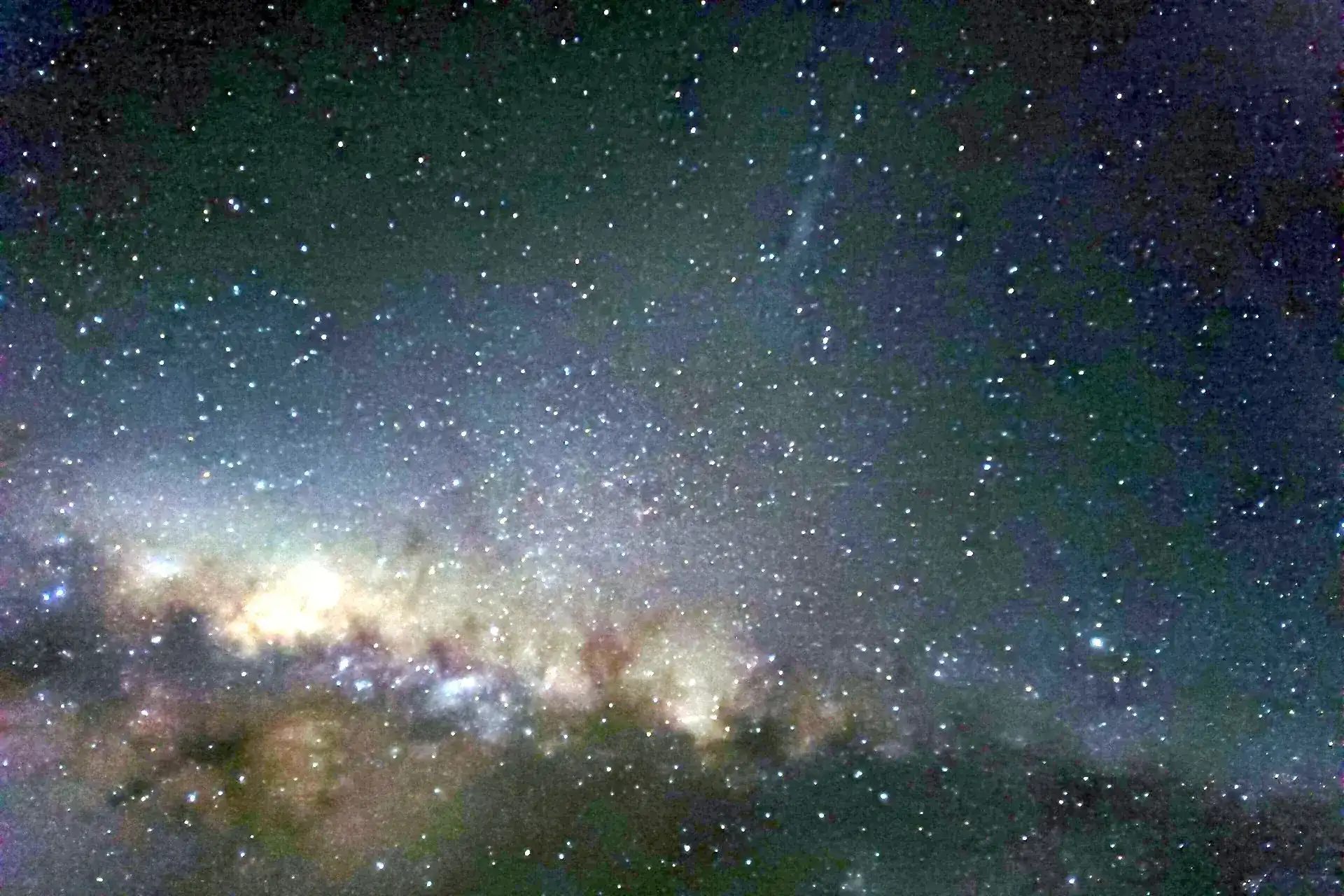
The Incas did not just look at stars: they also read the dark patches of the Milky Way and used the sky to time the farming year. Cusco Planetarium is the quickest way to understand that in one evening, with a talk, a dome projection and, weather permitting, telescope viewing a few minutes from town. It makes a good plan for your first or second night, when a late one is not wise at altitude, and it works well with children too.
Start here: Cusco tips · things to do in Cusco
What Cusco Planetarium is
According to its official website, it is a family project born from a wish to share astronomy and Andean culture. It runs from an Andean-style house with adobe walls and red tiles, between the Saqsayhuamán archaeological complex and the Llaullipata ecological reserve, about 15 minutes from the centre. The visit has three stages: an interpretation centre on Inca astronomy, a projection of the southern sky in a dome, and viewing through professional telescopes, always weather permitting. There are now two domes: Digitalis, 5.5 m for 20 people, and Merge, 8 m for 50 people.
- Sacsayhuamán: how to visit, tickets, history and tips
- The best museums in Cusco: which to visit, tickets and how to plan
Popular activities on GetYourGuide
The group show step by step
The website lists this schedule for the daily group presentation, with return transport included:
- 5:30 pm: meet in Plaza Regocijo, in the middle of the square by the fountain. They only wait 10 minutes, then walk a couple of blocks to the vehicle.
- 6:05 pm: arrival at the planetarium.
- 6:10 pm: introduction to Inca astronomy in the interpretation rooms.
- 6:40 pm: projection of the southern sky and Inca constellations in the dome.
- 7:10 pm: telescope viewing, weather permitting.
- 7:40 pm: return to the city.
Groups range from 4 to 22 people, and presentations are in English and Spanish. The planetarium notes the order may change to improve viewing chances.
Be on time
Get to Plaza Regocijo a few minutes before 5:30 pm: the wait is short and the group leaves on schedule.
- Plaza de Armas in Cusco: history, what to see around it and practical tips
- Night tours in Cusco: planetarium, dance shows, walks and dinners for the evening
Price and booking
The official website gives the daily group show as from S/ 90 per adult. The private presentation runs at 7:30 pm from S/ 1080 per group; the booking page states that transport is not included in the private option. Booking ahead on the website is recommended. Prices can change, so confirm the final amount when you book.
Clouds decide
Telescope viewing depends on the weather. In the rainy season overcast skies are more likely, though the talk and dome show still go ahead.
- Rainy season in Cusco and Machu Picchu: what to expect and how to make the most of it
- Cusco weather by month: temperatures, rain and what to expect
Mayu: the Inca Milky Way
In Quechua the Milky Way is Mayu, the river. Besides star-to-star constellations, Andean peoples recognised figures in the dark dust clouds that cut across the band of light, which is unusual among world cultures. Anthropologist Gary Urton studied them in communities near Cusco and described several:
- Yacana, the llama, with two bright stars as its eyes.
- Mach'acuay, the serpent.
- Hanp'atu, the toad.
- Atoq, the fox.
- Yutu, the Andean tinamou.
From Cusco, far from big-city glare, these shapes are visible to the naked eye on clear nights, and the dome show teaches you how to find them.
- Qorikancha, the Temple of the Sun: tickets, hours, what to see and history
- Machu Picchu history: who built it, why, and how the world found out
The Pleiades and the rain
The Pleiades, called Qollqa or "storehouse", played a special role. In 2000 a study in Nature by Benjamin Orlove, John Chiang and Mark Cane showed that Andean farmers' custom of watching how bright the Pleiades look in late June to decide when to plant has a real basis: the high, thin cloud that dims them is linked to El Niño years with less rain. It is a neat example of how practical Andean astronomy was.
- Inti Raymi in Cusco: date, schedule, tickets and how to experience the Festival of the Sun
- Cusco festivals: a month-by-month calendar
When the sky is best
- The dry season, roughly May to September, tends to bring clearer and colder nights.
- Nights near the new moon are best for the Milky Way; under a full moon fewer stars show, although the Moon itself is a great telescope target.
- Light pollution in the city is real; getting a few kilometres out, as the planetarium does, makes a difference.
- Cusco weather by month: temperatures, rain and what to expect
- Best time to visit Cusco and what to pack
What to bring
- Proper warm layers: jacket, hat and gloves. Night temperatures drop sharply, especially in the dry season.
- Comfortable shoes, as the planetarium itself advises.
- A small torch, ideally with red light so you do not dazzle others.
- Travelling with children? The experience suits all ages; ask when booking if the return time worries you.
- What to pack for Cusco and Machu Picchu: a packing list by season
- Cusco with kids: altitude, itinerary and family activities
How to combine it
Visit Saqsayhuamán in the afternoon and walk down to the centre before 5:30 pm, or book it the night before a pre-dawn tour, since you are back early. For more evening ideas, see our night tours guide.
- Night tours in Cusco: planetarium, dance shows, walks and dinners for the evening
- Half-day tours in Cusco: the best options if you're short on time
- Sacsayhuamán: how to visit, tickets, history and tips
Frequently asked questions
- How long does the planetarium visit take?
- About two hours in total, including transport to and from Plaza Regocijo.
- What languages are offered?
- English and Spanish, according to the official website.
- Is it worth it if it is cloudy?
- Yes for the talk and dome, which do not depend on the weather; only telescope viewing may be cancelled.
- Is it on the Cusco Tourist Ticket?
- No. It is a private project booked separately.
Official sources
Book this plan
- Cusco city tourCompareSee dates →
- Sacred Valley tourCompareSee dates →
- Machu Picchu day trip from CuscoCompareSee dates →
Notice: This guide shares advice and recommendations based on research and local experience. Prices, opening hours and rules may change: always check with official sources and operators. Cusco Tips is not responsible for third-party services, bookings or decisions made using these guides; some links are affiliate links (see our affiliate policy).
Related guides
Night tours in Cusco: planetarium, dance shows, walks and dinners for the evening
What to do in Cusco at night beyond the bars: the planetarium and Inca astronomy, the Centro Qosqo dance show, walks through the lit-up centre and food tours.
Read guide →
Half-day tours in Cusco: the best options if you're short on time
The best half-day tours from Cusco: City Tour with Sacsayhuamán, Moray and Maras, the South Valley, horse rides, cooking and chocolate workshops, and the planetarium.
Read guide →
Sacsayhuamán: how to visit, tickets, history and tips
Guide to Sacsayhuamán, the great Inca complex above Cusco: walking up or by taxi, which ticket you need, hours, what to see (walls, Rodadero, tunnels) and its history.
Read guide →
Cusco weather by month: temperatures, rain and what to expect
What Cusco's weather is like each month: approximate day and night temperatures, rain, crowds and festivals, with tips for Machu Picchu and treks.
Read guide →
Cusco with kids: altitude, itinerary and family activities
How to travel to Cusco and Machu Picchu with kids: acclimatisation and health, starting in the Sacred Valley, family activities, tickets and trains, and practical tips.
Read guide →