
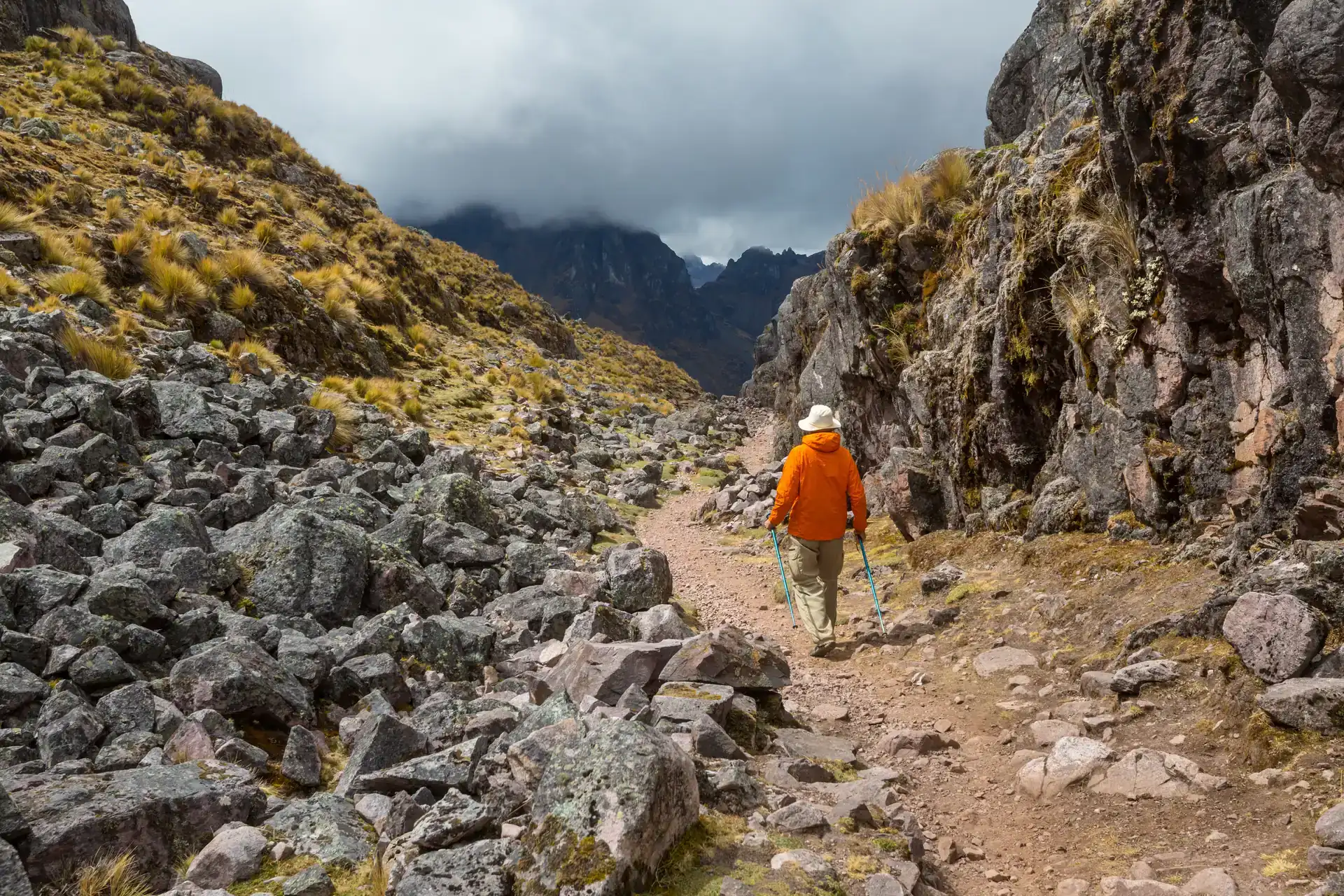
From Cusco's Plaza de Armas on clear days you can see snowy peaks over 6,000 m. The region has several of southern Peru's highest summits, and some can be attempted with a mountain guide even if you're not an elite mountaineer. But high mountains are a world apart from trekking: glaciers, crevasses, extreme cold and very demanding altitude. This guide gives an overview to start planning.
Start here: Cusco tips · things to do in Cusco
The main peaks
- Ausangate (6,384 m): the highest mountain in the Cusco region and the fifth highest in Peru. It's Cusco's great apu and the best-known peak for mountaineering.
- Verónica or Wakay Willka (about 5,900 m): the highest summit of the Urubamba range, a pyramid above the Sacred Valley. It's technical.
- Campa (about 5,500 m): in the Vilcanota range, often used as an acclimatisation climb before Ausangate.
- Salkantay (6,271 m): famous for the trek that passes at its feet, its summit is a technical, demanding climb for experienced mountaineers.
- Ausangate trek: the great circuit of the sacred peak (route, altitude and preparation)
- Salkantay Trek to Machu Picchu: route, difficulty, best season and how to plan it
Popular activities on GetYourGuide
Ausangate
The normal route is moderately technical: after crossing a crevassed glacier there's a steep ice wall of about 200 m before a long plateau to the summit. You need great stamina, experience with crampons and ice axe and solid acclimatisation. Expeditions usually last several days, with a base camp and a high camp.
Verónica
Its silhouette dominates the Sacred Valley between Ollantaytambo and the Abra Málaga area. According to mountain guides, the route includes a rock section before the glacier and steep snow slopes, so previous technical experience is required. It isn't a beginner's peak.
Season
The high-mountain season runs from May to September, with June and July the driest months. Early on there's more snow left from the rainy season; by August glaciers are drier and more crevasses open. From November to March snowfall, lightning storms and deep snow make climbs much harder.
- Cusco weather by month: temperatures, rain and what to expect
- Rainy season in Cusco and Machu Picchu: what to expect and how to make the most of it
Acclimatisation
It's the key to success and safety. Guides recommend at least three full nights in Cusco before sleeping above 4,000 m, and climbing a peak of about 5,500 m before attempting a 6,000 m one. Doing a trek such as Ausangate or Salkantay first is excellent preparation.
Don't skip steps
High-altitude pulmonary or cerebral oedema can be fatal. With severe symptoms, the only solution is to descend.
What experience do I need?
For glaciated summits you need to know how to use crampons, ice axe, rope and glacier travel and crevasse rescue techniques. If you lack experience, some guides offer introductory courses before the climb. Be honest about your level with the guide.
Mountain guides
Choose high-mountain guides with recognised training and experience on the peak you want to climb. Ask about the guide-to-client ratio, the acclimatisation plan, safety gear and the evacuation protocol. Be wary of very cheap offers.
Gear
- Mountaineering boots compatible with crampons.
- Crampons, ice axe, harness and helmet.
- A sleeping bag for temperatures well below freezing.
- Technical layers, a down jacket and expedition gloves.
- Glacier glasses and extreme sun protection.
Cusco has shops that rent mountain gear, but for high mountains it's best to bring your own boots.
Extreme cold
At high camps night temperatures can drop well below freezing, and on the summit the wind makes it feel colder still. Summit pushes usually start in the early hours, sometimes soon after midnight, to make the most of firm snow.
Insurance and rescue
Mountain rescue in Peru is limited and can take time. Get insurance that explicitly covers mountaineering at the altitude you'll reach, including helicopter rescue where available.
If you're a beginner
Before a glaciated summit, try high-altitude treks such as the Ausangate circuit or the Seven Lakes hike, which let you feel the altitude without technical skills. You can also start with rock climbing near Cusco.
- Ausangate trek: the great circuit of the sacred peak (route, altitude and preparation)
- Ausangate Seven Lakes: a one-day hike from Cusco
- Rock climbing in Cusco: Ch'acco Huayllascca, nearby crags and tips
Mountains as apus
For Andean communities, the great mountains are apus, protective spirits. Many guides make an offering or payment to the earth before the climb. Respect these traditions and the communities whose land you cross.
Frequently asked questions
- What is the highest mountain in Cusco?
- Ausangate, at 6,384 m, the fifth highest in Peru.
- When is the mountaineering season?
- May to September, with June and July the driest months.
- Can I climb Ausangate without experience?
- It's not advisable: it requires glacier and ice technique and very good acclimatisation.
- How much acclimatisation do I need?
- At least three nights in Cusco before sleeping above 4,000 m, according to guides.
Book this plan
- Urubamba river raftingCompareSee dates →
- ATV ride to Maras and MorayCompareSee dates →
- Sacred Valley ziplineCompareSee dates →
Notice: This guide shares advice and recommendations based on research and local experience. Prices, opening hours and rules may change: always check with official sources and operators. Cusco Tips is not responsible for third-party services, bookings or decisions made using these guides; some links are affiliate links (see our affiliate policy).
Related guides
Ausangate trek: the great circuit of the sacred peak (route, altitude and preparation)
Ausangate trek guide: a 4–6 day circuit above 4,000 m with passes over 5,000 m, lakes, glaciers and Rainbow Mountain, best season, cold, agencies and safety.
Read guide →
Camping in Cusco: where to pitch, what gear to bring and how to handle Andean cold
A guide to camping in the Cusco region: treks with camps, night temperatures, gear rental, water, permits, communities, safety and alternatives such as glamping.
Read guide →
Rock climbing in Cusco: Ch'acco Huayllascca, nearby crags and tips
Where to climb around Cusco: the Ch'acco Huayllascca park near Pitumarca, limestone walls close to the city and the Sacred Valley, season, altitude, gear and guides.
Read guide →
Trekking gear rental and shops in Cusco: what to rent, what to bring and tips
Trekking gear in Cusco: renting sleeping bags, poles and jackets, outdoor shops, what agencies include, what to bring from home, checking gear and a packing list.
Read guide →