
On the slopes of Pachatusan, the apu (sacred mountain) that watches over the Cusco valley, stands a sanctuary that thousands of people reach every September by walking through the night, many fasting and some carrying stones on their backs. This is Señor de Huanca, a Christ painted on rock whom Cusco people call "the doctor of the poor". The festival and pilgrimage were declared Cultural Heritage of the Nation in 2014. This guide covers its story, the 14 September feast, how to visit the rest of the year and how to get there.
Start here: Cusco tips · things to do in Cusco
Where the sanctuary is
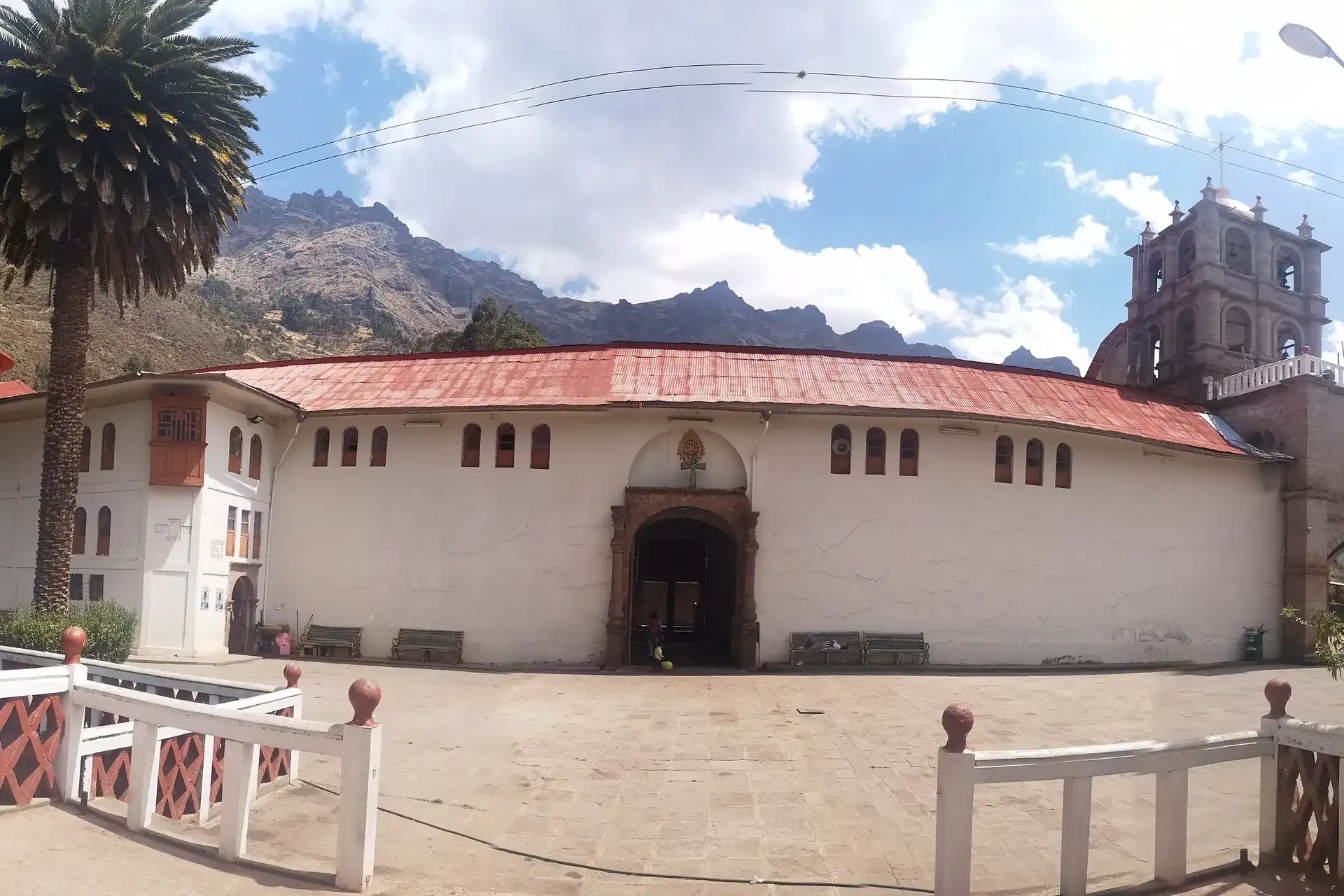
The Señor de Huanca sanctuary is in San Salvador district, Calca province, about 4 km from the village of San Salvador at the foot of the apu Pachatusan, according to the Ministry of Culture. The official tourism inventory puts it at about 3,100 m, slightly lower than Cusco. The complex includes the church, Siloé park, pools of water that devotees consider healing and the celdas, small rooms beside the church where pilgrims stay.
- Cusco's South Valley: Tipón, Pikillacta, Andahuaylillas and local flavours
- Pisac: Inca ruins, craft market and how to visit from Cusco
Popular activities on GetYourGuide
The story: a Christ on the rock
According to the oral tradition recorded by the Ministry of Culture, in colonial times a farmer from Chinchero named Diego Quispe, forced to work in a mine, escaped and hid among the rocks of Huanca. At night he saw a light and in it Jesus Christ bleeding from the lashes. That same year he led the parish priest and some neighbours to the spot, considered the first pilgrimage. The tourism inventory dates this story to around 1675 and records a second version, from 1778, about a man named Pedro Valero who found the image after being healed by a mysterious doctor.
The revered image is a painting of the martyred Christ on living rock, from the 17th century and in the Cusco School style. It sits in the main altar, a baroque gilded wooden altarpiece about 20 metres high. The present church was built between 1931 and 1965 and is cared for by the Mercedarian order.
- The Cusco School of painting: where to see it and how to buy a reproduction
- Churches of Cusco: La Compañía, San Blas, La Merced, San Francisco and more
The 14 September feast
The main day is 14 September, but activities start earlier. According to the resolution that declared it national heritage:
- From 4 September there is a novena: nine consecutive masses, prayers, hymns and the "night of darkness", when candles are put out for about 20 minutes.
- On the morning of 13 September there is mass and the image is carried in procession to the cemetery.
- On the night of the 13th the great pilgrimage on foot takes place (see below).
- On the 14th, from before dawn, pilgrims bathe in the pools, there is a procession of the Blessed Sacrament with a blessing of the sick, packed masses and, in the afternoon, the blessing of images, medicinal plants, food and crosses made from a shrub called huaranhuay, followed by the procession of Señor de Huanca and the Virgen Dolorosa.
- Eight days later, the octava or "encierro" closes the feast.
In 2027, 14 September falls on a Tuesday.
The night pilgrimage from San Jerónimo
The great walk leaves San Jerónimo district, about 10 km from Cusco, on the night of 13 September. It passes the communities of Huaccoto and Huancapata, climbs over the apu Pachatusan and descends to the sanctuary, where pilgrims arrive at dawn on the 14th. The Ministry of Culture says it takes 5 to 7 hours. Along the way people pray, sing and make offerings to Pachamama and the apu. Some devotees carry large stones as penance and, on arrival, leave them beside the church to build small figures of what they are asking for.
If you want to join as a visitor:
- Go with someone who knows the route or walk with groups of pilgrims; it is dark and crowded.
- Bring a headlamp, warm clothes, water and snacks.
- It is a long walk at altitude: arrive well acclimatised.
- Remember it is an act of faith: walk respectfully and do not turn it into a photo shoot.
Without the walk
Many people arrive by vehicle on the 14th itself. You will leave before dawn and hit traffic, but you will see the masses, processions and fair.
- San Sebastián and San Jerónimo: Cusco's south-eastern districts
- Altitude sickness in Cusco: how to prevent it and what to do
The fair and the alasitas
During the feast a large fair sets up below the sanctuary, with livestock breeders, farmers, artisans and traders from several regions. The highlight is the alasitas: miniature houses, vehicles, deeds or certificates bought as symbols of what you hope to obtain. Small figures made of candle wax carry the same meaning and can be seen in the sanctuary's candle rooms.
Visiting the rest of the year
You do not have to wait for September. The tourism inventory lists free entry and daytime visits, roughly 7 am to 5 pm, with toilets, parking and stalls selling candles and souvenirs. On mass days priests often bless vehicles and other belongings with holy water, quite a sight. Dress modestly, keep quiet inside the church and ask before taking photos.
Combine it
The sanctuary lies on the Sacred Valley side. You can pair it with Pisac on the same day, or with the South Valley if you go via Huambutío.
How to get there from Cusco
The tourism inventory describes two paved road routes:
- Cusco – Oropesa – Lucre – Huambutío – San Salvador – sanctuary, through the South Valley.
- Cusco – Pisac – San Salvador – sanctuary, through the Sacred Valley.
Public minibuses run to San Salvador; from the village, local taxis go up to the sanctuary. During the feast there is far more transport, but also queues and traffic: leave early. For the pilgrimage on foot, the starting point is San Jerónimo, on the south-east side of Cusco.
- Cusco to the Sacred Valley and Ollantaytambo: colectivo, taxi, tour and train
- Getting around Cusco: taxis, ride apps, city buses and colectivos
Frequently asked questions
- When is the Señor de Huanca festival?
- The main day is 14 September, with a novena from the 4th and the great pilgrimage on the night of the 13th.
- Where is the sanctuary?
- In San Salvador district, Calca province, at the foot of the apu Pachatusan.
- How long is the pilgrimage on foot?
- 5 to 7 hours from San Jerónimo, overnight, arriving at dawn on the 14th.
- Is there an entry fee?
- The tourism inventory lists free entry. Masses and visits are open during the day.
Official sources
Book this plan
- City tour of the Tourist Ticket sitesCompareSee dates →
- Cusco walking tourCompareSee dates →
Notice: This guide shares advice and recommendations based on research and local experience. Prices, opening hours and rules may change: always check with official sources and operators. Cusco Tips is not responsible for third-party services, bookings or decisions made using these guides; some links are affiliate links (see our affiliate policy).
Related guides
Cusco festivals: a month-by-month calendar
Calendar of the main festivals in and around Cusco: Carnival, Holy Week, Qoyllur Rit'i, Corpus Christi, Inti Raymi, Virgen del Carmen, Pachamama, Santurantikuy and more.
Read guide →
Churches of Cusco: La Compañía, San Blas, La Merced, San Francisco and more
Guide to Cusco's churches: the Cathedral, La Compañía, San Blas and its pulpit, La Merced, San Francisco, Santa Catalina, Santo Domingo and the religious circuit, with tips.
Read guide →
San Sebastián and San Jerónimo: Cusco's south-eastern districts
Guide to San Sebastián and San Jerónimo in Cusco: the baroque San Sebastián church, Vinocanchón market, their role in Corpus Christi and how to visit.
Read guide →
Pisac: Inca ruins, craft market and how to visit from Cusco
Pisac guide in the Sacred Valley: what to see in the archaeological park, the market, getting there from Cusco, entry with the Tourist Ticket, the walk down and tips.
Read guide →
Cusco's South Valley: Tipón, Pikillacta, Andahuaylillas and local flavours
Guide to Cusco's South Valley: Tipón's Inca waterworks, the Wari city of Pikillacta, Andahuaylillas church, Huacarpay lagoon, chicharrón, Oropesa bread and how to get there.
Read guide →