
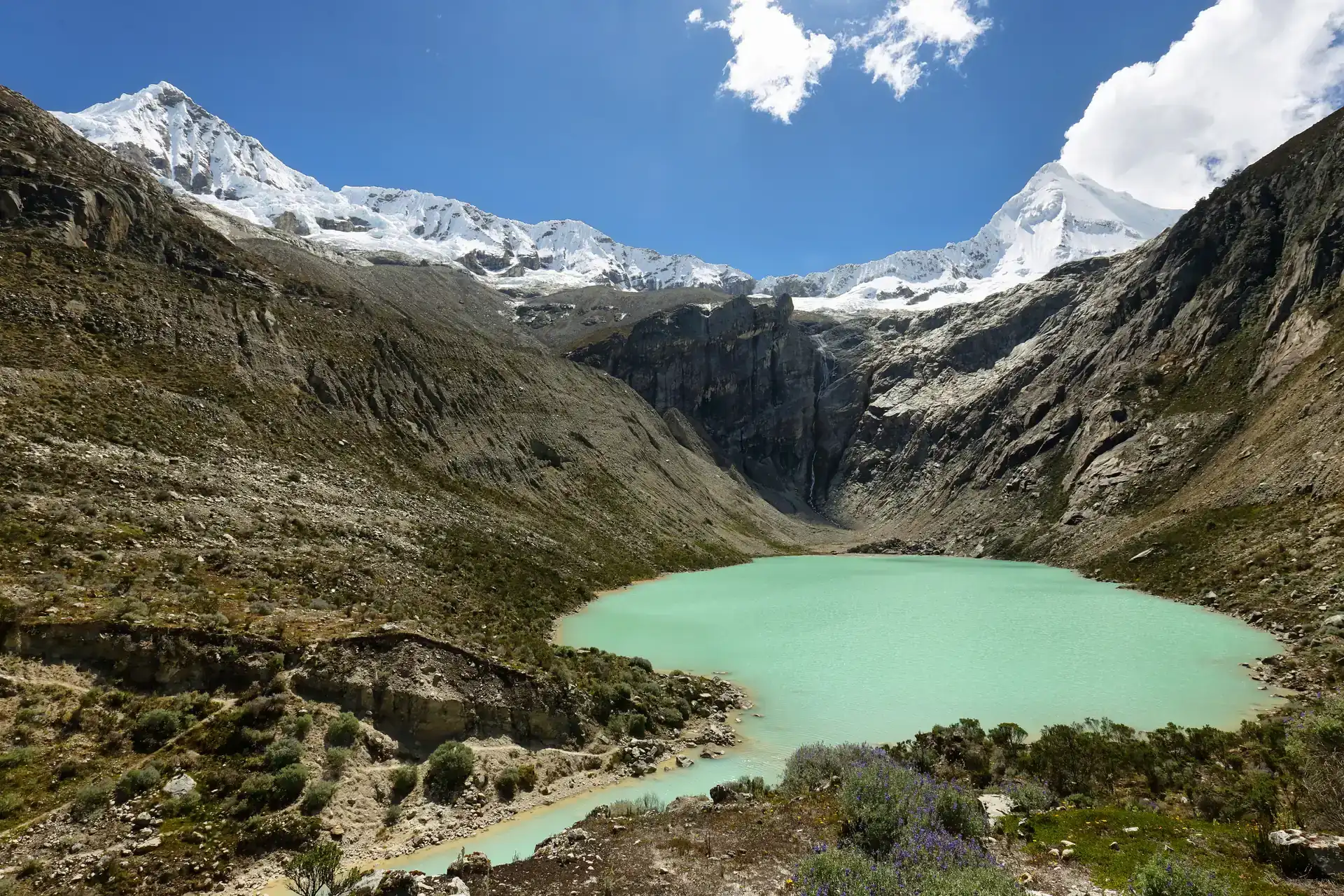
Above Pisac, in the heights separating the Sacred Valley from the puna, lie the Kinsa Cocha lakes, whose Quechua name means "three lakes". It's a little-known outing, ideal for open Andean scenery, silence and contact with farming communities, without the crowds of Humantay or Rainbow Mountain. It can be a short taxi trip or a more demanding hike.
Start here: Cusco tips · things to do in Cusco
What are the Kinsa Cocha lakes?
Three high-altitude lakes surrounded by grassland, hills and herds of llamas, alpacas and sheep, at roughly 4,000 m. The scenery changes with light and season: blue water and clear skies in the dry season, green meadows and shifting clouds in the rainy season. Quechua communities nearby keep up traditional herding and weaving.
Popular activities on GetYourGuide
Getting there
- By taxi from Pisac: the simplest option. A taxi or mototaxi climbs a dirt road to near the lakes in about an hour; agree the return price and waiting time beforehand.
- On foot from Pisac: a long, steep hike with big elevation gain. Only for well-acclimatised, fit walkers, ideally with a local guide.
- On a tour: some Sacred Valley agencies include Kinsa Cocha in hiking or community-tourism routes.
Frequent colectivos run from Cusco to Pisac in about an hour.
- Pisac: Inca ruins, craft market and how to visit from Cusco
- Cusco to the Sacred Valley and Ollantaytambo: colectivo, taxi, tour and train
Difficulty and altitude
By taxi, the walk between lakes is short and easy, though you'll feel the altitude with every step. The full hike from Pisac is demanding due to elevation gain and height. Either way, go after several days acclimatising in Cusco or the Sacred Valley.
Altitude
At about 4,000 m the air is much thinner than in Cusco. Walk slowly, drink water and descend if you feel a strong headache or dizziness.
Communities and respect
The lakes are on communal land. A small access fee may be charged for the community; paying it supports local families. Ask before photographing people and their animals, keep out of corrals and fields and leave no rubbish. If someone sells weavings or drinks, buying something is a kind gesture.
Best season
The dry season, roughly May to September, has the clearest skies, though mornings are very cold. In the rainy season, November to March, the dirt road can be poor and afternoons bring storms; set off early and check with taxi drivers first.
- Best time to visit Cusco and what to pack
- Rainy season in Cusco and Machu Picchu: what to expect and how to make the most of it
What to bring
- Warm clothes, hat and gloves: the high-altitude wind is cold.
- A waterproof jacket.
- Sunscreen, sunglasses and a hat.
- Water and food: there are no services at the lakes.
- Cash for the taxi and community fee.
- Hiking boots if you're walking.
How to combine it
A full-day plan: early start to Pisac, morning trip up to Kinsa Cocha, back to town for lunch and the market and, with energy left, the Pisac archaeological site in the afternoon. It also fits a multi-day stay in the Sacred Valley.
- Pisac: Inca ruins, craft market and how to visit from Cusco
- Cusco's artisan markets: San Blas, Centro Artesanal, Pisac and Chinchero
- Where to stay in the Sacred Valley: Pisac, Urubamba, Ollantaytambo and more
Other lakes near Cusco
- Humantay Lake: more spectacular and glacial, but much busier.
- Huaypo and Piuray lakes: on the Chinchero plateau, more accessible.
- Ausangate's seven lakes: for high-mountain seekers.
- Humantay Lake: how to get there, the hike and tips
- Huaypo and Piuray lakes: a quiet escape near Chinchero
- Ausangate Seven Lakes: a one-day hike from Cusco
Safety and navigation
The lakes are remote, with little phone signal and no services, so take precautions:
- Tell your lodging your plan and expected return time.
- If walking, download an offline map first and don't start late: the sun sets early and temperatures drop fast.
- Avoid going alone without mountain experience; a local guide adds safety and local knowledge.
- In fog or lightning, leave high exposed ground and head back.
- Save your taxi driver's number and confirm the pick-up time.
Photography
The best photos usually come in the morning, before the wind ripples the water and while hill reflections are sharp. Herds grazing by the shore add life to the image, but approach calmly and ask the herders' permission.
Frequently asked questions
- Where are the Kinsa Cocha lakes?
- In the heights above Pisac in the Sacred Valley, at about 4,000 m.
- How do I get to Kinsa Cocha?
- By taxi from Pisac on a dirt road, or on foot, which is much harder.
- Is it difficult?
- The walk between lakes is easy, but the altitude requires acclimatisation.
- Is there an entry fee?
- A small community fee may be charged.
Book this plan
- Rainbow Mountain (Vinicunca)CompareSee dates →
- Humantay LakeCompareSee dates →
- Sacred Valley tourCompareSee dates →
Notice: This guide shares advice and recommendations based on research and local experience. Prices, opening hours and rules may change: always check with official sources and operators. Cusco Tips is not responsible for third-party services, bookings or decisions made using these guides; some links are affiliate links (see our affiliate policy).
Related guides
Pisac: Inca ruins, craft market and how to visit from Cusco
Pisac guide in the Sacred Valley: what to see in the archaeological park, the market, getting there from Cusco, entry with the Tourist Ticket, the walk down and tips.
Read guide →
Huaypo and Piuray lakes: a quiet escape near Chinchero
Huaypo and Piuray lakes on the Chinchero plateau: getting there, walks, cycling, kayaking, birds, communities, combining with Maras and Moray, and altitude tips.
Read guide →
Humantay Lake: how to get there, the hike and tips
Practical guide to Humantay Lake (~4,200 m): tours from Cusco, going independently via Mollepata and Soraypampa, the hike, altitude, best season and packing.
Read guide →
Sacred Valley of the Incas: what to see and how to visit
Sacred Valley guide: Pisac, Chinchero, Moray, the Maras salt pans and Ollantaytambo, tickets, how to visit (tour, independently or with a driver) and a 2-day plan.
Read guide →